From the morning cup to a refresher between work sessions. Japan is the world's third-largest coffee importer, and its consumption boasts a high level internationally too. Japan's imports of green coffee beans in 2024 reached about 360,000 tons, showing a firm, roughly flat trend year on year.
So where does the coffee we drink every day come from?
This article gives a thorough explanation of the realities of Japan's coffee imports. From the characteristics of major growing regions to the latest market trends, and even the impact of international developments, we deliver accurate, data-based information.
An overview of Japan's coffee import volumes
Japan's coffee imports began with the opening of the country in the Meiji era. Today it imports beans from countries around the world, and the scale is expanding year by year.
According to Ministry of Finance trade statistics, green coffee bean imports in 2024 were about 360,000 tons, equivalent to about 6 million 60 kg bags. On a consumption basis, it ranks fourth in the world (per ITC/ICO data), playing an important role in the global coffee market.
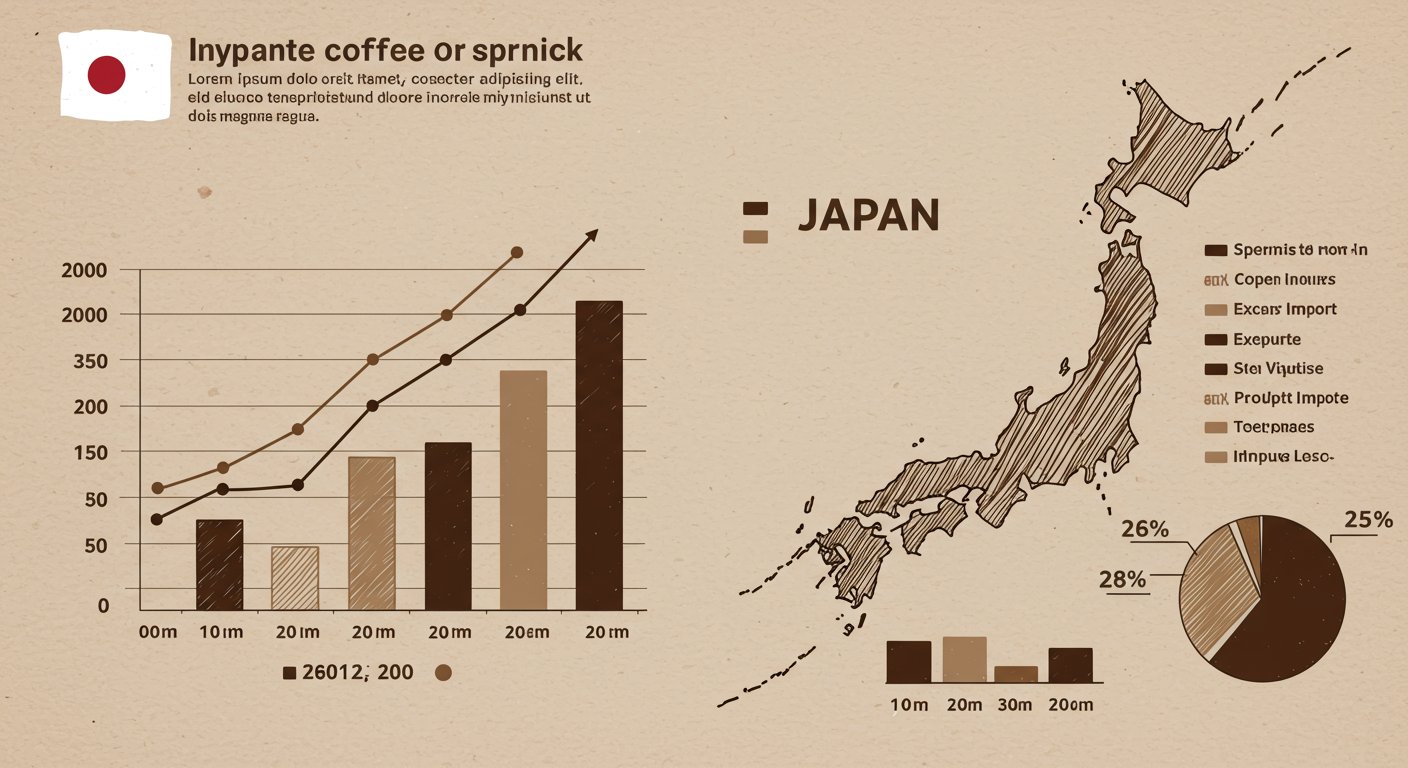
The forms of coffee imported are also diversifying. Green beans are the mainstay, but regular coffee, instant coffee, coffee extract, and more are also imported, and products meeting consumer needs circulate in the market.
Along with rising health consciousness, the increase in decaf coffee imports has come to be reflected in import statistics. The growing segment of consumers mindful of caffeine is bringing changes to import composition too.
Import volume ranking by producing area (2024 estimate)
Japan's coffee import sources are wide-ranging, but the top three countries account for the majority of the share. The 2024 import volume ranking by producing area, based on Ministry of Finance trade statistics, is as follows.
| Rank | Country | Import volume (estimate) | Share | Main bean types |
|---|---|---|---|---|
| 1st | Brazil | About 146,000 tons | About 40% | Arabica (Santos, etc.) |
| No. 2 | Vietnam | About 100,000 tons | About 28% | Robusta |
| 3rd | Colombia | About 47,000 tons | About 13% | Arabica (mild) |
| 4th | Indonesia | About 25,000 tons | About 7% | Mix of Arabica and Robusta |
| 5th | Guatemala | About 20,000 tons | About 6% | Arabica (highland-grown) |
| 6th and below | Ethiopia, Tanzania, and others | About 22,000 tons | About 6% | Arabica (specialty) |
The structure where the top three countries alone account for about 80% of the total has not changed over the past 10 years, and concentration risk in procurement sources is pointed out within the industry. On the other hand, with expanding demand for specialty coffee, small-volume, multi-variety imports from Ethiopia, Panama, Rwanda, and others are also increasing.
Characteristics of the top three importing countries
Brazil: the largest supplier with an overwhelming share
By a wide margin, the top source of Japan's coffee imports is Brazil. In 2024, imports reached about 146,000 tons, accounting for roughly 40% of the total.
Brazil is the world's largest coffee producer, producing roughly 30 to 35% of world output (ICO statistics). Its strength is being able to steadily supply high-quality Arabica thanks to its vast land and ideal climate conditions. A good balance of acidity and sweetness and a flavor without quirks match Japanese tastes.
It also offers excellent cost performance and is widely used as a base for blended beans.
Vietnam: a major source of Robusta
Second is Vietnam, with imports of about 100,000 tons. As the world's second-largest producer, Vietnam is known as the largest producer of Robusta.
Robusta is marked by strong bitterness and a full-bodied flavor, indispensable for instant coffee and espresso blends. In Japan it's imported in bulk for canned coffee and blends, and in most cases consumers are drinking Vietnamese coffee daily without being aware of it.
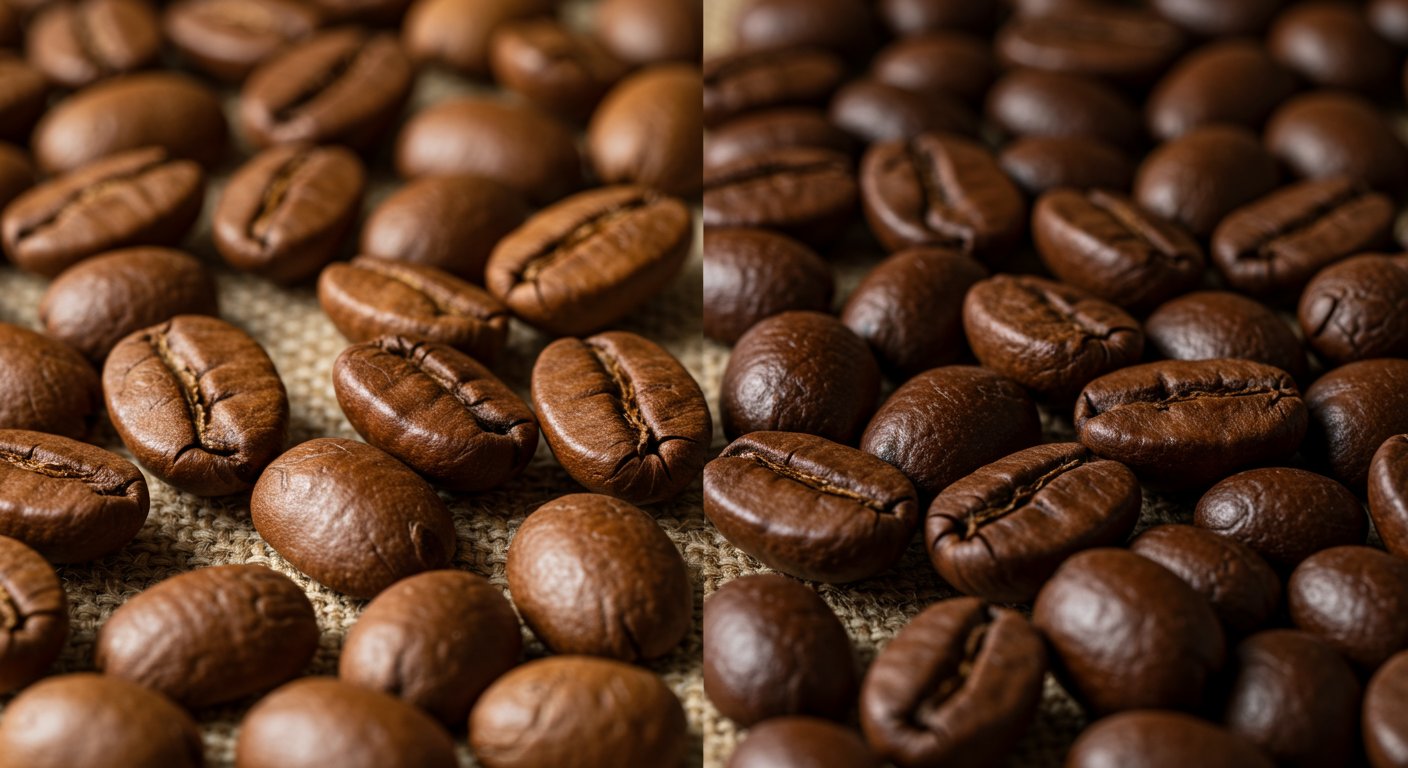
The Vietnamese government also positions coffee as an important export item and is putting effort into expanding production.
Colombia: synonymous with high-quality mild coffee
Third is Colombia, with imports of about 47,000 tons. Colombia is world-famous for the mild Arabica beans grown in its highlands.
Characterized by an easy-drinking balance, with a standout sweetness amid rich body and acidity, it enjoys high popularity in Japan as well. High-end brands such as Emerald Mountain have also established a firm position in the Japanese market.
In Colombia, about a quarter of farmers are involved in coffee production, and a nationwide coffee industry has taken shape.
Importing countries to watch and trends by region
Indonesia: a strong presence with distinctive flavors
From fourth-ranked Indonesia, Japan imports about 25,000 tons. Premium varieties such as Mandheling and Toraja are famous, popular for their distinctive aroma and weighty body.
Beans with different flavor profiles are produced island by island, such as on Sumatra and Sulawesi, earning high marks in the specialty coffee market.
Central American countries: small-volume imports with an emphasis on quality
Guatemala ranks fifth, with imports of about 20,000 tons. Although it ranks 11th in world production, it is extremely popular in Japan and is often seen on café menus.
Imports from Central American countries such as Honduras, El Salvador, Costa Rica, and Panama are also steadily increasing. Though their production volumes are small, these countries are drawing attention as sources of high-quality specialty coffee.
African countries: a treasure trove of distinctive coffees
Ethiopia ranks sixth, with imports of about 20,000 tons. Known as the birthplace of coffee, it is noted for beans with floral and fruity aromas. Coffee from the Sidamo region is also called "the queen of coffee."
Tanzania ranks seventh, with about 13,000 tons. It has long enjoyed firm popularity in Japan under the Kilimanjaro brand name. Although it ranks 15th in world production, its presence in the Japanese market is significant.
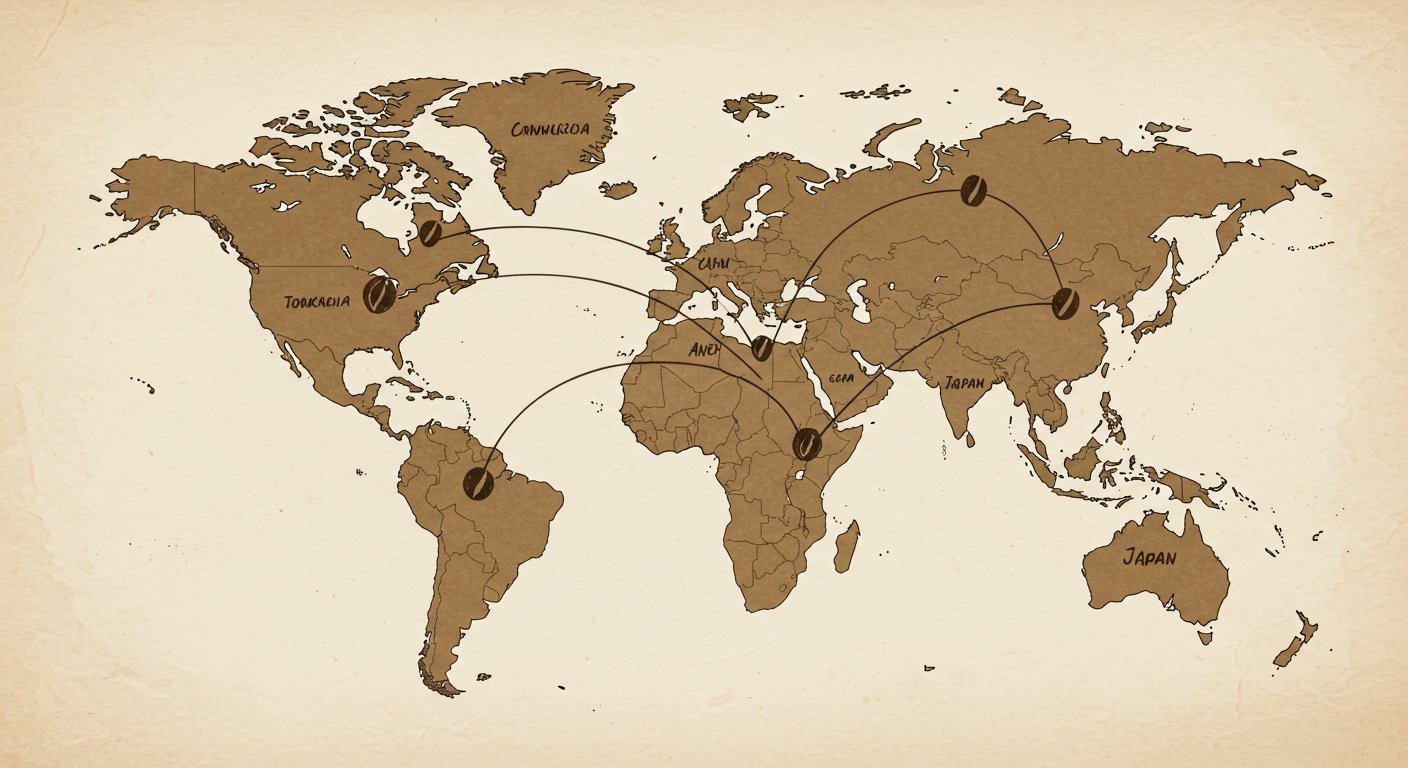
Imports from other African countries such as Kenya, Rwanda, and Burundi are also on the rise, meeting the needs of consumers seeking distinctive flavors.
The latest trends and market developments
The expansion of the specialty coffee market
A notable trend in Japan's coffee market is rising interest in specialty coffee. In All Japan Coffee Association surveys, awareness of and intent to buy specialty coffee is rising year by year, and demand for high-quality beans is coming to be reflected in import composition.
Consumers have become more conscious of "who grew the beans, where, and how," and attention is focusing on single origin (single-farm) coffee. The "third wave" movement, which emphasizes transparency in origin labeling and the roasting process, is taking hold in Japan as well.
Changes in the form of coffee imports
The form of coffee imports is diversifying from a green-bean focus. The following is the rough composition-ratio trend of import forms (industry estimate).
| Import form | Around 2015 | Around 2020 | Around 2024 | Notes |
|---|---|---|---|---|
| Green beans (green coffee) | About 73% | About 70% | About 68% | Still the mainstay. Specialty beans increasing |
| Roasted beans, regular coffee | About 12% | About 13% | About 14% | Driven by the increase in imported brand products |
| instant coffee | About 10% | About 11% | About 11% | Stable in convenience-store coffee use |
| Decaf, functional coffee | About 2% | About 3% | About 4% | Expanding against a backdrop of health consciousness |
| Coffee extract, others | About 3% | About 3% | About 3% | Raw material for RTD beverages |
Decaf and functional coffee are small in absolute terms, but their growth rate exceeds that of green beans, and increases in import volume are expected going forward too.
The diversification of café culture
New concept cafés are opening one after another, centered on the greater Tokyo area. While the spread of convenience-store coffee has created an environment where coffee can be enjoyed easily, specialty shops that emphasize experiential value are on the rise.
Roastery cafés with in-house roasting facilities and shops where baristas carefully brew each cup are gaining popularity. Coffee is shifting from a mere indulgence to a symbol of lifestyle.
The rise of health-consciousness and decaf
As health awareness grows, demand for decaf (caffeine-free) coffee is rising rapidly. Enjoyable even for pregnant or breastfeeding women and those sensitive to caffeine, decaf shows a clear upward trend in import statistics.
Products using oat milk, such as plant-based lattes, are also expanding, and product development to meet diverse lifestyles is advancing.
International developments and their impact on the coffee market
The 2025 tariff policy and the coffee market
In April 2025, the import tariff policy the United States rolled out is sending ripples through the world's coffee market. Since the US had until now imposed almost no tariffs on green coffee beans, it's an exceptional measure.
According to reports, a tariff totaling the equivalent of 46% is under consideration for Vietnamese coffee beans, and a major impact is feared for Vietnam, the world's second-largest producer (implementation depends on future negotiations). Indonesian imports are also reported to be set to face a 32% tariff.
As a result, beans from Vietnam and Indonesia, whose exports to the U.S. have declined, may flow into the European and Japanese markets. While a price drop is forecast due to an oversupply of Robusta, Arabica prices are showing unstable movements.
Climate change and its impact on production
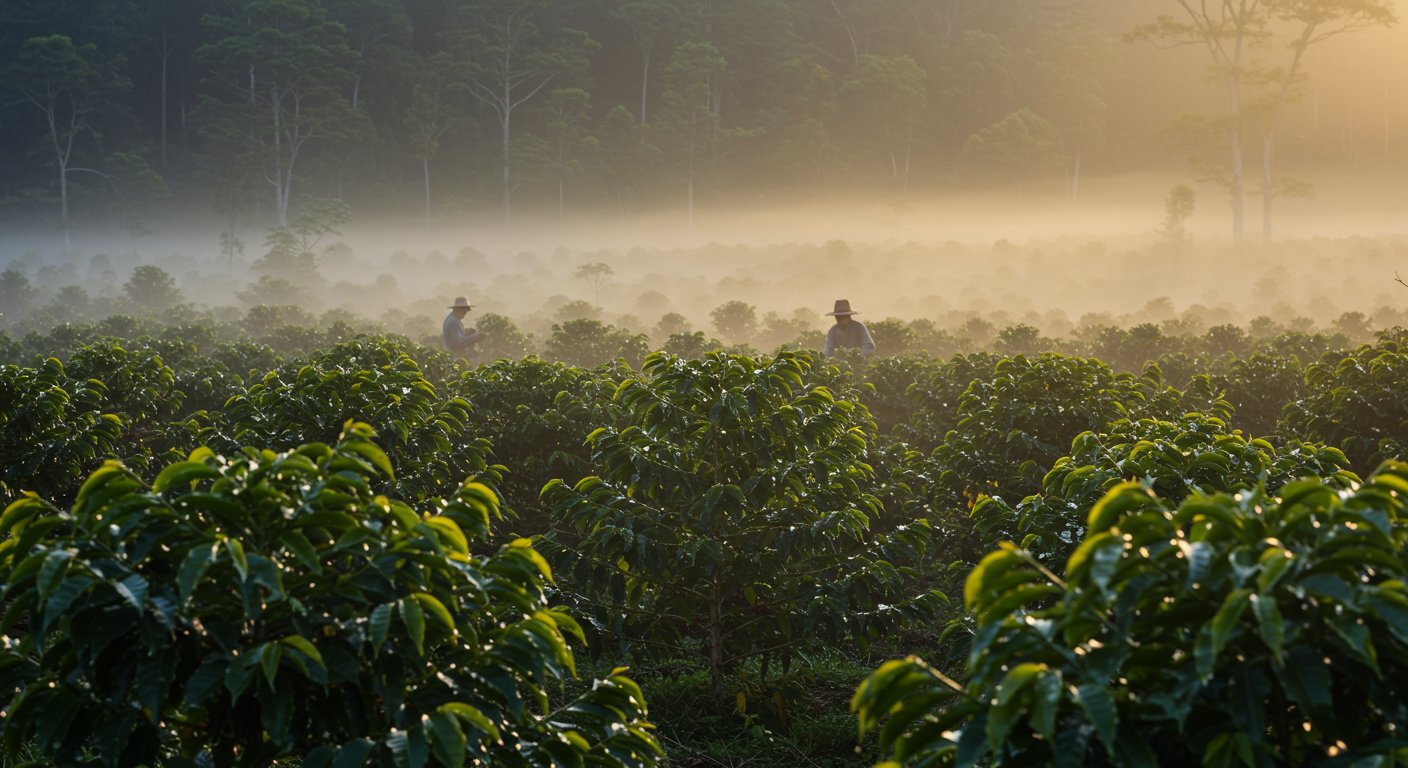
The coffee industry is greatly affected by climate change. Global warming has raised temperatures, intensifying the spread of pests and diseases and the decline in harvest yields.
Arabica, which grows in highlands in particular, is vulnerable to rising temperatures, and multiple research reports state that "the areas suitable for cultivation will shrink significantly by 2050" (Climate Change Biologically and others). Various countries are advancing efforts toward sustainable production, such as developing heat-tolerant varieties and introducing agroforestry (forest farming).
Efforts toward sustainability
In many producing countries, smallholder farmers carry out production, and price volatility and an unstable distribution structure pose challenges. Against this backdrop, Fairtrade and Rainforest Alliance certification are drawing attention.
Through these mechanisms, a movement is spreading to help producers trade at fair prices and to reconcile environmental conservation with improved livelihoods. Consumers, too, have come to prioritize "ethical choices" over "cheapness," giving rise to a shift in social awareness through coffee.
Summary: the future of Japan's coffee imports seen through data
Japan's coffee imports are accounted for by the top three countries—Brazil, Vietnam, and Colombia—at about 80% of the total. However, along with rising interest in specialty coffee, imports from Central American and African countries are also steadily increasing.
Green bean imports in 2024 were about 360,000 tons, maintaining the world's fourth-largest scale on a consumption basis. The fact that consumption stays flat even as the population declines shows the importance of coffee in Japanese people's lifestyles.
Going forward, while being affected by shifts in international developments and climate change, we can expect the expansion of the quality-focused specialty coffee market, the growth of decaf and plant-based products to match health-consciousness, and stronger efforts toward sustainability.
Coffee is a presence that reflects the world's diversity, beyond being merely a drink. Behind a single cup of coffee, the producing country's climate, culture, and people's lives are condensed. By knowing the data, we can more deeply understand the value of the coffee we drink daily.