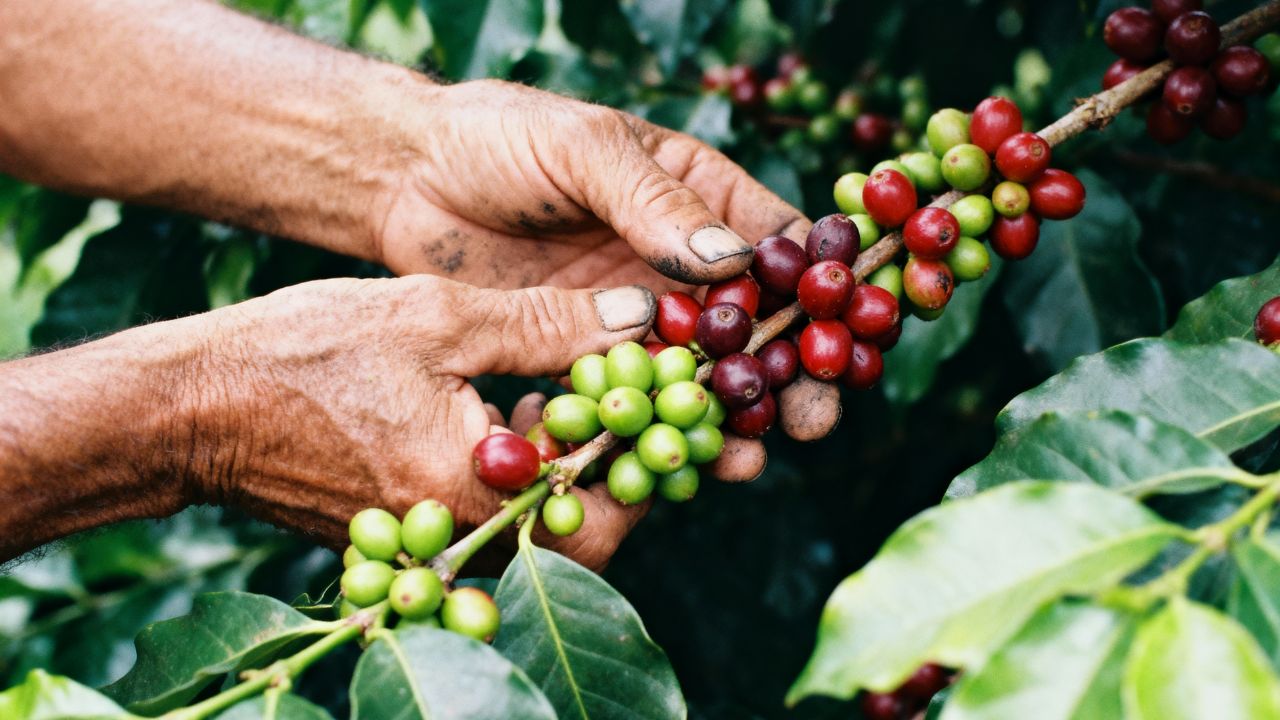
Have you ever thought about where your morning cup of coffee comes from?
In fact, the world’s coffee-growing regions have something in common: they are concentrated in a specific band centered on the equator. This belt-shaped zone is called the “Coffee Belt,” a golden region that produces more than 170 million bags of coffee a year. From Brazil to Ethiopia to Vietnam, over 70 countries fall within this area, and more than 2.5 billion cups of coffee are consumed worldwide every day.
This article takes a close look at the present and future of coffee-growing regions—from the geography of the Coffee Belt and the flavor differences among major origins to the 2050 problem brought on by climate change.
What Is the Coffee Belt? The Geographic Conditions Ideal for Cultivation
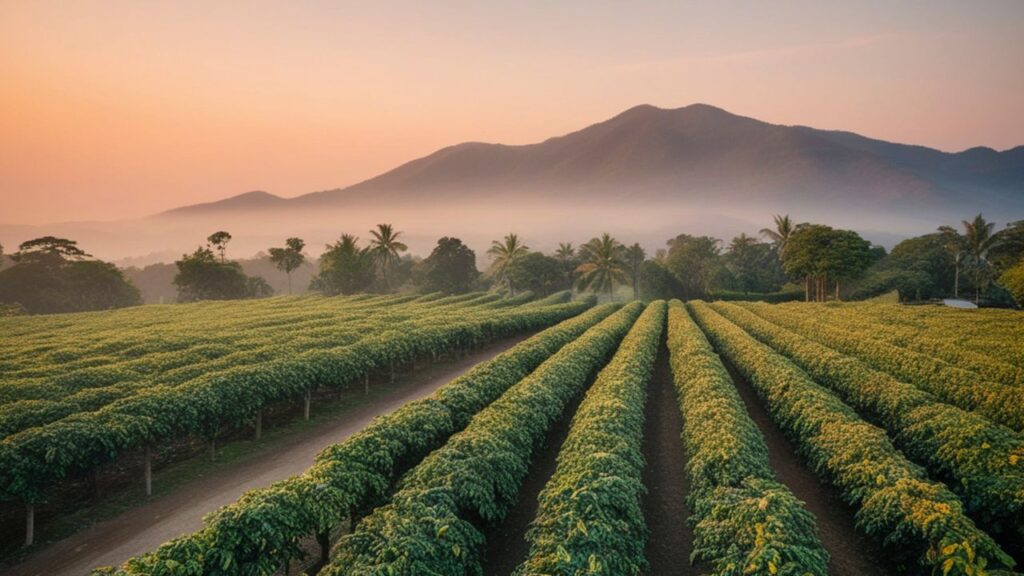
The Coffee Belt refers to the band of land straddling the equator, from 25° north to 25° south latitude.
Also known as the “Coffee Zone,” this range has the climatic conditions coffee cultivation requires: a warm tropical climate, adequate rainfall, rich volcanic soil, and highlands with a wide gap between day and night temperatures. When these factors come together, they produce fragrant, high-quality coffee beans.
The Major Regions Within the Coffee Belt
The Coffee Belt is broadly divided into three regions.
Central and South AmericaMajor producers here include Brazil, Colombia, Guatemala, Costa Rica, Jamaica, and Peru. The region boasts the world’s largest production volume and is known for its well-balanced flavor. Brazil alone accounts for roughly one-third of the global share, supplying large quantities of consistently high-quality Arabica.
AfricaAfrica is represented by Ethiopia, Kenya, Tanzania, Rwanda, and others. Beginning with Ethiopia, regarded as coffee’s birthplace, the region produces many distinctive beans with fruity, vibrant aromas. With high altitudes and rich acidity, it is home to a concentration of origins highly prized as specialty coffee.
Asia and the PacificThis region includes Vietnam, Indonesia, and India. Vietnam is the largest producer of Robusta and the world’s second-largest coffee exporter. With its strong bitterness and bold, full-bodied flavor, it is indispensable to instant coffee and espresso blends.
Japan and the Coffee Belt
Most of Japan lies between 20° and 46° north latitude, outside the Coffee Belt.
That said, Ishigaki and Miyako islands in Okinawa Prefecture (latitude 24°N) do fall within the coffee belt. Chichijima in the Ogasawara Islands, part of Tokyo (Father Island sits at roughly 27°N), falls just outside this article's definition (25°N-25°S), but taking advantage of its subtropical climate, Japan's first attempt at coffee cultivation was made there in 1878, in the Meiji era, and a harvest came four years later — though it never took hold on a lasting basis. Today, small-scale coffee farms operate in places such as Okinawa's main island, Ishigaki, Tokunoshima in Kagoshima Prefecture, and Chichijima in the Ogasawara Islands.
Japan is the world’s third-largest coffee importer, and with the spread of convenience-store coffee and third-wave specialty shops, coffee is shifting from a simple indulgence to a symbol of lifestyle.
Major Coffee Belt Origins and Their Flavor Characteristics
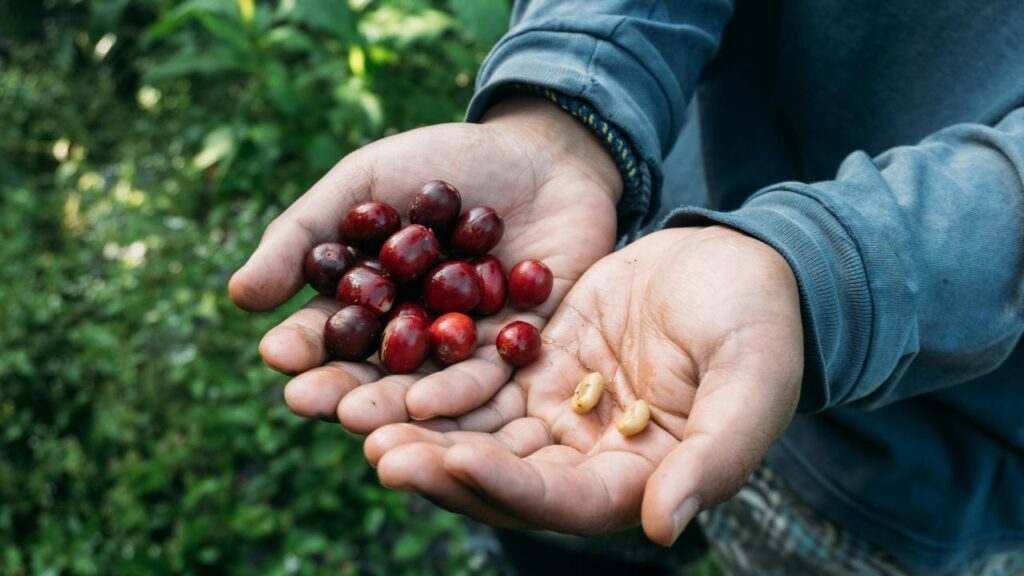
Coffee’s flavor changes dramatically depending on the origin.
What creates these differences is the climate, altitude, soil, and the variety being grown. About 70% of the coffee traded worldwide is Arabica, with the rest being Robusta. Arabica is grown in highlands at 1,000 to 2,000m, characterized by rich acidity, aroma, and a refined flavor. Robusta, by contrast, is a hardy variety that grows even in the lowlands, with a high caffeine content and strong bitterness.
Characteristics of Central and South American Origins
Brazil is the world’s largest coffee producer. It has a good balance of acidity and sweetness, with a mellow, gentle body. Its consistent quality and large-scale production make it the base of many blends.
Colombia is famous for its mild, high-grown Arabica. With superbly balanced flavor and consistent aroma, and a government that puts effort into quality control, it enjoys high international acclaim.
Guatemala’s appeal lies in the toasty sweetness and deep finish produced by its volcanic soil and high altitude. With 14 distinct ecosystems, it yields coffees with diverse flavor profiles that vary by region.
Jamaica’s Blue Mountain is known as a rare, high-quality, well-balanced coffee. Its clear, refined flavor is highly prized by coffee lovers around the world.
Characteristics of African Origins
Ethiopia is regarded as the birthplace of coffee. It is known for floral, fruity aromas reminiscent of flowers and fruit, producing many beans with distinctive character. Many of its beans are grown in conditions close to wild cultivation, giving them a unique terroir.
Kenya is prized for its bright acidity and rich aroma. High-altitude cultivation yields dense beans with citrusy, lively acidity and a complex, wine-like flavor.
Tanzania is a well-balanced coffee known by the name “Kilimanjaro.” Beans grown in volcanic soil have a good balance of acidity and sweetness and a mellow mouthfeel.
Characteristics of Asia-Pacific Origins
Indonesia’s Mandheling is known for its distinctively deep body and bitterness. The unique Sumatran processing method, known as wet-hulling, gives it an earthy, robust flavor.
Vietnam is the largest producer of Robusta and holds an important position in the global coffee market. Its powerful bitterness and punchy flavor make it perfect for espresso and instant coffee.
Hawaii’s Kona coffee is known as a rare luxury. Its appeal is a mellow, full-bodied flavor born of volcanic soil and a warm climate.
The Coffee 2050 Problem and the Impact of Climate Change
The coffee industry now faces a serious crisis.
A 2015 research paper, “A Bitter Cup,” presented the alarming prediction that by 2050 the land suitable for growing coffee will be cut in half. This issue, known as the “Coffee 2050 problem,” could increase the risk of poverty for producers and lead to future coffee shortages.
The Concrete Impacts of Climate Change
Rising temperatures deal a direct blow to coffee cultivation. Arabica, in particular, which grows at high altitudes, is sensitive to temperature increases, and its quality declines once temperatures move outside the optimal range for growing. Research suggests that even a 1-degree rise in temperature can significantly reduce yields.
Changes in rainfall are also a serious problem. Coffee needs a moderate amount of rain, but climate change is making the patterns of the rainy and dry seasons irregular. Unpredictable rainfall makes cultivation planning difficult and causes shifts in harvest timing and variability in quality.
The spread of pest and disease damage cannot be overlooked either. Warming has expanded the range of insect activity, reaching even high-altitude areas that previously saw little damage. Diseases such as coffee leaf rust are also worsening with rising temperatures, causing major economic losses for producers.
The intensification of tropical cyclones is another concern. As hurricanes and typhoons grow more powerful, physical damage to coffee farms increases, raising the risk that crops will be lost just before harvest.
Shifting Origins and New Growing Areas
To adapt to climate change, coffee-growing areas are on the move.
In traditional origins, cultivation is shifting to higher elevations. To escape rising temperatures, growers are trying to cultivate at higher altitudes, though the available land has its limits. A shift to higher latitudes is also being seen, and cultivation is becoming possible even in regions that were previously outside the Coffee Belt.
Some point out that the range of the Coffee Belt itself is expanding due to global warming. However, growing coffee in new origins takes time, and reproducing the quality cultivated in traditional regions is no easy task.
Efforts toward sustainable coffee production
The coffee industry faces a crisis, but efforts toward a solution are also gaining momentum.
Countries are developing heat-tolerant varieties. By researching and developing new varieties resistant to rising temperatures, they aim to maintain future production. The introduction of shade trees and agroforestry is also spreading as a way to block direct sunlight and improve the soil’s water retention.
Fairtrade and certification systems
In many producing countries, small-scale farmers carry out the production, and price volatility and instability in the distribution structure are ongoing challenges.
Fair trade is a system that supports producers so they can trade at fair prices. By reducing intermediaries and creating a structure that returns profits directly to producers, it supports sustainable production. Consumers, too, are coming to value “ethical choices” over “low prices,” and demand for fair-trade-certified coffee is rising.
Rainforest Alliance certification is an initiative that balances environmental conservation with improved livelihoods. Farms that meet a wide range of criteria—forest protection, water-resource management, protection of workers’ rights, and more—can receive certification. Earning certification helps producers strengthen their competitiveness in international markets.
Making Use of Coffee By-Products
To improve sustainability, the use of coffee by-products is also advancing.
Coffee cherry pulp (cascara) was traditionally discarded, but over the past few years it has been dried and used as a tea. Characterized by a faint sweetness and fruity flavor, it's drawing attention as a new beverage.
Coffee-leaf tea also holds new possibilities. Tea made from coffee leaves has a moderate caffeine content and a distinctive flavor. Because it can be produced without regard to the harvest season, it also helps diversify farmers’ income sources.
Reviving “forgotten coffees” is another effort underway. Varieties once cultivated but abandoned for commercial reasons are being rediscovered in an effort to preserve diversity.
Third-Wave Coffee and the Shift in Consumer Awareness
Coffee culture is evolving dramatically.
“Third-wave coffee,” which spread mainly from the United States, is a movement that emphasizes transparency about origin, producers, and the roasting process. We have entered an era in which consumers are conscious of “who grew the beans, where, and how,” and find value in the producer’s story.
Attention to single origin (single farm) has grown, and bean-origin labeling has become more detailed. It is now common to specify not just the country but the region, farm, altitude, and processing method. Diverse roasting styles such as light and medium roasts have spread, and a culture of enjoying the bean’s inherent character has taken root.
The Spread of Experience-Based Coffee Culture
In today's coffee market, value is shifting from quality alone toward experience.
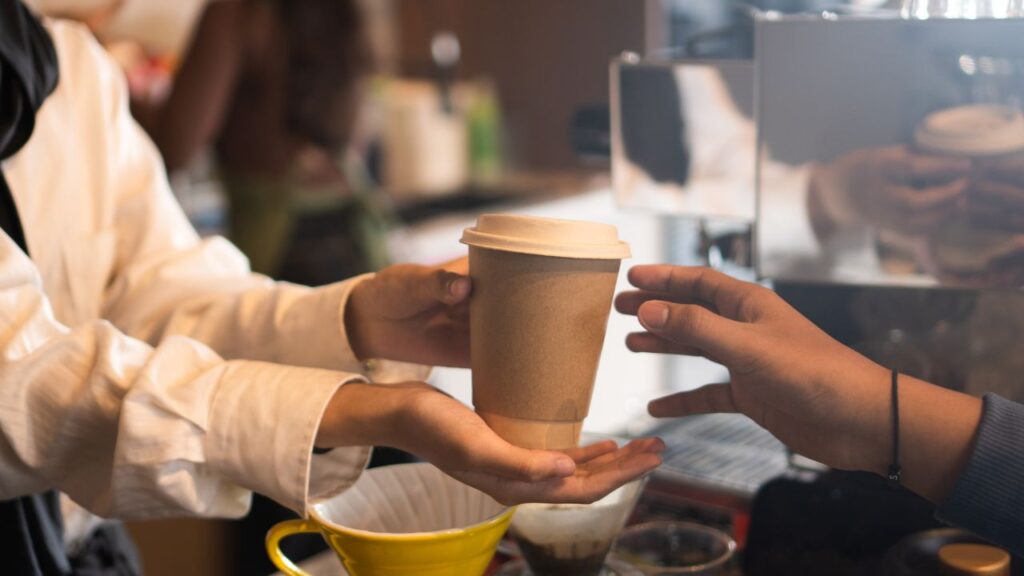
Subscription-style coffee services are gaining popularity. Services that deliver beans from a different origin each month let consumers enjoy coffees from around the world at home. The live experience of a barista carefully brewing each cup is also valued, and coffee shops are shifting from mere points of purchase to spaces for experience.
Demand is also rising for rare products, such as region-limited single origins. Limited lots and beans given special processing methods enjoy strong popularity among coffee enthusiasts.
Meeting Diversifying Consumer Needs
Products that cater to health-consciousness and diverse lifestyles are also expanding.
Decaffeinated coffee has improved dramatically in flavor thanks to advances in technology. It is embraced by a wide range of people, including those who are pregnant or who want to enjoy coffee at night. Plant-based lattes made with oat milk or almond milk are also popular. As a choice that balances a lower environmental footprint with health considerations, they have been especially well received by younger generations.
Coffee has become a medium that connects people and cultures, taking on a presence that goes beyond a mere beverage.
Summary: The Coffee Belt Sustains the World’s Mornings
The Coffee Belt is coffee cultivation’s golden zone, spreading across the region from 25° north to 25° south latitude centered on the equator.
In this region, which includes more than 70 countries, over 170 million bags of coffee are produced each year and more than 2.5 billion cups are consumed worldwide every day. Major origins including Brazil, Vietnam, and Colombia each produce distinctive flavors through their own climate, soil, and cultivation methods.
Yet the 2050 problem caused by climate change is serious. In response to the prediction that suitable land will be halved, a wide range of efforts is underway: developing heat-tolerant varieties, introducing agroforestry, and supporting producers through fair trade and Rainforest Alliance certification.
With the spread of third-wave coffee, consumers have come to find value in the stories of origins and producers. Through growing attention to single origin, the development of experience-based coffee culture, and responses to diverse needs such as decaf and plant-based lattes, coffee culture is becoming even richer.
A single cup of coffee distills the landscape of its origin, the effort of its producers, and the future of the global environment. Tasting coffee is also a way to feel the work of someone, somewhere in the world, and the environmental issues at stake.
The next time you drink coffee, why not take a moment to think about where the beans came from and the people who grew them? That small awareness is a step toward sustaining a sustainable coffee industry.