Vietnam is one of the world's leading coffee producers, and in Robusta production in particular it boasts one of the world's top rankings.
This article explains, from a resident's perspective, the features and types of Vietnamese coffee, popular brands, and how to choose souvenirs.
What is Vietnamese coffee? Its features and differences from other countries' coffee
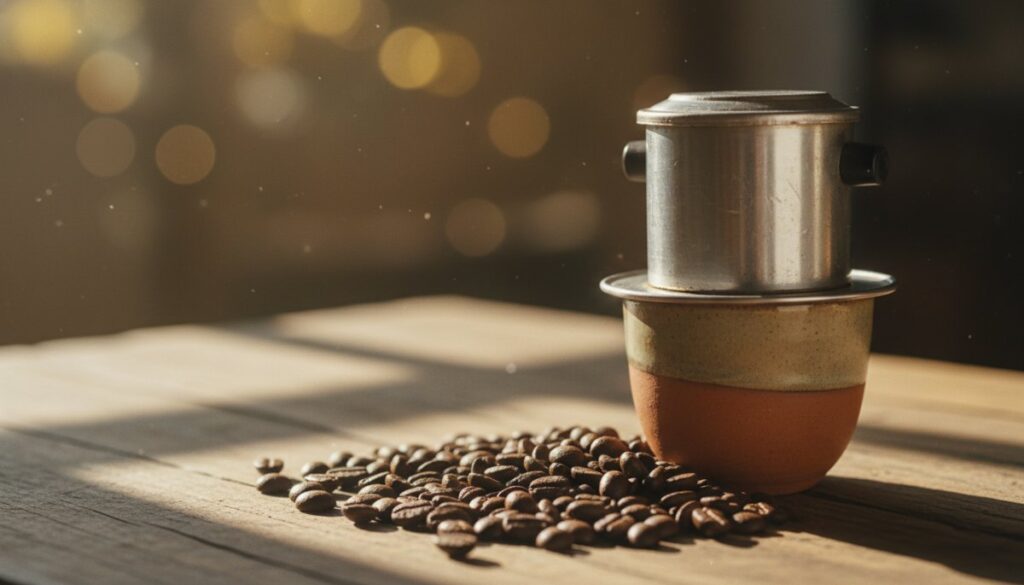
The coffee common in Japan mainly has a clean flavor using Arabica. Much of the coffee served at Japan's major café chains uses Arabica.
On the other hand, Vietnamese coffee features the powerful bitterness and rich, chocolate-like aroma unique to Robusta.
At first you may not be used to that distinctive bitterness.
But by learning the history and features behind Vietnamese coffee's development, you can understand that its flavor is an appeal born from Vietnam's unique climate and culture.
The history of Vietnamese coffee | a coffee culture that spread from the French rule era
For over 130 years, Vietnamese coffee has walked together with the turbulent modern history of colonial rule, war, and economic opening. Let's look back on that journey in a timeline.
| Era | Main events |
|---|---|
| 1850Era | French missionaries bring Arabica into Vietnam |
| 1880Era | The first commercial coffee plantations are established. Full-scale cultivation in the Central Highlands begins |
| 1975Year | Reunification of North and South. The coffee industry is nationalized |
| 1986Year | Marketization under the Doi Moi policy. Production increases all at once |
| 2000Era | Leaps to become the world's second-largest coffee exporter. International recognition is established |
■ 1850The [XXXX]s to1900Early [XXXX]s: colonial rule and the start of coffee cultivation
Coffee was brought in by France, which ruled Vietnam at the time. In the 1880s the first commercial plantations were established in the Central Highlands, and as Robusta adapted splendidly to the local soil and tropical climate, cultivation expanded rapidly.
■ 1945〜1975The year [XXXX]: stagnation of the coffee industry due to war
The long-term war from the independence movement through the Vietnam War (to 1975) dealt a devastating blow to coffee plantations.
With the war's end in 1975, the coffee industry was nationalized.
■ 1986From the year [XXXX]: the Doi Moi policy opens the door to becoming a coffee power
With the "Doi Moi policy" adopted in 1986, marketization advanced, and farmers became able to freely grow and sell their crops.
Along with rising production motivation, cultivation area and output expanded rapidly. In 2000 it leaped to become one of the world's leading coffee exporters, a position it has maintained to the present.
Today, interest in specialty coffee is rising at home and abroad, and the reputation of Vietnamese coffee is entering a new phase.
Vietnam's coffee production and its relationship with Japan
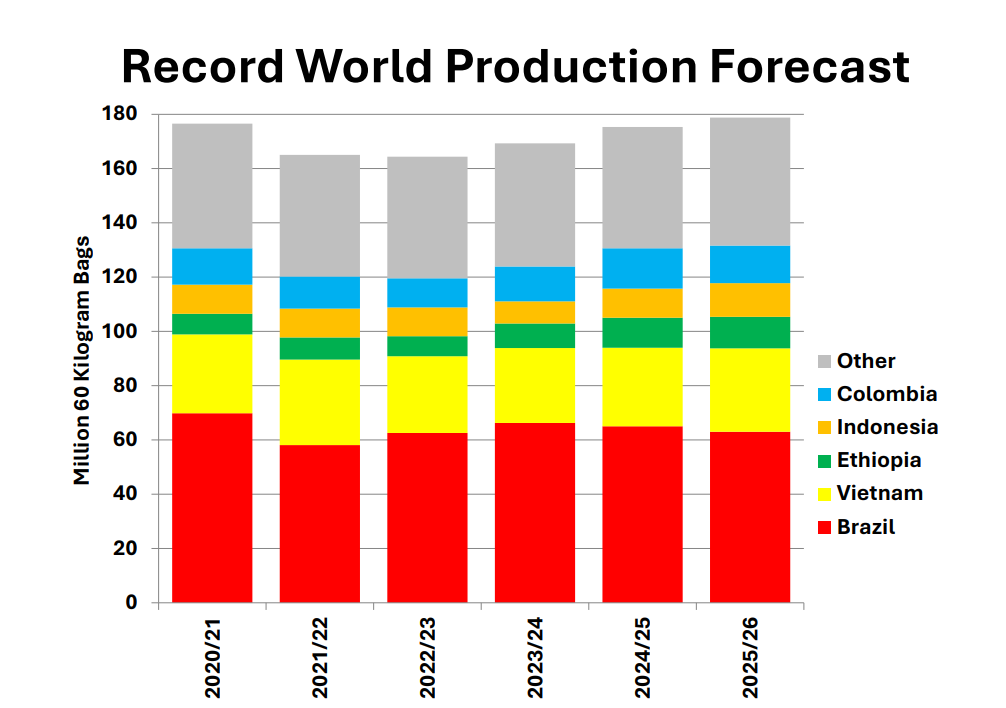
Source:Coffee: World Markets and Trade(2025/12)
According to the U.S. Department of Agriculture (USDA), Vietnam's coffee production boasts one of the world's top rankings.
It accounts for about 20% of the world's total coffee production, and if limited to Robusta, its output is one of the world's top. Vietnam and Brazil alone account for about half of the world's total production.
In Japan too, imports of Vietnamese-grown coffee beans are increasing year by year, and looking by country, it ranks second after Brazil.
The instant coffee and canned coffee we drink daily often use Vietnamese-grown Robusta. Even those who think "I've never drunk Vietnamese coffee" may be consuming it without realizing.
Types of Vietnamese coffee | the difference between Robusta and Arabica
Coffee beans are broadly divided into two types: Arabica and Robusta (Canephora).
Vietnam is the world's largest Robusta power, with Robusta accounting for about 90 to 95% of total output, but in these past few years Arabica cultivation has also increased, and its reputation as specialty coffee is rising.
The difference between Robusta and Arabica (comparison table)
| Item | Robusta | Arabica |
|---|---|---|
| Type | Robusta (Canephora) | Arabica |
| Suitable cultivation area (elevation) | Lowlands (300 to 800m) | Highlands (900m and above) |
| Flavor character | Strong bitterness, body, and earthiness | Rich aroma, moderate acidity, body |
| Caffeine content | About 1.7 to 4% (about twice Arabica) | About 0.8 to 1.4% |
| Resistance to pests and disease | Strong | Relatively weak (leaf rust, etc.) |
| Main uses | Instant coffee, canned coffee, for blends | Drip coffee, espresso, specialty |
| Price range | Relatively inexpensive | Somewhat expensive |
Why Vietnam is a Robusta power
Behind Vietnam specializing in Robusta cultivation, there are mainly two reasons: climate and elevation.
Climate
Vietnam's Central Highlands have a hot, humid tropical climate, with many low-elevation areas spread out. Arabica prefers cool highlands above 1,000m, but Robusta grows even in lowlands of 300 to 800m. Vietnam's climate and soil conditions were optimal for Robusta.
Production efficiency
Robusta has high resistance to pests and disease, and the amount of beans harvested from a single tree is large, so stable mass production is possible.
Because cultivation costs are kept lower than Arabica, as a result of putting national effort into Robusta cultivation, it became the world's largest Robusta producer.
Vietnam's main coffee-producing areas | Buon Ma Thuot, Da Lat, Son La
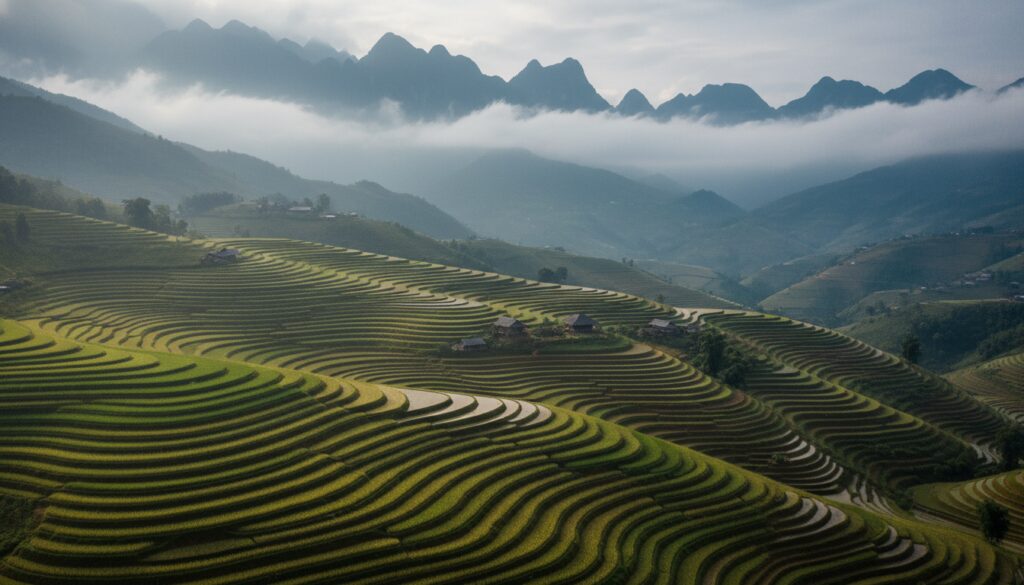
Vietnam's coffee-producing areas center on the Central Highlands, and the cultivated varieties and flavors differ by producing area.
Buon Ma Thuot | the center of Robusta production
Buon Ma Thuot in Dak Lak Province is warm and has high rainfall year-round, blessed with fertile volcanic soil. This environment nurtures the deep body and strong bitterness unique to Robusta, exported worldwide as instant coffee and blend material.
Representative Vietnamese coffee brands, starting with Trung Nguyen, are also based in Buon Ma Thuot.
Not only coffee plantations; there are also facilities where you can deepen your knowledge of coffee, such as the "Trung Nguyen Coffee Village" and the "World Coffee Museum," and it's also called the "capital of Vietnamese coffee."
Da Lat | a prestigious growing area for Arabica
In Vietnam, Robusta is mainly produced, but Da Lat in Lam Dong Province, located at an elevation of about 1,500m, is one of Vietnam's leading Arabica producing areas. With a cool annual average temperature of about 17 to 18°C, it was developed as a summer resort in the French colonial era.
Among Da Lat coffees, especially famous is "La Viet." There are specialty shops even in big cities such as Hanoi and Ho Chi Minh City. Those who aren't fond of the bitterness unique to Robusta, do give it a try.
Son La | an emerging producing area in the north
Son La Province is a relatively new coffee-producing area located in northwestern Vietnam. Ethnic minorities such as the Thai and Hmong produce coffee while protecting traditional farming methods, centered on Arabica cultivation.
At authentic cafés in Hanoi and Ho Chi Minh City, you can taste coffee using beans from the Son La region. Its clean flavor without off-notes is something you'll want to taste during a stay in Vietnam.
Recommended cafés where you can enjoy Vietnamese coffee
When you travel in Vietnam, do enjoy the coffee together with the atmosphere of the place at a local café. Here we introduce recommended cafés in each city.
Recommended cafés in Hanoi
In the capital, Hanoi, you can enjoy a wide lineup from historic cafés to recently opened stylish cafés.
Recommended cafés in Ho Chi Minh City
Ho Chi Minh City has drawn worldwide attention as an emerging spot for specialty coffee in these past few years.
In the heart of Ho Chi Minh City, cafés called new-wave cafés that serve single-origin coffee using high-quality Arabica are opening one after another, and you can enjoy a refreshing flavor drinkable black.
Recommended cafés in Da Nang
Da Nang, popular as a beach resort, is dotted with seaside open-terrace cafés and cafés with superb locations overlooking My Khe Beach, where you can taste Vietnamese coffee while enjoying the view.
Recommended Vietnamese coffee souvenirs
Vietnamese coffee has a wide range of options, from instant to authentic coffee beans. Choose according to the recipient and purpose.
For coffee lovers | roastery specialty coffee
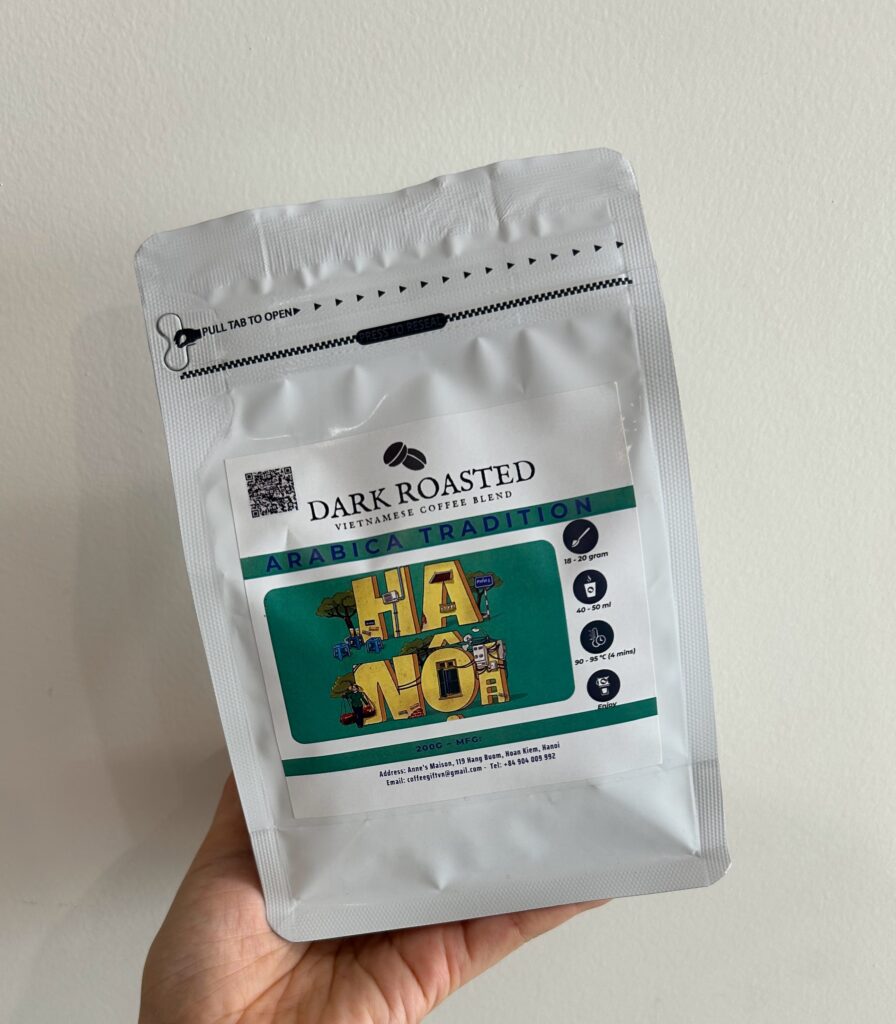
As a gift for coffee connoisseurs, Da Lat and Son La Arabica specialty coffee is appreciated.
Beans bought at a specialty coffee shop differ in aroma from the commercial products you can buy at a supermarket. Aroma and bean blends differ by shop, so check before buying.
Recommended places to buy
In Hanoi's Old Quarter, specialty coffee shops line up. Where 80% of visitors are Japanese,Anne’s Maisonyou can encounter representative Vietnamese coffee beans such as Arabica, Robusta, and civet coffee (kopi luwak).
Especially the aromatic Arabica and original blend beans are perfect as souvenirs.