Vietnamese-cacao chocolate ranges from single-origin bars to varieties with fruit or spices. Rather than choosing by brand name alone, it becomes easier to compare by cacao percentage, origin, the presence or absence of sugar, dairy, and nuts, packaging, and the preferences of the recipient.
Prices and award histories cited in this article change over time, so they are not treated as a fixed ranking. Also, "internationally awarded" does not mean "delicious for everyone" — people who find the acidity and bitterness of high-cacao chocolate off-putting may be better served by flavored varieties or lower percentages.
The Bottom Line First: 4 Things to Check Before Giving
- Whether the cacao percentage and origin are clearly stated
- Whether allergens such as dairy, nuts, and soy are labeled and verifiable
- Whether it can be transported without melting during a hot journey
- If bringing it back to Japan, whether the ingredients include any regulated items such as meat or meat extract
3 Things That Set Vietnamese Chocolate Apart
"Serious chocolate from Southeast Asia?" — plenty of people are surprised, but Vietnamese chocolate has three qualities that are rare even within Asia. Once you understand them, choosing brands and tasting become a good deal more rewarding.
World-class cocoa quality with "Heirloom Cacao" certification
Cacao from southern Vietnam is often described as having a fruity flavor, but the expression "top 10% in the world" cannot be treated as an objective ranking without a clear evaluating body and reference population. Cacao from Tiền Giang and Bến Tre provinces in the Mekong Delta region in particular has attracted attention from Western specialists for its fruity aroma and smooth mouthfeel. Bean-to-bar chocolate made from Vietnamese cacao has also been featured in the New York Times and the Financial Times.
A cluster of dedicated Bean to Bar brands
Bean to Bar means handling everything in-house, from selecting the cocoa beans through roasting, grinding, and molding. Vietnam has more than seven dedicated Bean to Bar brands in operation — MAROU, Pheva, Alluvia, T-BROS, Stone Hill, BINON CACAO and others — making it one of the leading hubs in Southeast Asia.
A blend of French colonial heritage and tropical ingredients
Cocoa-growing techniques reached Vietnam during French rule, and the production methods still carry the influence of French confectionery. On top of that, the Vietnamese style is to combine tropical ingredients like jackfruit, lychee, pomelo, and coconut. Flavored chocolates mixing in Eastern spices such as cinnamon, black pepper, and ginger have also flourished.
7 Top Chocolate Brands: Price, Character, and Who They Suit
Here are seven of Vietnam's signature chocolate brands, organized by price range, character, and who to give them to. From a special gift to a treat for yourself, you'll find the right brand for the occasion.
| Brand | Founded in | Approx. price (per bar) | Characteristics | Best for |
|---|---|---|---|---|
| MAROU | Ho Chi Minh City | 120,000–210,000 VND (720–1,260 yen) | 6 single origins, international award history | Special gift, cocoa connoisseurs |
| Pheva | Da Nang | 50,000–80,000 VND (300–480 yen) | 18 flavors, beautiful gift boxes | Handing out to a group, combined gifts |
| Alluvia | Ho Chi Minh City | 80,000–120,000 VND (480–720 yen) | Single-estate Tien Giang cocoa, stylish packaging | Gifts for women |
| T-BROS | Da Nang | 100,000–180,000 VND (600–1,080 yen) | Founded 2017, a young Vietnamese brand | Fans of up-and-coming makers, Da Nang souvenirs |
| BINON CACAO | Ba Ria-Vung Tau | 150,000–250,000 VND (900–1,500 yen) | Farm to Bar, tasting experiences at its own plantation | Experience-based gifts, cocoa fans |
| Stone Hill | Dak Lak | 120,000–200,000 VND (720–1,200 yen) | Tree to Bar, sustainable farming | Eco-conscious buyers, lovers of rare finds |
| D’Art Chocolate | Ho Chi Minh City | 80,000–150,000 VND (480–900 yen) | Tropical fruit flavors (lychee, jackfruit, pomelo) | Novelty gifts, conversation starters |
If you can't decide on a special gift, MAROU is the safe pick; for handing out to a group, go with Pheva; and for something for women or an affordable little gift, Alluvia — those three rarely disappoint. BINON and Stone Hill are rare brands with limited distribution, so they're worth considering if you happen to spot them.
A Closer Look at 3 Major Brands
MAROU: the flagship brand with an international award history
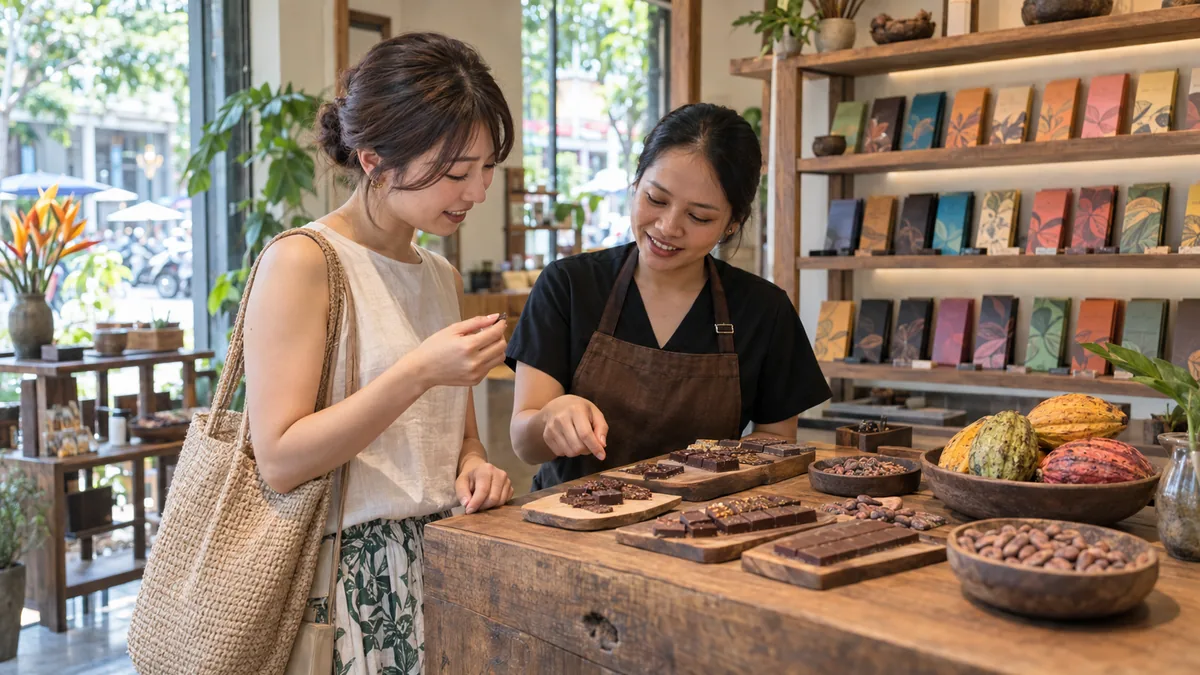
Founded in Ho Chi Minh City in 2011 by two Frenchmen, MAROU has placed multiple times at the International Chocolate Awards and the Academy of Chocolate and been featured in the New York Times and the UK's Financial Times — a craft chocolate brand that represents Asia. The only ingredients are Vietnamese cocoa and cane sugar, and bars are released by six origins — Ben Tre, Tien Giang, Dong Nai, Lam Dong, Ba Ria-Vung Tau, and Dak Lak — so its biggest draw is comparing the flavor of each region. Its flagship store "MAISON MAROU" in District 2 of Ho Chi Minh City is a tourist destination with tastings, sales by weight, and a café menu, where you can also watch the chocolate being made in-house.
Pheva: 18 flavors out of Da Nang
Founded in Da Nang's old quarter in 2009 by a Frenchman, Pheva crafts cocoa from southern Ben Tre province using French methods. It offers 18 flavors — cinnamon, black pepper, ginger, cashew, matcha and more — and the designs of its 12-piece and 24-piece gift boxes are superb. You can also buy it at the shop in the basement of Takashimaya in Ho Chi Minh City. With a good balance of price and presentation, it's a popular choice for gifts to coworkers or a group.
Alluvia: an affordable little gift for women
Based in Ho Chi Minh City, Alluvia was launched by Vietnamese entrepreneur Nguyen Ngoc Diep, who grew her family's cocoa business into the brand. It uses single-origin cocoa from Tien Giang province in the Mekong Delta, with charming packaging aimed at women. The Landmark Gift Box (about 700 yen) is affordable yet presentable, making it handy as a little gift for female coworkers or friends. You'll sometimes spot it at airport duty-free shops too, which can save you if you forgot to buy one.
The other 4 brands in a nutshell
- T-BROS (Da Nang): A young Vietnamese brand founded in 2017. Popular as a Da Nang souvenir and a new-generation craft chocolate.
- BINON CACAO (Ba Ria-Vung Tau): A Farm to Bar brand with its own plantation. Plantation tours and tastings are available too.
- Stone Hill (Dak Lak): Tree to Bar from its own plantation, practicing sustainable farming. For those who love rare finds.
- D’Art Chocolate (Ho Chi Minh City): Distinctive for pairings with tropical fruits like lychee, jackfruit, and pomelo.
How Flavor Differs Across the 6 Cocoa Regions
What makes Vietnamese cocoa fascinating is how clearly the flavor changes by region. Using MAROU's six single origins as an example, here's a breakdown of each region's flavor character.
| Growing regions | Location | Cocoa % | Flavor character |
|---|---|---|---|
| Ben Tre (Bến Tre) | Southern Mekong Delta | 78% | Nutty, with milk-caramel notes |
| Tien Giang (Tiền Giang) | Southern Mekong Delta | 70% | Fruity and light, good for beginners |
| Dong Nai (Đồng Nai) | Southern inland | 72% | Citrusy acidity with jasmine aroma |
| Lam Dong (Lâm Đồng) | Central highlands | 74% | Smoky and pleasantly bitter, for the seasoned palate |
| Ba Ria-Vung Tau (Bà Rịa Vũng Tàu) | Southern coast | 76% | Red-fruit (berry) acidity |
| Dak Lak (Đắk Lắk) | Central highlands | 80% | Bold bitterness with a woody finish |
If it's your first taste, start with Tien Giang 70%. It's fruity and light, and easy on the Japanese palate. For a special gift to a chocolate lover, go with Dak Lak 80% or Lam Dong 74%, and for a multi-origin tasting set, MAROU also offers the "Origin Discovery Box."
Where to Buy Vietnamese Chocolate? Comparing 4 Options
There are four kinds of places to buy chocolate, and the best choice changes with your purpose and budget. Here's a rundown of each.
| Where to buy | Selection | Price | Recommended for |
|---|---|---|---|
| Flagship stores (MAISON MAROU, Pheva main store, etc.) | Full lineup, including new releases | List price | Special gifts, tasting for yourself |
| Large supermarkets (Lotte Mart, GO!) | 5–10 standard items | List price | Buying several, including giveaways |
| Department stores (Vincom, Takashimaya) | 3–4 major brands | List price to slightly higher | Gifts where packaging matters |
| Airport duty-free shops | 2–3 standard brands | 1.3–1.8x city prices | A last-minute save |
If you don't want to slip up on a special gift, go to a flagship store; if you want value and are buying several, supermarkets are a sure bet. Airports are pricey, so ideally stock up in the city by the day before departure.Vietnam Shopping Guidealso lists the main shops by city.
Tips for Bringing It Home: Beating the Melt and Storing It Right
To get Vietnamese chocolate safely back to Japan and into your recipient's hands in top condition, you need to pay attention to temperature and packing.
In summer (May–October), ice packs and a cooler bag are essential
Vietnam stays at 25–35°C year-round, so chocolate starts to melt quickly if you carry it around at room temperature after buying. Keep these points in mind:
- When buying at a flagship store, ask whether they offer a cooler bag with ice packs.
- While moving around the city, store it temporarily in your hotel fridge.
- Keep it in a cooler bag right up until airport check-in.
- After arriving in Japan, use the airport's refrigerated delivery service (figure on an extra 1,000–2,000 yen).
Carry-on or checked? Temperature changes the answer
Checked baggage stays stable at cargo-hold temperatures (about 4–10°C), so checking it is fine in winter. In summer, carry-on is in the safe zone with a cabin temperature of 22–24°C, but there's a risk of melting near the counter if you wait a long time at the airport. For each airline's baggage rules, seecomplete guide to flights from Japan to Vietnamfor details.
Shelf life and storage
The shelf life of Vietnamese Bean to Bar chocolate is generally 12–18 months from production. After arriving in Japan, storing it in the vegetable drawer of your fridge (around 10°C) keeps the flavor fresh longer. After taking it out of the fridge, let it sit at room temperature for 30 minutes before opening to prevent condensation.
3 Ways to Buy Vietnamese Chocolate in Japan
For those who forgot to buy it on the trip or want to try that flavor again, here are three ways to get Vietnamese chocolate within Japan.
MAROU's official online shop (ships to Japan)
MAROU ships internationally to Japan from its official online store. You can buy the six single-origin set or limited flavors directly, and the appeal is the same selection as on the ground. Shipping runs about 5,000–8,000 yen from Ho Chi Minh City, with delivery taking roughly 1–2 weeks.
KALDI, Seijo Ishii, Amazon
KALDI Coffee Farm sometimes stocks MAROU's standard flavors during Vietnam-themed promotions. On Amazon and Rakuten Ichiba you can find parallel-imported MAROU and Pheva, priced at roughly 1.8–2.5x local prices. Choosing a shop with plenty of reviews helps you avoid quality issues.
Imported-chocolate specialty shops and Vietnamese grocery stores in Tokyo
Imported-chocolate specialty shops in Tokyo, and Vietnamese grocery stores in Takadanobaba and Shin-Okubo, sometimes carry MAROU and Pheva depending on the season. Stock varies a lot by shop, so call ahead before visiting, or order online if you definitely want it.
Summary: Choose MAROU, Pheva, or Alluvia by Occasion
Vietnamese chocolate has grown into an emerging chocolate origin where dedicated Bean to Bar brands gather, built on a blend of French colonial heritage and tropical ingredients and high-quality cocoa. You can choose by occasion among three options: MAROU for a special gift, Pheva for handing out to a group, and Alluvia for an affordable little gift. The flavor differs greatly across the six cocoa regions, so when you're there, be sure to enjoy it with a tasting.
If you want to sort out Vietnamese souvenirs in general, seeThe Complete Guide to Sweetsand2026 Souvenir Ranking, where coffee and tea can also be chosen by recipientour Vietnam souvenir guideas well.
Frequently asked questions
What is the most famous chocolate in Vietnam?
The most famous is MAROU. It has won multiple times at the International Chocolate Awards and the Academy of Chocolate and been featured in the New York Times and the UK's Financial Times — a craft chocolate brand that represents Asia. Pheva, Alluvia, T-BROS, and BINON CACAO follow.
How much does MAROU cost?
A single-origin 80g bar runs about 120,000–210,000 VND (roughly 720–1,260 yen). At the MAISON MAROU flagship store you can also do tastings and buy by weight, and the six-flavor "Origin Discovery Box" goes for around 400,000 VND (2,400 yen).
Is it true that Vietnamese chocolate tastes bad?
Flavor assessments vary with cacao percentage, origin, acidity, and sugar content. International award wins are a useful indicator of quality, but they do not guarantee personal preference. If you find the bitterness and acidity of high-cacao chocolate off-putting, beginners may find it easier to appreciate the flavor by starting with a Tiền Giang 70% bar or Pheva's flavored chocolates (nut, matcha, etc.).
Can I buy Vietnamese chocolate at the supermarket?
Yes — at large supermarkets like Lotte Mart, GO! (formerly Big C), and Coopmart, and in the basement food halls of department stores such as Vincom Center and Takashimaya. The standard flavors of MAROU, Pheva, and Alluvia are stocked, but limited editions and new releases are only available at the flagship stores.
Can I buy Vietnamese chocolate in Japan?
MAROU ships to Japan from its official online shop. On KALDI, Amazon, and Rakuten you can find parallel-imported MAROU and Pheva, priced at roughly 1.8–2.5x local prices. Imported-chocolate specialty shops in Tokyo and Vietnamese grocery stores in Takadanobaba and Shin-Okubo also carry it depending on the season.
Can I bring Vietnamese chocolate into Japan?
Standard commercial chocolate bars are relatively easy food items to bring home, but not all chocolate can be categorically excluded from quarantine requirements. Check the ingredients against Japan's latest quarantine conditions — particularly for meat, meat extracts, and dairy — and if in doubt, contact the Animal Quarantine Service or the Plant Protection Station. Note that chocolate melts easily in summer (May–October), so a cooler bag with ice packs or making use of cabin temperatures by carrying it as hand luggage may be necessary. Baggage rules by airline are also covered in a separate article.
In Summary: Choose a Bar the Recipient Can Enjoy, Not Just a Famous Brand
Match the chocolate to the person: high-cacao single-origin bars for cacao enthusiasts, individually wrapped pieces for groups, and fruit or nut varieties for those with a sweet tooth. Prioritize products with clear ingredient lists, cacao percentages, best-before dates, and allergen labeling over award histories and price.