ベトナムは世界有数のコーヒー生産・輸出国で、ロブスタが大きな比重を占めます。ただし年ごとの順位や比率は統計と作柄で変わるため、この記事では固定順位より、ジャコウネココーヒーを買うべきか判断できる情報を優先します。
Coffee was brought to Vietnam in the late 19th century, during the French colonial era. Introduced at first as an export crop rather than a luxury good, plantations expanded rapidly, centered on the Central Highlands. Against this backdrop, Vietnam’s coffee culture developed in a distinctive direction: “dark roast by default,” “bitterness-focused,” and “mass-production style.”
A metal filter called the phin is used for brewing, and adding condensed milk is the common way to drink it. This drinking style arose naturally to soften Robusta’s intense bitterness, and today the sight of enjoying conversation over sweet coffee at street cafés has become an everyday part of Vietnam.
Among such Vietnamese coffees, the one spoken of as being in a class of its own is civet coffee.
What is civet coffee (kopi luwak)?
Civet coffee, also called “kopi luwak,” is a method that originated in Indonesia.
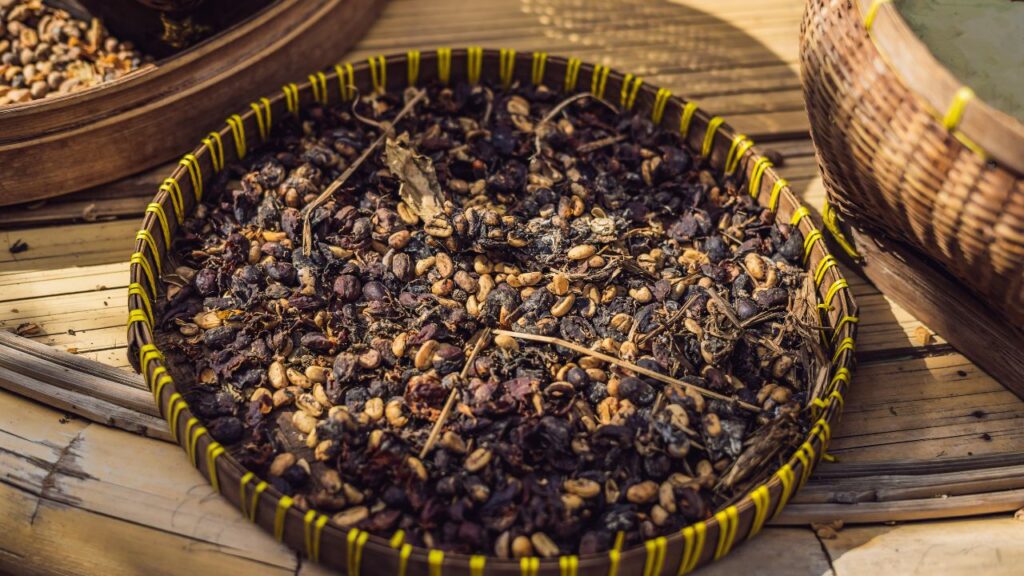
本来は、野生のジャコウネコが食べて排泄したコーヒー種子を回収・洗浄・精製する製法です。ただし商業生産では捕獲・飼育個体にチェリーを与える例があり、「完熟果だけを自由に選ぶ」という説明が常に当てはまるわけではありません。消化工程だけでおいしさが保証されるわけでもなく、豆、衛生、焙煎、保管が味を左右します。
味は豆の種類、産地、焙煎、鮮度で大きく変わり、ナッツやチョコレート、滑らかさを必ず感じるとは限りません。希少な製法と、カップとしての品質は別に評価してください。
The history and production process of civet coffee
起源として、オランダ植民地期の農園労働者が、持ち出しを禁じられた豆の代わりに排泄物から種子を拾ったという説が広く語られます。ただし歴史資料で細部まで確認できる単一の事実としてではなく、由来を説明する伝承として扱うのが慎重です。
Later, it was introduced to wealthy Westerners as “the world’s most expensive coffee” and drew attention all at once. Today it’s produced not only in Indonesia but also in Vietnam, the Philippines, and elsewhere.
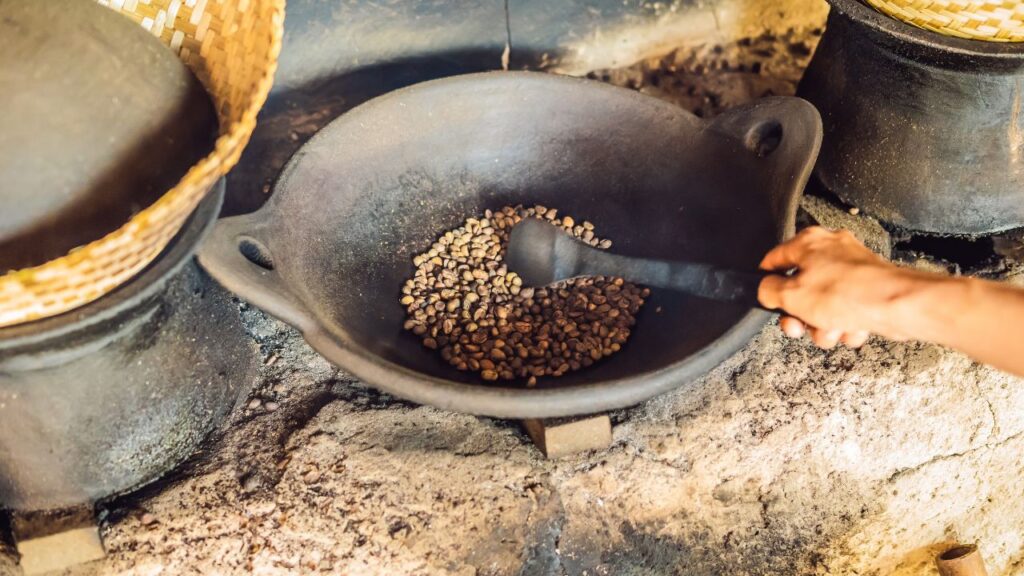
The production process is extremely labor-intensive. First the beans are collected from droppings, washed many times, then sun-dried. After that, defective beans are removed by hand-picking, and the beans are roasted in small batches. The precision of the washing and drying in particular greatly affects the flavor, and neglecting it produces off-odors and off-flavors. The higher the quality of the product, the more time and manpower go into this process.
The flavor of civet coffee and how it differs from other coffees
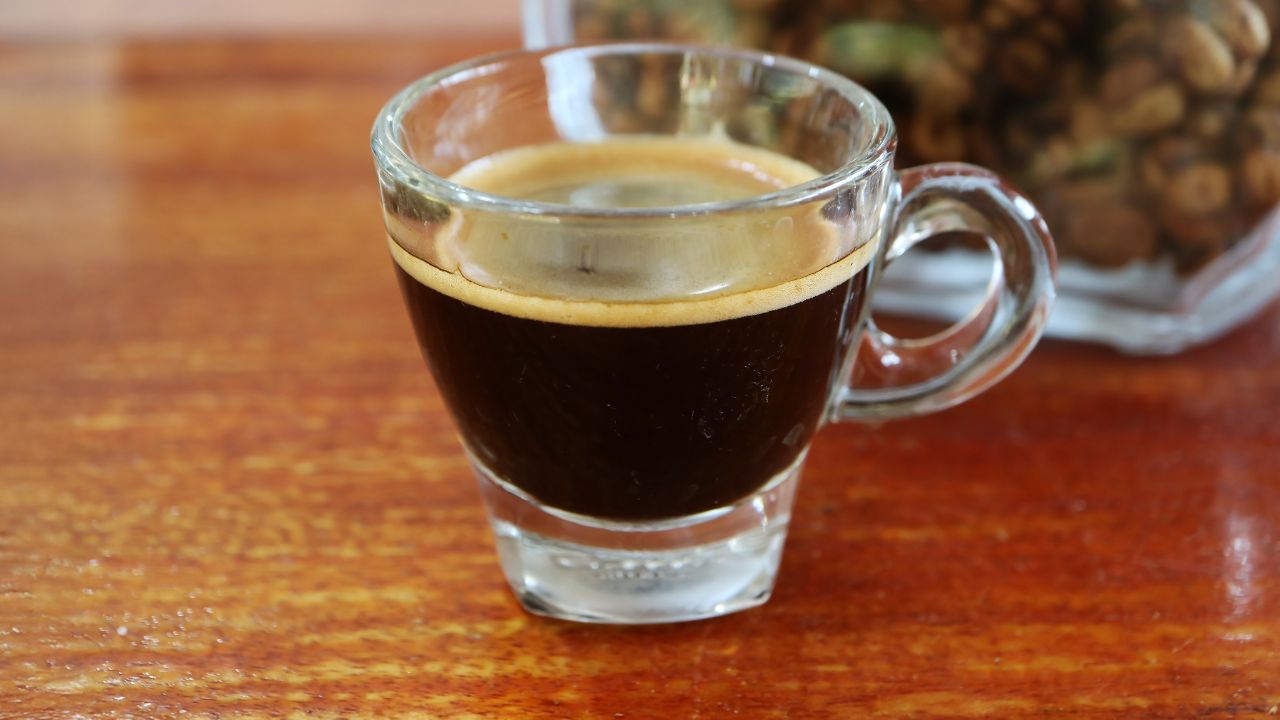
Civet coffee’s aroma is gentle, its acidity round, and its bitterness restrained. Behind the fruitiness you can sense flavors of nuts and chocolate, and the aftertaste is exceptionally clean.
The biggest difference from ordinary coffee is that an animal is involved in the production process. Because humans don’t harvest it—civets naturally sort out the fully ripe cherries—it can’t be mass-produced. This “scarcity” creates its rarity and ties directly to the price.
Why civet coffee is so expensive
The reasons civet coffee is expensive are clear: the production process is almost entirely by hand, the harvest is extremely small, and global demand is rising. These three factors overlap.
While ordinary Robusta is cheap and distributed in large quantities, civet coffee is treated as a luxury indulgence. The stricter the bean-selection criteria, the higher the quality rises—and the price rises in proportion.
購入前に最優先する動物福祉と真正性
A big problem in recent years is animal welfare. As tourism demand has expanded, cases of confining civets in cramped cages and force-feeding them coffee cherries have increased. This is far removed from the original natural selection, and it invites not only stress on the animals but also a decline in flavor.
Today, small-scale producers touting “wild-sourced” or “free-range” are emerging, but the industry as a whole is still in a transitional period. Consumers avoiding extremely cheap kopi luwak and adopting a stance of checking the production background helps make the industry sounder.
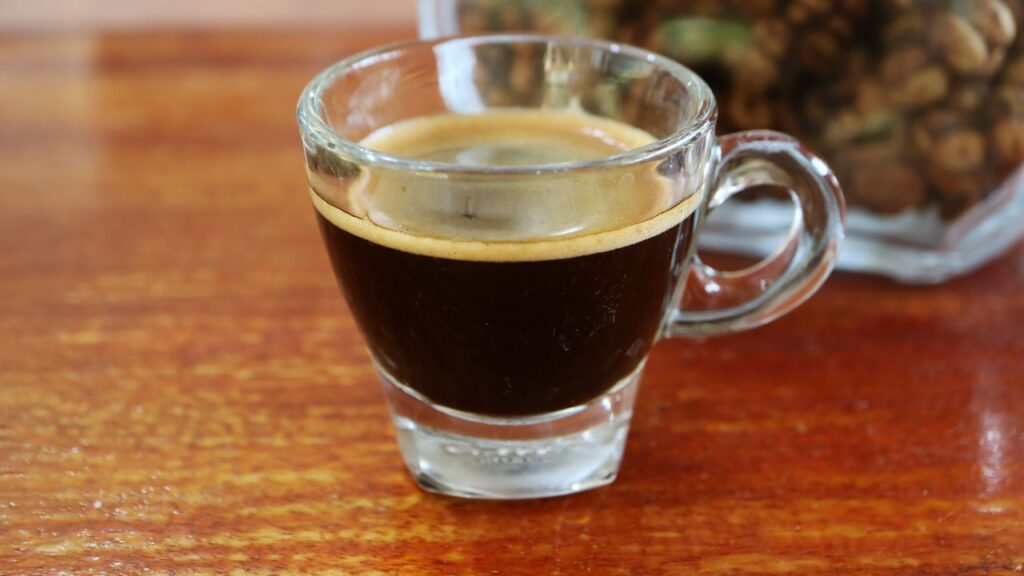
The state of civet coffee in other countries
Kopi luwak originated in Indonesia, but it’s now produced in several Southeast Asian countries, including Vietnam, the Philippines, and Thailand.
In Indonesia, Arabica is mainly used, and it’s traditional for wild-civet kopi luwak to be gathered in the high-altitude mountains of Sumatra and Java. This region’s coffee has strong earthy and spicy notes, considered the so-called “classic kopi luwak” flavor.
In Vietnam, on the other hand, much of the production is Robusta-based, tending to bring body and bitterness to the fore. It’s also often roasted darker to suit tourism demand, and quite a few products are made on the premise of being combined with condensed milk.
In the Philippines, relatively small farms are the norm, and products touting a light, Arabica-based flavor are increasing. But the market is still small and distribution is limited.
Even under the same name “kopi luwak,” the variety used, altitude, refining method, and roast design differ greatly by country, and the flavors are different enough to be called separate things. It’s more realistic to consider a product without an origin listed as difficult to judge for quality from the start.
How to buy civet coffee in Vietnam
In Vietnam, civet coffee is sold in a wide range of places—local markets, specialty coffee shops, small roasters, souvenir shops at tourist sites, and online stores. Note, however, that most of the products in circulation are either “from caged civets” or, in reality, imitations made by adding flavoring to ordinary beans.
Much of the “cheap kopi luwak” sold at tourist sites in particular is not genuine. Products in the range of a few thousand yen should, almost without exception, be treated with suspicion. True civet coffee is collected in extremely small quantities, and going through a proper process naturally makes it expensive.
The minimum conditions for a trustworthy source are these three: the production region is clearly stated, there is an explanation of whether it’s caged or wild, and the roast date is shown. If possible, it’s safer to choose a specialty shop where you can taste it, or a roaster with a direct connection to a farm.
When buying online, always check that the listing gives a specific farm name and refining method—not just vague phrases like “100% kopi luwak” or “finest grade.”
The civet’s diet and cultural background
The civet is originally an omnivorous, nocturnal animal that eats fruit, insects, and small creatures. In the wild, it roams the forest and uses its sense of smell to find ripe, high-sugar fruit. Coffee cherries are just one of its options, not a staple.
In other words, true kopi luwak is a byproduct that arises by chance from “fully ripe cherries the civet happened to choose.” When artificial feeding or force-feeding enters the picture, not only does the quality of the beans fall, but the animal’s health is also severely harmed.
In some regions of Vietnam, the civet has long been spoken of as “a bringer of wealth and good fortune.” In rural areas, lore still remains that it’s auspicious when a civet appears near the house. For that reason, it was originally treated not as a target of hunting but as a creature to coexist with.
But as the tourism industry has expanded, the civet has come to be treated as “a tool for producing luxury coffee,” and its original cultural value is fading rapidly. What truly deserves appreciation today is not mass-produced product but the very small lots produced in a form close to the natural environment.
Choosing civet coffee is not merely selecting an indulgence. Judging it while including the ecosystem, culture, and human involvement behind it is the stance of engaging properly with this coffee.
結論:味だけが目的なら、別の高品質豆も比較する
高価格は、希少性・物語・流通コストを反映しても、味の優秀さを保証しません。動物を介さない高品質なベトナム産アラビカやファインロブスタも飲み比べ、価格、味、倫理性のどれにお金を払うのか決めてください。
- ケージ飼育や動物展示がないか
- 野生採取をロット単位で追跡できるか
- 豆の産地・品種・焙煎日があるか
- 極端に安い「100%」表示ではないか
Summary
Civet coffee is not simply a luxury coffee. It’s an extremely special coffee that comes together through a complex intertwining of multiple elements: the coffee culture of Southeast Asia, including Vietnam; a history that originated in Indonesia; the peculiar method of natural selection by an animal; and the animal-welfare problems thrown into relief in the modern era.
In terms of flavor, its direction differs from ordinary coffee, with restrained bitterness, a rounded mouthfeel, and a distinctive aroma. But while its scarcity draws attention, expanding demand has spread improper caging and mass-production-style “pseudo kopi luwak,” and truly natural civet coffee grows scarcer year by year.
That’s exactly why what matters is not choosing it just because “it’s luxurious” or “it’s famous.” Which country it’s made in, in what kind of environment the civet was raised, and with what stance the producer approaches it—only by choosing after checking that background does the value of this coffee come into view. It’s more realistic to consider extremely cheap products, or those of unknown origin, as something different from true civet coffee.
Civet coffee is not a drink for enjoying flavor alone. The culture of the land, the ecology of the animal, and human economic activity are all condensed into a single cup. If you’re going to experience it, savor not just the aroma and flavor but the whole story behind it. That is the most important stance for engaging properly with this “special coffee.”