Getting to know Vietnam's soup culture
麺料理だけでなく、ご飯に添える汁物まで見ると、ベトナムのスープ文化の幅が分かります。好みを決めつけず、まずは「麺入り」か「食卓の汁物」かを区別すると選びやすくなります。
Just as miso soup is indispensable for Japanese people, in Vietnamese home cooking the soup "canh" — leafy or root vegetables with protein like pork, shrimp, or fish added — is indispensable at the table. Soup has its own recipe in each household, and it's a memorable, special dish especially for Vietnamese living alone or away from their hometown.
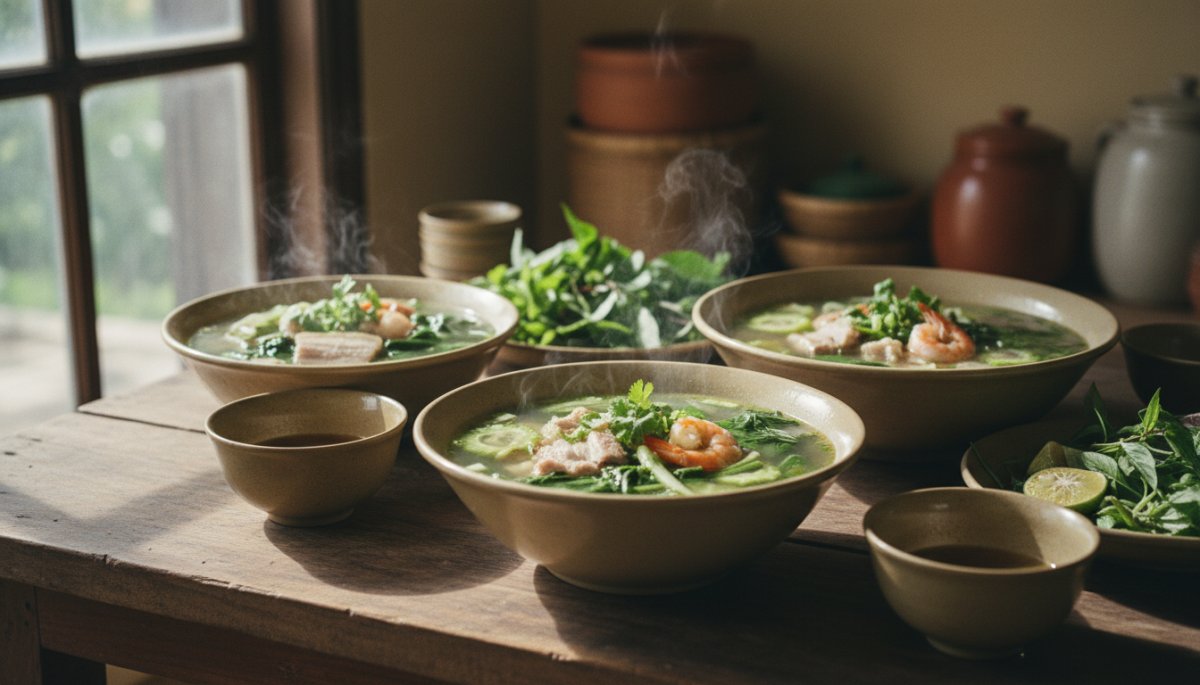
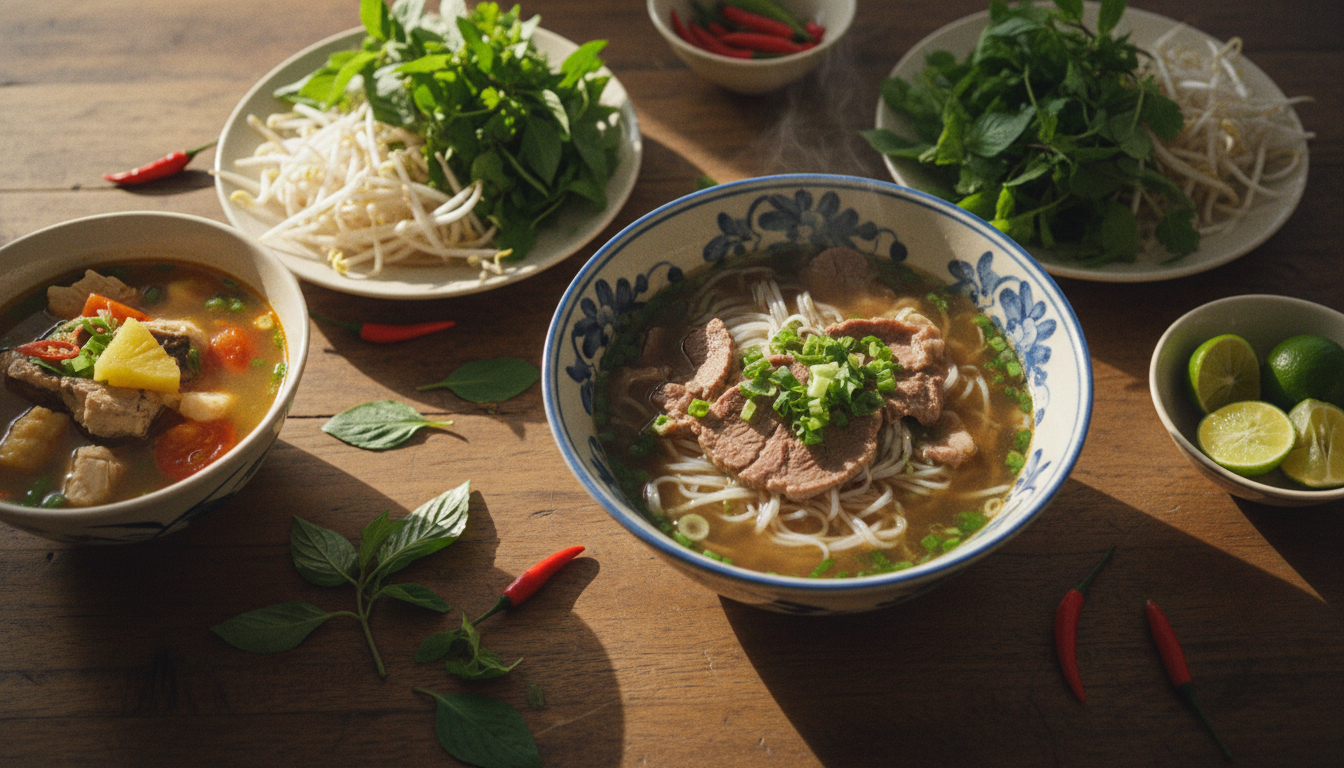
Vietnamese soups are broadly divided into noodle soups like pho and bun, and canh, a staple of home cooking. Each has regional character, and the interesting point is that differences in seasoning and ingredients can be seen between the north and the south.
Pho and bun | the noodle soups that represent Vietnam
The basics and types of pho
Pho is a rice-flour noodle originating in northern Vietnam and said to be Vietnam's national dish.
The ingredients are dried noodles made by kneading rice flour and water, spreading it thin and steaming it into sheets, then cutting it into noodles with a cutting blade. Vietnam is known as the world's second-largest coffee producer, but in fact rice production is thriving too, and a food culture using rice flour is deeply rooted.
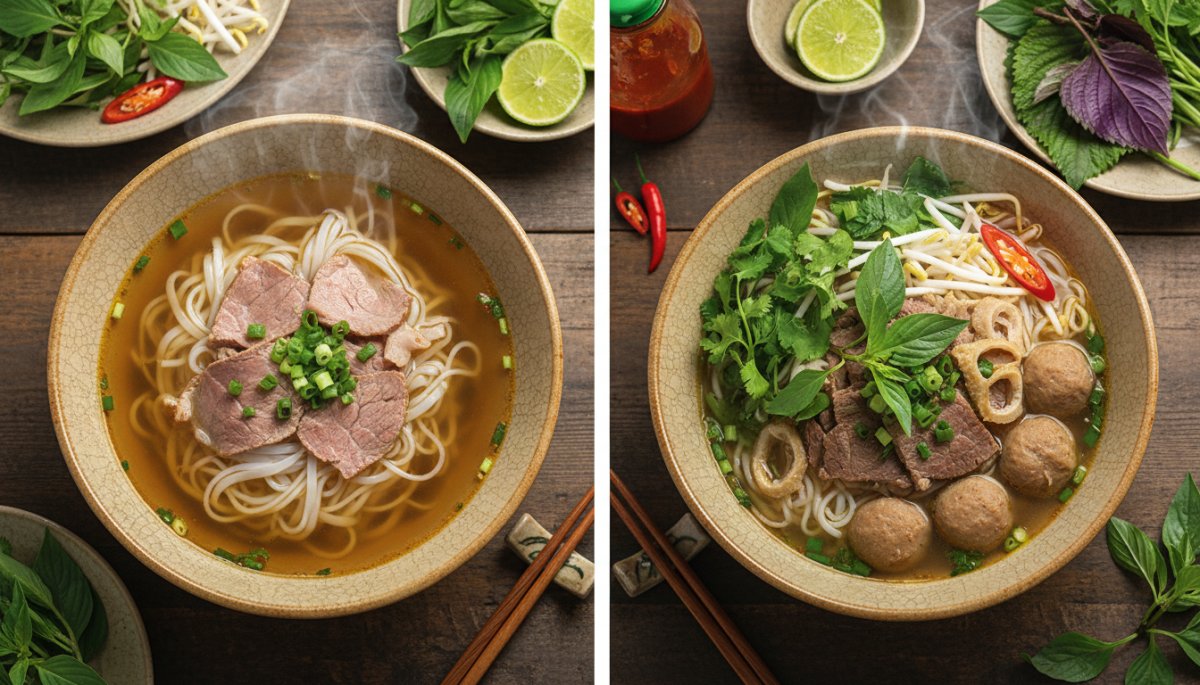
フォーには大きく分けて2つの種類があります。フォーボー(Phở bò)は牛肉入りのスープフォーで、煮込み牛肉のフォーはスープをとった後のかたまり肉を薄切りにしてのせる定番料理です。よく煮込まれた柔らかい牛肉とほんのりスパイスの効いたクリアなスープが楽しめます。一方、フォーガー(Phở gà)は鶏肉入りで、店や部位によっては牛肉版より軽く感じられます。味の好みを性別で一般化せず、脂の量や肉の部位で選びましょう。
Differences in taste by region
ハノイのフォーボーは、牛骨に焼いた生姜やたまねぎを合わせた澄んだスープが典型です。ただし北部でも店によって香草や薬味は出るため、「生のハーブを添えない」とは断定できません。お好みで油条(ヨウティャオ)という中国の揚げパンと一緒に食べるのが特徴的です。
対照的に、ホーチミンのフォーは甘みを感じるスープや、多種類の香草・もやしを別皿で添える店が多い傾向です。「酸味」は主にライムなどを客が足す場合があり、店ごとの差もあります。ニラやコリアンダーなどの香菜、唐辛子などをトッピングします。フォーはもともと北部ハノイだけで食べられていた料理で、南部でも食されるようになったのは1954年にフランスからの独立戦争が終結し、多くの人がハノイからサイゴン(現ホーチミン)に移住したからだといわれています。
The difference from bun (rice vermicelli)
フォーと混同されやすいブン(bún)も米を主原料とする麺ですが、日本でいう乾燥ビーフンすべての単なる別名ではありません。形、製法、発酵の有無、料理での使い方が異なります。
フォーとブンは同じ米から作られていますが、製造方法や料理のバリエーションに違いがあります。ブンは練った生地を小さな穴に高圧をかけて押出してめんにする製法です。フォーは牛肉・鶏肉のスープフォー、炒め物など料理のバリエーションが少ないのに対し、ブンは汁麺以外にも和え麺・ライスペーパーに包む具材として使われ、ごはんの代わりにおかずを乗せて食べられます。フォーにも日常的な店や家庭の食べ方があり、ブンにも専門料理があります。「ごちそう対日常食」と固定せず、料理名ごとに具材と食べ方を見ます。
The taste of home | the world of canh
Green-vegetable soup (canh rau)
Vietnam, where various flavorful green and yellow vegetables are harvested year-round. A simple soup using seasonal leafy vegetables is not only delicious but also a way to take in nutritious vegetables.
Especially popular is water spinach soup (canh rau muong). Water spinach is characterized by a crisp texture and a faintly sweet aroma, and is widely used in Vietnamese cuisine. The slightly sour soup is perfect for a hot day too. Also, in the hot season, Malabar spinach soup (canh rau mung toi) is popular. Malabar spinach has a mild taste and turns slightly thick when heated. It's often cooked with crab paste, but dried shrimp, fresh shrimp, or luffa may be added too.
Root-vegetable soup (canh rau cu)
Soups using root vegetables are characterized by depth of flavor — soups with broth taken from bones or richness from ground pork — and suit rainy days and the cold season.
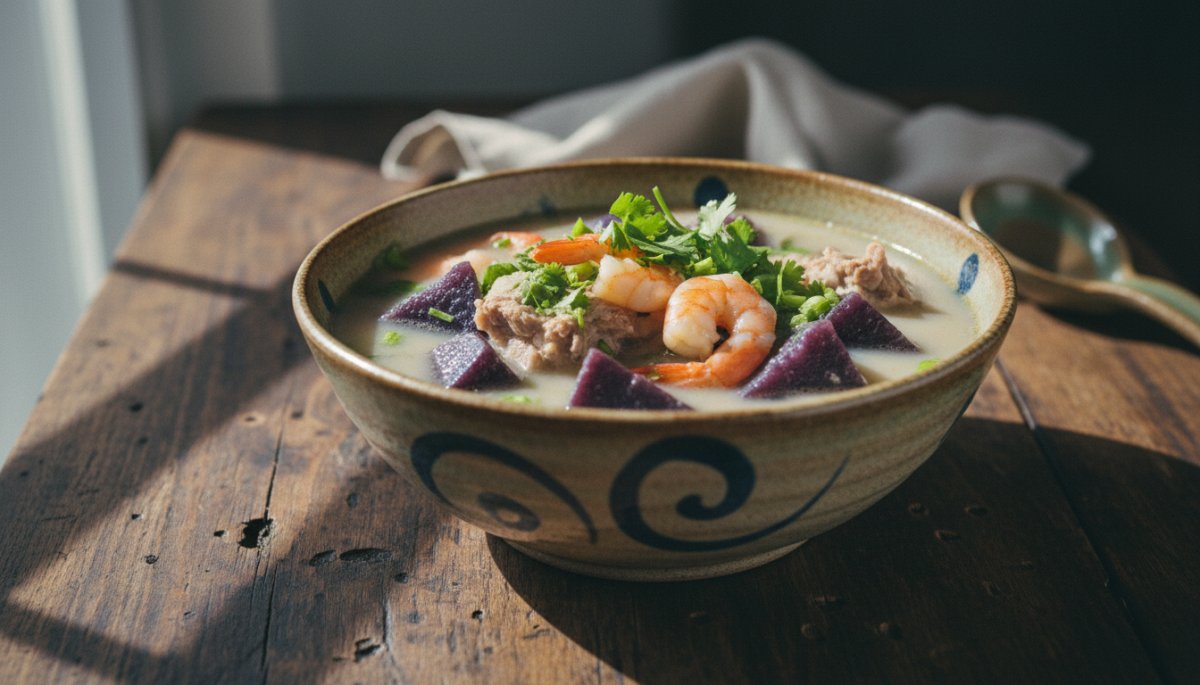
Popular among root-vegetable soups is a soup using purple yam with a creamy texture (canh khoai mo). Made by simmering with pork bones or shrimp, this soup lets you enjoy the contrast of the creamy soup and the fluffy texture of the purple yam. The soup is thick but light in taste, going superbly with other dishes.
Pumpkin soup (canh bi do), which lets you easily replenish plenty of nutrients, is also one of the popular soups. The soup's ingredients — ground meat, pumpkin, and herbs — are very simple, but you can enjoy a gentle flavor where the umami of the ground meat and the sweetness of the pumpkin harmonize.
Hearty soups and celebratory soups
The "thap cam" of canh thap cam means "mixed" or "assorted" in Vietnamese, referring to a soup with many ingredients. Traditionally mushrooms, carrots, and corn are used, but you can also arrange it by adding vegetables you like.
Dried pork skin and vegetable soup (canh bong thap cam) is a soup originating in the northern region. The ingredients include dried pork skin, meat, shrimp, and colorful vegetables. This soup symbolizes good luck and prosperity, and is an indispensable dish at celebratory occasions like Lunar New Year and weddings.
Spare rib and vegetable soup (canh suon non) is a flavorful soup letting you take in plenty of vegetables. The ingredients are pork spare ribs, potato, carrot, corn, and cauliflower, and simmering slowly brings out the sweetness of the vegetables. This soup can be enjoyed as a main or a side dish, and eating it with macaroni is recommended too.
Sour soup | the appeal of canh chua
Canh chua is a staple soup of Vietnamese home cooking.
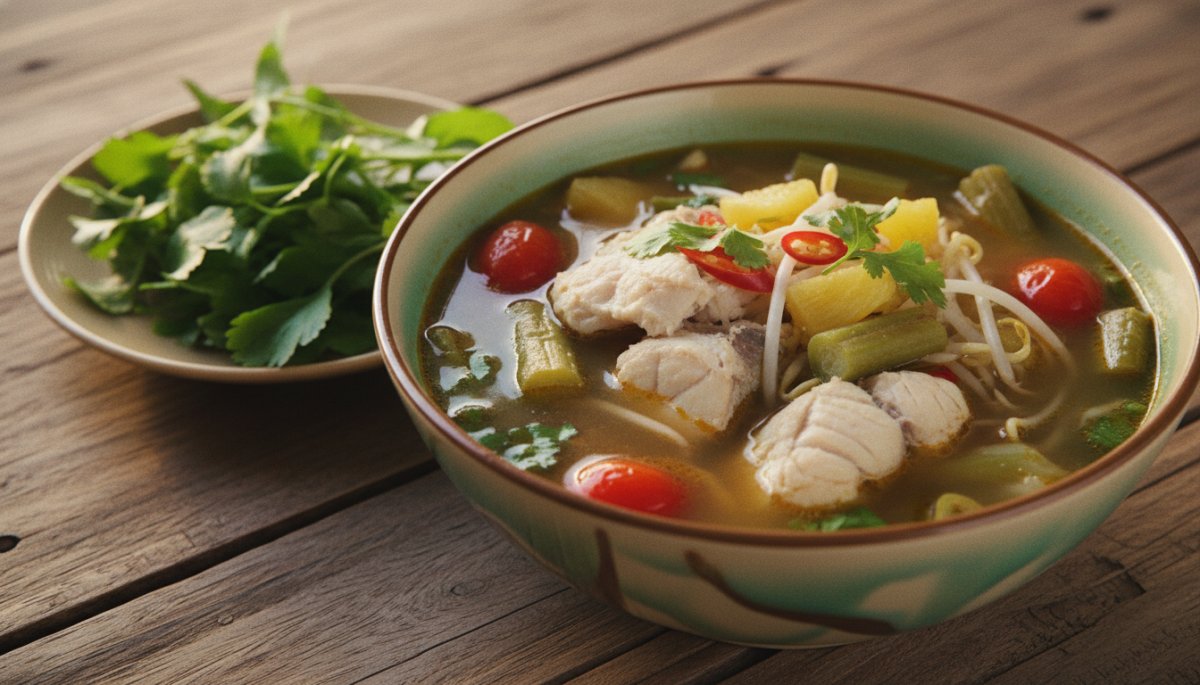
This soup, with an exquisite balance of sweetness and sourness, commonly uses pineapple, tamarind, or tomato for the sourness. There are various kinds of canh chua, but the southern canh chua ca (Canh Chua Ca) and the northern canh suon chua (Canh Suon Chua) are especially popular.
Southern sour fish soup
The southern "sour fish soup (Canh Chua Ca)" is a soup where the sourness of tamarind and the like harmonizes with the delicate flavor of freshwater fish. Since the soup also contains herbs, tomato, bean sprouts, and taro stems, it's very filling.
Taking the fish out of the soup onto a plate and eating it with a little fish sauce combines spiciness, sweetness, and sourness for an addictive deliciousness. This distinctive balance of sourness and sweetness is also a feature of the southern Ho Chi Minh City seasoning.
Northern spare-rib sour soup
The northern canh suon chua (Canh Suon Chua) is a sour soup using spare ribs. Northern seasoning is simpler than the south, with a more modest use of spices. Good broth comes from the spare-rib bones and soaks into the vegetables.
Locally there's a potato version too, and a recipe using taro is popular. To avoid needing to soak the taro, peel it just before use. Stir-frying the taro before simmering removes the stickiness, turning the surface translucent for a melting texture.
Easy recipes you can make at home
How to make chicken pho
We introduce a basic recipe for Vietnamese-style pho you can easily make with one pot.
材料(1人前)は、フォー約45g、鶏もも肉50g、もやし50g、たまねぎ1/4個、青ねぎ1本、レモン・パクチー適量、水500cc。調味料は砂糖小さじ1/3、ナンプラー大さじ1/2、鶏がらスープの素(顆粒)です。製品により塩分が大きく違うため、スープの素は表示量より少なめから調整してください。
作り方は、鶏もも肉を一口大、たまねぎをスライス、青ねぎを小口切りにします。調味料と水を鍋に入れて火にかけ、沸騰したら鶏肉とたまねぎを加えます。「4分」で一律に完成とはせず、鶏肉の中心まで十分に加熱してください。フォーは商品表示を確認し、別ゆで・浸水指定ならそれに従い、最後にもやしと合わせます。お好みでレモン、パクチーをトッピングしてください。
It's a dish with a light soup carrying the umami of chicken. Enjoy the chewy noodle texture and the freshly made, piping-hot soup.
Grated Chinese yam and ground pork soup
This is a recipe arranging a traditional Vietnamese home dish with Japanese ingredients.
The ingredients (for 2 servings) are about 150g of Chinese yam, 2 thin green onions, cilantro to taste, 10g of dried shrimp, 100g of lean ground pork, 1 tablespoon of rice oil, 2 cups of water, and a little pepper. Seasoning A is 1 tablespoon of nuoc mam and a little pepper. Seasoning B is nuoc mam to taste and a pinch of sugar.
Cut the thin green onion into the upper green part and lower white part; finely chop the green part into small rounds and mince the white part. Crushing the white part first with the flat of the knife before mincing greatly brings out the aroma. Rinse the dried shrimp quickly, rehydrate for about 10 minutes in 2 tablespoons of hot water, and once soft, chop finely with a knife.
It's a rustic, comforting soup characterized by a smooth texture and deep richness.
Tips for ordering and dining manners
How to order on the ground
We introduce points for ordering soup at Vietnamese street stalls and restaurants.
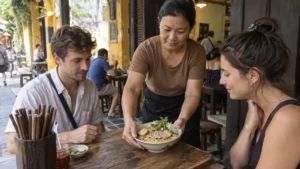
When ordering pho, choose "pho bo" (beef) or "pho ga" (chicken). Sizes are usually chosen from "small (Nho)," "medium (Vua)," and "large (Lon)." Toppings can be added too; if you want to add raw meat, say "Tai" (raw beef), or "Chin" for simmered meat.
On the table there are usually seasonings and condiments like red chili, lemon, nuoc mam, hot chili sauce, and pickled garlic-and-chili. Adjusting the taste to your liking is the way to enjoy Vietnamese soup.
Dining manners
食べる音への受け止め方は家庭や店、同席者で違います。「音を立てるほど喜ばれる」という決まりはないため、周囲に合わせ、共有の調味料や具材には自分の箸を直接入れない配慮を優先します。
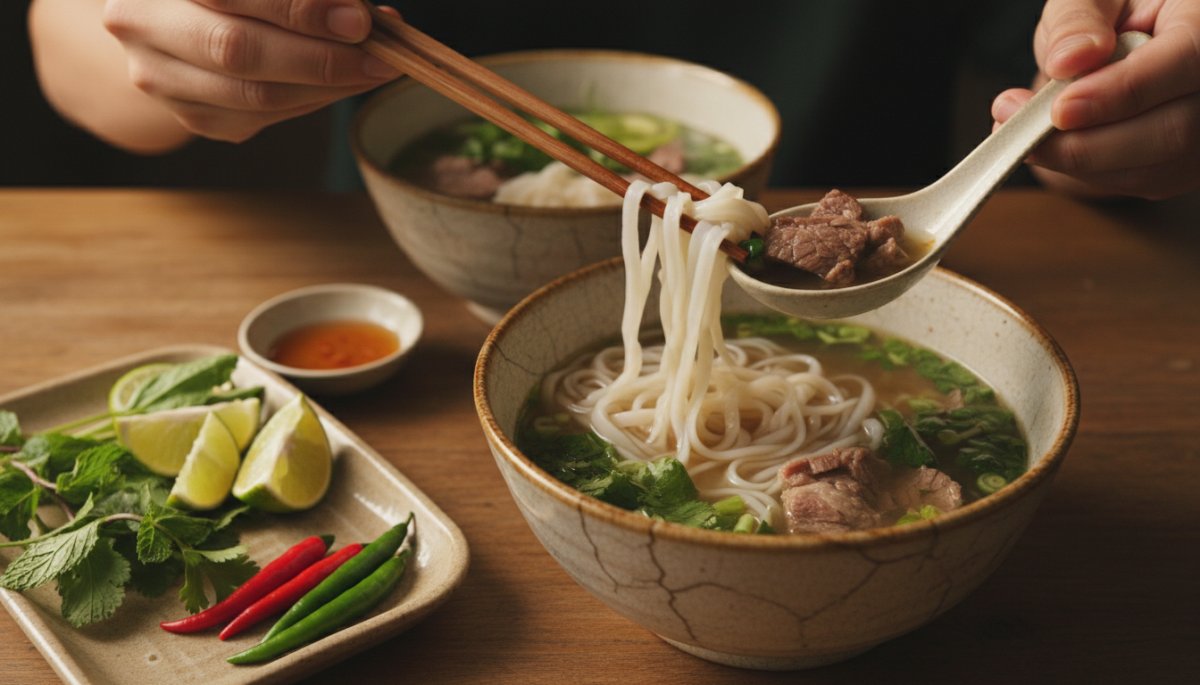
Eating with chopsticks and a spoon is common. Lift the noodles with chopsticks and scoop the soup with a spoon. For pho, we recommend enjoying it as is without changing the seasoning at first, then adjusting to your liking with the tabletop seasonings partway through.
Squeezing lime or lemon adds freshness, and adding chili gives a spicy kick. Add fresh vegetables like cilantro and bean sprouts to the soup just before eating and enjoy the crisp texture.
注文前に確認すると失敗しにくいこと
- 麺入りの一食か、ご飯に添えるカインか
- 牛・鶏・豚・魚介のだしと、具材の加熱状態
- 魚醤、エビ・カニ、ピーナッツなどのアレルゲン
- 生野菜や香草を入れるか、熱いスープで加熱するか
- 卓上調味料は一度に入れず、元の味を見て少量ずつ
Summary | enjoy the depth of Vietnamese soup
Vietnam's soup culture is rich in diversity by region and household.
From noodle soups like pho and bun to the home-cooking soup called canh, each has its own appeal. The difference between the north's simple seasoning and the south's complex flavor also tells of the richness of Vietnamese food culture.
Even when making it at home, master the basic recipe and you can enjoy authentic Vietnamese soup. With easy-to-find seasonings like fish sauce and chicken stock, it turns out plenty delicious. That you can customize it to your liking with tabletop seasonings is also a big appeal of Vietnamese soup.
When you visit Vietnam, do try the authentic soup at local street stalls and restaurants. And after returning home, why not take on making Vietnamese soup at home?
For those who want to know more about Vietnam's tourist information and coffee culture,VNplease see. It's packed with information you'll want to read before a trip — Vietnam's food, cafés, the atmosphere of the streets, and even local ways of life.