What makes walking tours of Vietnamese cities so appealing?
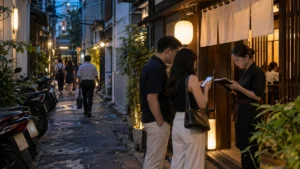
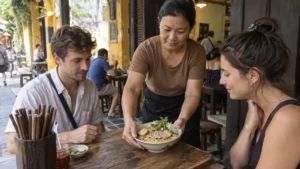
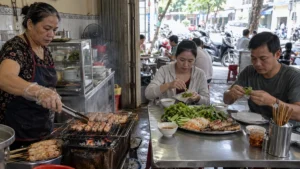
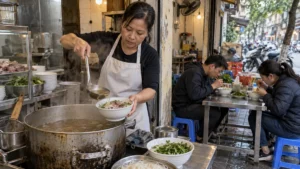
In Vietnam's cities, there are sights you can only see on foot.
高層ビルの足元に広がる路地裏の食堂、フランス統治時代の面影を残すコロニアル建築、そして朝の市場に集まる地元の人々。歩道や横断歩道でも車両に注意が必要です。交通の流れを「かいくぐる」ことを勧めず、安全に止まって確認できる経路を選びます。
The bustle of Ho Chi Minh City, the calm of Hanoi, the openness of Da Nang, and the glow of Hoi An's lanterns. The unique rhythm each city has can be felt in your skin precisely because you're on foot. Small discoveries you'd pass right by through a taxi window are scattered in countless numbers on a walking journey.
Vietnam's major cities well suited to walking tours
Vietnam has several cities well suited to exploring on foot. Each has a different character and walkability, so you can choose to match your travel style.
Ho Chi Minh City: a lively economic hub
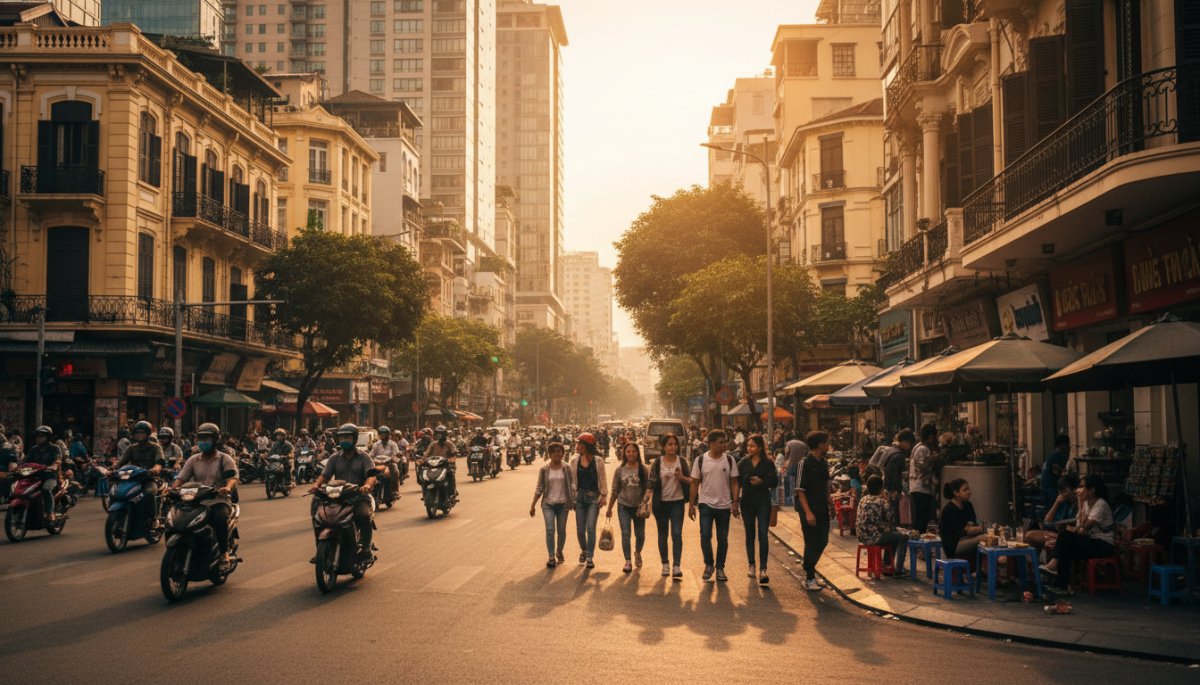
Ho Chi Minh City, Vietnam's largest city, is characterized by a scene where an incessant flow of motorbikes, high-rises, and local shops all mingle.
The area around Dong Khoi Street is ideal as a starting point for a walking tour. Cafés and shops that make use of French colonial architecture line the street, and historic buildings such as the Saigon Notre-Dame Cathedral and the Saigon Central Post Office are also clustered within walking distance. From Ben Thanh Market to the Ho Chi Minh City People's Committee building, the main spots are within walking distance.
道路は信号と横断歩道を使い、青信号でも左右と右左折車を確認します。地元の人について渡ることを安全保証にせず、見通しが悪い、速度が高い、怖いと感じる場所では迂回してください。
Hanoi: an old quarter where history and culture live on
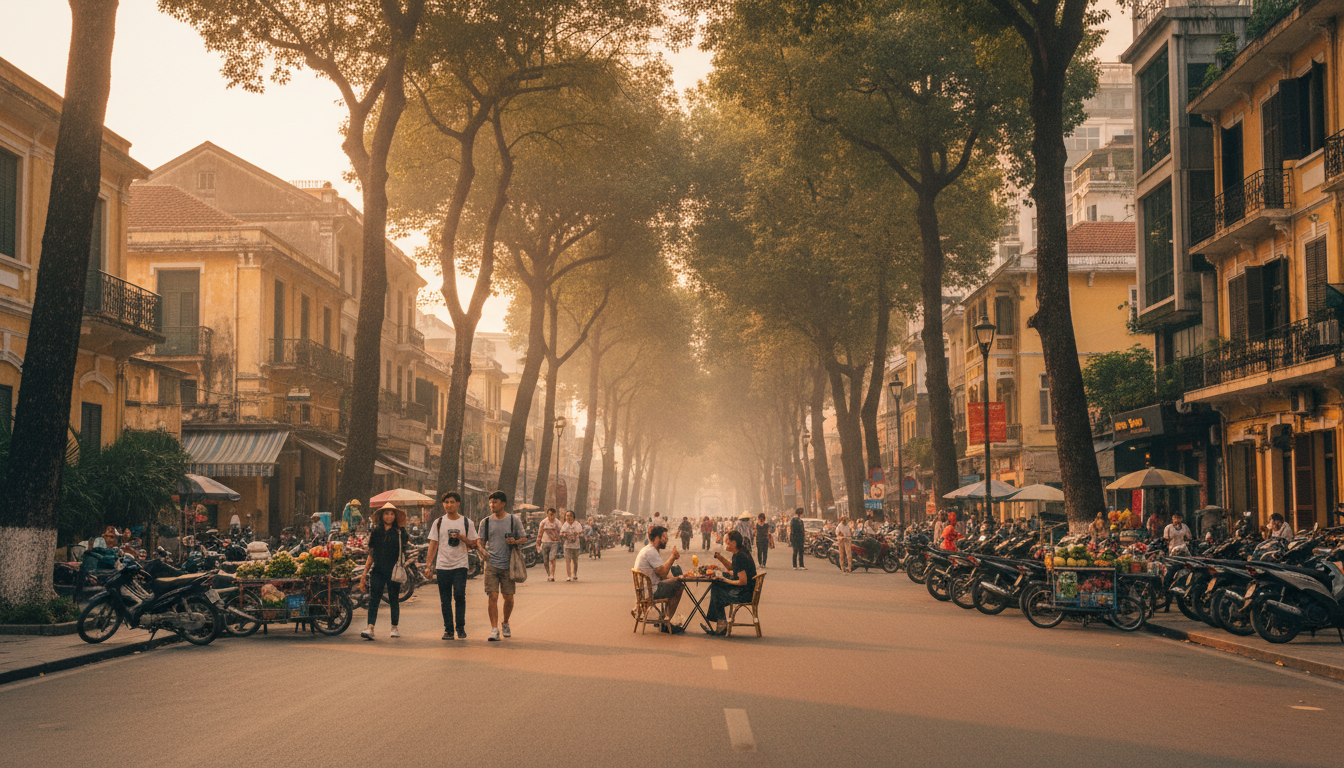
Hanoi, the center of politics and culture, has a calm atmosphere in contrast to Ho Chi Minh City.
The Old Quarter area is the perfect place for a walking tour. Commerce and daily life are packed into narrow streets, and livelihoods that have continued for generations still go on today. Around Hoan Kiem Lake, you can see people doing morning exercises and locals enjoying strolls, and even though it's a tourist spot, there's a strong sense of everyday life being laid open as it is.
Because major sights such as the Ho Chi Minh Mausoleum and the Temple of Literature are scattered about, taxi travel is generally the norm, but the Old Quarter and the area around Hoan Kiem Lake can be thoroughly enjoyed on foot.
Da Nang: a compact, easy-to-navigate beach city
Da Nang, which has developed rapidly over the past few years, is gaining popularity as a place where resort and city blend together.
The city itself is compact and easy to get around, making it well suited to a first stay in central Vietnam. The long sandy beaches, exemplified by My Khe Beach, are a place of relaxation not only for tourists but for locals too, and the beachfront promenade is ideal for walking and cycling. A key feature is how urban convenience and proximity to nature coexist.
Model walking-tour routes for Ho Chi Minh City [3 picks]
For a walking tour of Ho Chi Minh City, it's efficient to focus on specific areas. Here we introduce three model routes you can do in a day.
Route 1: A tour of historic architecture around Dong Khoi Street (about 3 hours)
サイゴン大教会から中央郵便局へ進みます。旧稿に多い「エッフェル設計」という説明は根拠が定まらないため用いず、19世紀末の植民地期建築として見学します。現在の営業と工事状況を確認してください。レトロなデザインのポストカードを購入して、自分宛てに送るのもおすすめです。
After that, head south down Dong Khoi Street and take a break at a café housed in colonial architecture. Take in the exteriors of the Reunification Palace and the Ho Chi Minh City People's Committee building, then enjoy local food at Ben Thanh Market.
This route has the main spots clustered within walking distance, making it ideal for the afternoon of your first day or the morning of your last.
Route 2: Tracing the memory of the Vietnam War (about 4 hours)
Start at the War Remnants Museum and confront the records of the war. The exhibits deal with heavy themes, but it's an essential place for understanding Vietnam's modern history.
After that, tour the Reunification Palace. This building, the stage for the fall of Saigon in 1975, preserves the offices and meeting rooms of the time just as they were. There are also war rooms and communications rooms in the basement, conveying the rawness of history.
In the afternoon, stroll around the Ho Chi Minh City People's Committee building, and in the evening watch a water-puppet show. You can experience Vietnamese culture through the traditional performing arts.
Route 3: A café and goods tour of the Thao Dien area (about 4 hours)
If you want to see Ho Chi Minh City's new face, the Thao Dien area is recommended.
This area, dotted with stylish cafés and goods shops, has many Western residents and a refined atmosphere. After being surprised by the vivid colors of the Sri Thendayuthapani Temple, spend some relaxed time at a café nearby.
In the afternoon, walk along the Saigon River to the Landmark 81 Skydeck. The view from Vietnam's tallest building is spectacular.
Model walking-tour routes for Hanoi [3 picks]
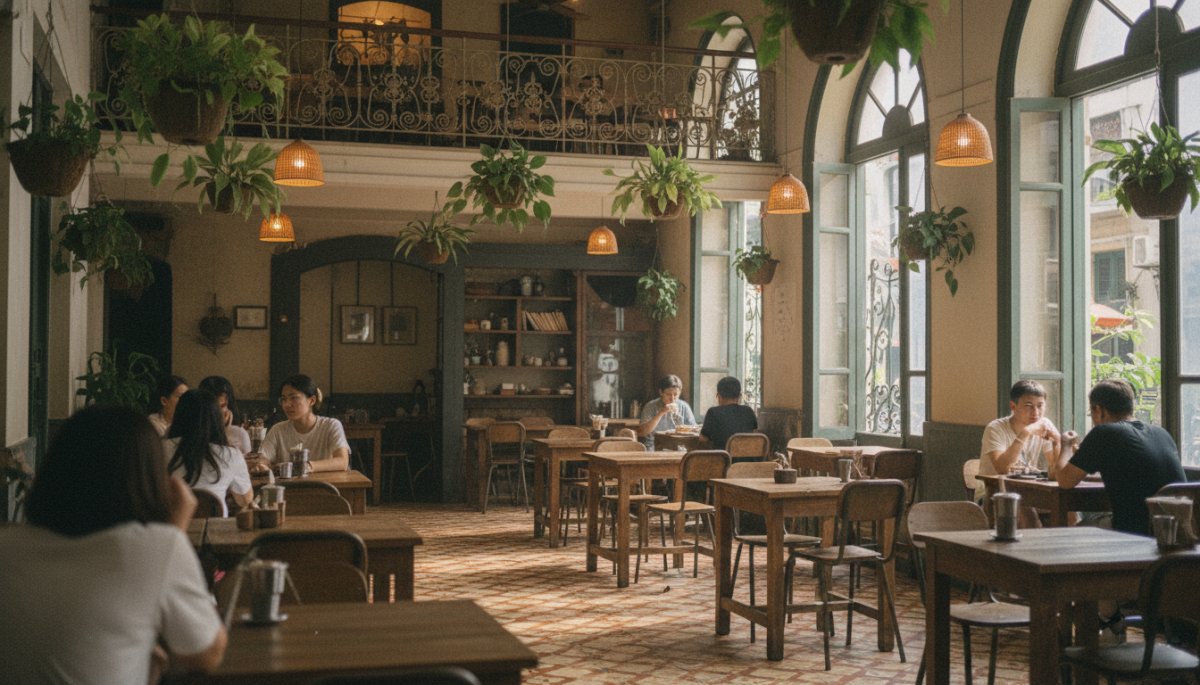
Hanoi's Old Quarter is a treasure trove for walking tours. We introduce its distinctive atmosphere, where history and daily life mingle, through three routes.
Route 4: A tour of the Old Quarter's shopping streets (about 3 hours)
Start at Hoan Kiem Lake and walk the narrow streets of the Old Quarter. Each street deals in different goods—the silver street, the lantern street, the medicinal-herb street—and these historic commercial divisions still remain today.
Pass by St. Joseph's Cathedral (Hanoi Cathedral) and take a breather at a nearby café. In the afternoon, enjoy some local shopping at Dong Xuan Market. The market's bustle and energy are Hanoi's daily life itself.
Route 5: A lakeside stroll and a tour of cultural facilities (about 4 hours)
In the early morning around Hoan Kiem Lake, locals enjoy tai chi and jogging. After circling the lake while soaking up that atmosphere, head to the Ho Chi Minh Mausoleum.
This place, enshrining the father of Vietnam's founding, is wrapped in a solemn atmosphere. Also visit the adjacent One Pillar Pagoda, and in the afternoon experience Vietnam's scholarly culture at the Temple of Literature. As Vietnam's first university, the Temple of Literature strongly retains the influence of Confucian culture.
Route 6: Local food and the Old Quarter at night (about 3 hours)
This route, starting in the evening, is for enjoying Hanoi's nightlife.
After savoring authentic pho at "Pho Thin," a famous spot popular with locals, stroll the backstreets of the Old Quarter. As night falls, more food stalls appear, and it bustles with people enjoying roadside beer and light snacks.
A pub crawl on Ta Hien Street is the classic way to make the most of a Hanoi night. Local young people and tourists mingle, creating a distinctive energy.
Model walking-tour routes for Da Nang and Hoi An [2 picks]
The two central cities each have a different appeal. We introduce routes that let you enjoy both a beach resort and an ancient town.
Route 7: A stroll along Da Nang beach (about 3 hours)
Feel the sea breeze as you walk the long sandy stretch of My Khe Beach. In the early morning, locals enjoy strolls and jogs, and though it's a tourist spot, it also functions as part of everyday life.
After breakfast at a beachfront café, head to Da Nang Cathedral. This church, distinctive for its pink exterior, is a remnant of the French colonial era. In the afternoon, savor fresh seafood at the market.
Route 8: A lantern tour of Hoi An's old quarter (about 4 hours)
The old quarter of Hoi An, registered as a World Heritage Site, is ideal for a walking tour.
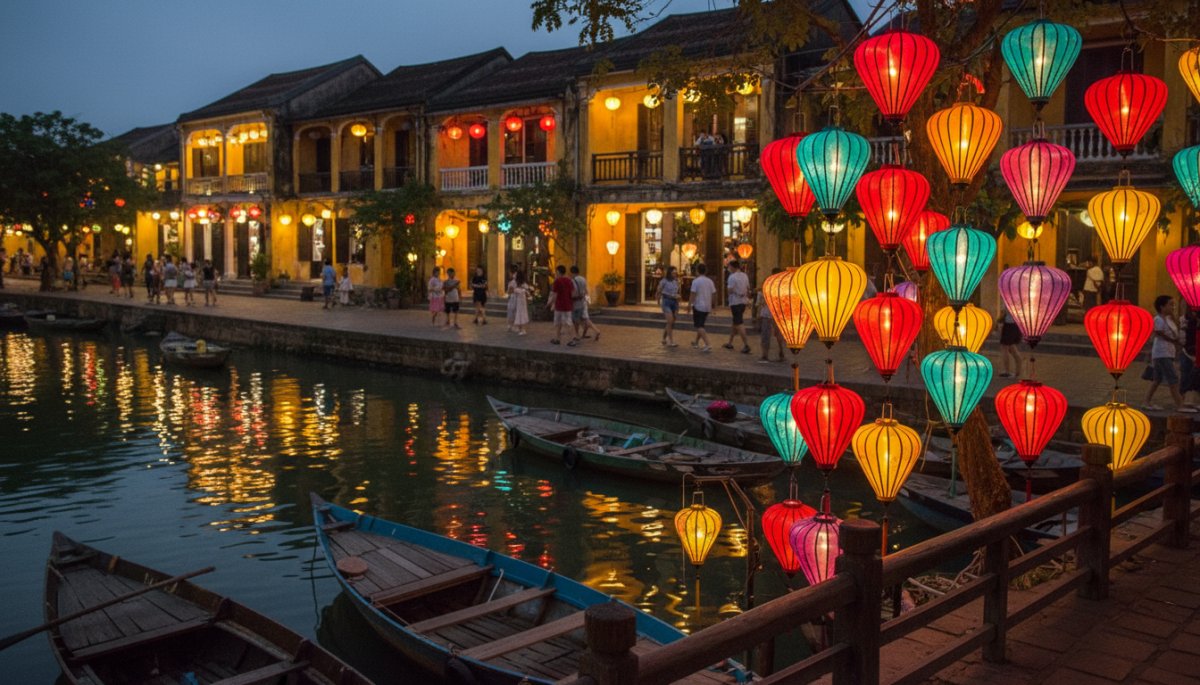
By day, tour old houses and merchant halls, tracing the memory of a port town that once thrived on trade. Historic buildings such as the Japanese Bridge (Lai Vien Kieu) and the Fujian Assembly Hall are dotted about.
At night, the glow of lanterns envelops the town, showing a completely different face from the daytime. Walking along the river and enjoying the streetscape lit by lantern light is recommended. There's no excessive flashiness, and it has a curious charm that naturally slows even your walking pace.
Model walking-tour routes for Hue [2 picks]
Hue, the former royal capital, is a place that quietly conveys history. We introduce two routes that deepen your understanding the more time you spend on them.
Route 9: A tour of the palace and temples (about 5 hours)
Start at the Hue Imperial City and trace the traces of Vietnam's last dynasty. Palaces, gardens, and temples are dotted across the vast grounds, so touring slowly and taking your time is recommended.
In the afternoon, head to Thien Mu Pagoda. This temple, standing along the Perfume River, is a symbolic presence in Hue. Amid the quiet, immerse yourself in the lingering resonance of dynastic culture.
Route 10: A tour of the imperial tombs (about 6 hours)
This route tours the imperial tombs dotted around the outskirts of Hue. The Tomb of Khai Dinh, the Tomb of Minh Mang, the Tomb of Tu Duc, and others each have a different architectural style and atmosphere.
Since it's hard to get around on foot alone, combining taxis and motorbike taxis is the realistic option. At each tomb, tour slowly on foot and enjoy the open space and quiet rather than flashiness.
Things to note and what to bring on a Vietnam walking tour
For a comfortable and safe walking tour, there are a few things to note and items to prepare.
Tips for crossing the road
In Vietnam's urban areas, the flow of motorbikes and cars hardly ever breaks.
When crossing, the trick is to walk slowly at a steady pace in step with the locals. Suddenly stopping or running is, on the contrary, dangerous. Drivers anticipate pedestrians' movements and steer around them, so cross calmly.
Guarding against pickpockets and snatch-theft
Vietnam's public safety is relatively good, but in urban areas there have been reports of pickpocketing and bag-snatching targeting tourists.
Don't carry valuables or large amounts of cash, and hold your bag in front of your body. Avoid walking with your smartphone in hand, and refrain from walking alone at night.
Essential packing list
Here's a summary of what to bring to make a walking tour comfortable.
- Easy-walking shoes: With many unpaved roads, sneakers are best
- Hat and sunglasses: Essential because the sunlight is strong
- Sunscreen: A travel size so you can reapply frequently
- Water for staying hydrated: Always carry it to prevent dehydration
- Sanitizing wipes: Handy when eating at stalls and small eateries
- Small bills: Small bills are needed at stalls and markets
- The ride-hailing app "Grab": As a way to get around when you're tired of walking
Sources Kansai International Airport: "A Vietnam trip in 3 days/2 nights or 4 days/3 nights! Model routes for Ho Chi Minh City, Hanoi, and Da Nang" (2024); compiled from this source

The best season for a Vietnam walking tour
Because Vietnam is long from north to south, the best season differs by city.
ハノイの10〜11月、3〜4月は歩きやすい候補ですが、暑さ、雨、大気質は日ごとに変わります。平年値だけでなく、当日の予報とAQIを見て距離を調整します。
ダナンやホイアンは季節の傾向があっても、5〜8月は強い暑さや紫外線、海況の変化があります。「最適」と固定せず、熱中症警戒、波・離岸流、台風、当日の予報を確認します。
In Ho Chi Minh City in the south, November to March is the period with little rain and low humidity. With a comfortable climate and many sunny days, it's well suited to walking tours.
In this way, if you're clever about which region you visit, you can enjoy comfortable walking tours year-round—that's the appeal of Vietnam.
Sources Kansai International Airport: "A Vietnam trip in 3 days/2 nights or 4 days/3 nights! Model routes for Ho Chi Minh City, Hanoi, and Da Nang" (2024); compiled from this source
徒歩コースを当日に組み直す基準
- 地図の所要時間へ休憩・横断・入場待ちを30〜50%加える
- 信号と歩道がある経路を優先し、工事中の道は迂回する
- 正午前後の暑さ、雷雨、大気質が悪い時間は屋内へ切り替える
- 寺院・王宮・生活路地では服装、撮影、私有地へ配慮する
- スマートフォンは車道側で持たず、立ち止まって確認する
- 疲労、痛み、めまいがあれば配車や休憩へ切り替える
所要3時間などの表記は移動だけの目安ではありません。開館時間、工事、食事、暑さで変わるため、全スポットを完走することより、安全に戻れる時間と体力を残してください。
Summary: the experiences you gain from a Vietnam city walking tour
Exploring Vietnam's cities on foot makes for a trip that stays in your memory not as mere transportation but as an experience.
The bustle of the market, a single cup of coffee drunk by the roadside, the flow of people that swells in the evening. The form differs by city, but in every town, life sits right next to tourism. That closeness is what makes the trip special.
If you want energy, Ho Chi Minh City; if you want to feel history and daily life, Hanoi; for a balance of nature and city, Da Nang; if you want to savor atmosphere, Hoi An; if you want to touch quiet history, Hue. Each town shows you the country of Vietnam from a different angle.
A walking tour is a series of small discoveries not found in guidebooks. On your next trip to Vietnam, try choosing a walking journey. Encounters and experiences beyond your expectations are surely waiting.