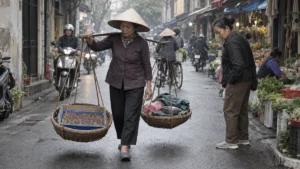
At the History Museum of Ho Chi Minh City, standing in a corner of the Saigon Zoo and Botanical Gardens in District 1 in central Ho Chi Minh City, a special exhibition themed on the rivers of southern Vietnam, "Nous, les fleuves du Sud (Rivers of Southern Vietnam / We, the Rivers of Southern Vietnam)," is being held. Organized by the French Embassy and the Institut Français, it traces the long relationship between the people living in the Mekong Delta and the waterside through about 80 rare materials, paintings, photographs, and records carefully selected from four museums in the city. It runs until October 17. It's a limited-time cultural experience where you can touch another face of Saigon in an air-conditioned hall between a sightseeing-packed stay.
For travelers visiting Ho Chi Minh City from Japan, the strong impression of this city is food stalls, high-rise buildings, and a flood of motorbikes. But what shaped the very form of the land of southern Vietnam was neither buildings nor motorbikes, but rivers. An exhibition where you can turn the pages of that river story one at a time through paintings, old photographs, and period records awaits about 30 minutes from the airport.
The gist of the exhibition
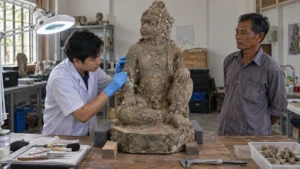
The core of the exhibition is a gathering of about 80 rare materials. The breakdown is artifacts, paintings, photographs, and document archives, all selected from the holdings of four major museums in Ho Chi Minh City. In other words, items that are usually scattered across separate museums and can't be seen at once are lined up together along a single axis: the river.
The theme is consistently "the long relationship between the people of southern Vietnam and the river." How did the Mekong's waters moisten the land, give rise to markets, and shape people's movements and forms of life? Rather than telling that relationship chronologically, the format makes you feel it through objects like paintings and records. The organizers position this exhibition as part of "Vivre avec les Fleuves (Living with the Rivers)," an effort to support the sustainable development of riverside regions through scientific research, urban planning, and culture and education. It's fair to say it's a project that uses the past as an entrance to think about the river's future, not a mere retrospective.
Why do France and Vietnam talk about rivers?
At first you may find it surprising that the organizers are the French Embassy and the Institut Français. But between southern Vietnam's rivers and the Western gaze, there's a deep connection when you trace it. In the late 19th century, there was an accumulation of expeditions and surveys that went up the Mekong to record the whole picture of its water system, and river maps, water depths, and sketches of basin villages are inscribed in the vast records left from that era. That the exhibition includes many paintings and old records isn't unrelated to that historical depth.
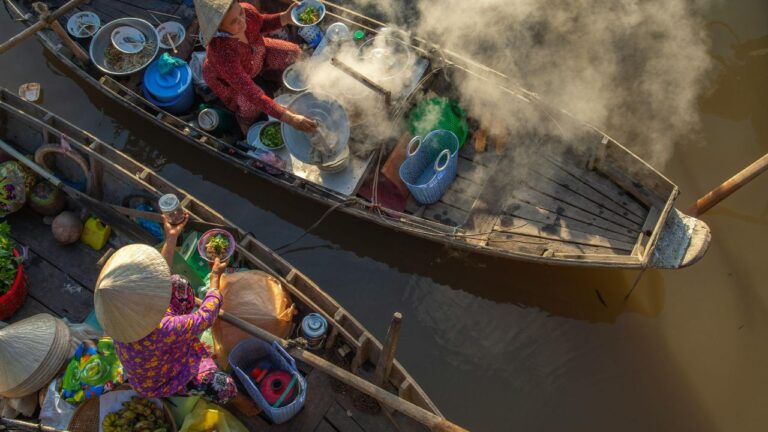
The viewpoint of putting the river in the lead role is right on target for understanding southern Vietnam. A delta is land formed by soil carried from upstream piling up. People first settle along the river, waterways serve as roads, boats carry goods, and floating markets run the economy. Not the idea of building cities on land, but the idea of spreading life on the water, lies at the root of this region's culture. In Japanese terms, it's close to the sense of an era when water transport connected regions before highways or railways. Thought of that way, the project's idea of telling the south's story through the lens of rivers falls neatly into place.
Another thing not to overlook is that this exhibition champions "sustainable development." The Mekong Delta faces real challenges such as saltwater intrusion, land subsidence, and water-volume changes from upstream dam construction. The act of lining up past paintings and records is connected not to mere nostalgia but to the question of how to deal with the river now. Even as a cultural exhibition, a problem-awareness of the modern environment quietly runs beneath it.
Main highlights and the museum's layout
The venue itself, the History Museum of Ho Chi Minh City, is a highlight to begin with. Built during the French colonial period, the building has a distinctive appearance blending Eastern motifs and Western architecture, and its exterior topped with an octagonal tower makes you want to photograph it. The permanent exhibition covers everything from prehistory through the various dynasties to the culture and history of the south, with holdings said to reach about 25,000 items. This special exhibition adds one auxiliary line—"rivers"—to that permanent flow.
When viewing the exhibition, having the following perspectives increases the enjoyment.
- Old maps and water-system records — how people of the time grasped where the rivers flowed and which villages they connected
- Paintings and photographs — how life on the water, markets, and boats change by the era in which they were depicted
- Artifacts gathered from four museums — the regional spread that becomes visible when items from separate collections are lined up together
The scale of about 80 items is an amount you can tour in 30–40 minutes at a quick pace, or about an hour if you read carefully. Combined with the permanent exhibition, it fits neatly into a half-day sightseeing block.
How it's being received
This project is being received favorably by several groups.
First, as a cultural-exchange effort. That France and Vietnam joined hands on "rivers," a theme they can share, rather than a history of conflict or rule, is rated as an example of positive collaboration. The format of using the past as material while connecting it to the future-oriented framework "Living with the Rivers" gives a sense of a spread that won't end as a one-off event.
Second, from a research and education standpoint. The work of gathering the holdings of four museums in one place is a valuable chance to show usually scattered materials across collections, and its significance as a place for research and learning is noted. For students and those interested in local history, it's become a place to touch a consolidated set of primary sources.
Third, in terms of travelers' interest. Such limited-time special exhibitions resonate with those who seek "a Saigon one step deeper" than just food stalls and shopping. Time to learn a place's origins while taking a breather in an air-conditioned hall makes a fitting rest in an itinerary worn out by walking under a blazing sun.
How to build it into a Japanese traveler's stay
This exhibition's usability lies in its location. The venue, the History Museum of Ho Chi Minh City, is in District 1 within the grounds of the Saigon Zoo and Botanical Gardens, close to the city center. Because many sights are within walking or short ride-hailing distance, it's easy to build an itinerary—touring the Reunification Palace and the Central Post Office in the morning and spending the hot midday hours at the museum.
For families, being able to pair the museum with the zoo and botanical gardens on the same grounds is a big plus. A division of roles works too—adults taking a breather at the river exhibition while the kids enjoy the animals. For travelers who love history and culture, it lets you walk along the river carrying the question "why did the south take this form?" rather than gazing at the city vaguely. If you extend to an actual Mekong Delta day tour after seeing a painting of a floating market at the exhibition, it becomes an experience where the world in the painting and the river before your eyes connect.
That it runs until October 17 is also a reason it's easy to build into an itinerary. Unlike permanent sights, the limited nature of "you can't see it unless you go during this period" clarifies the motive for a visit.
Ripple effects on cultural tourism
An increase in such international co-organized projects quietly widens Ho Chi Minh City's tourism range. To travel options that tended to skew toward shopping and food, an axis of high-quality cultural exhibitions is added. A project using "rivers" as a lens in particular plays the role of connecting city sightseeing and Mekong Delta sightseeing into a single story. If a round trip is created—learning the background before heading to the delta and looking back at the records after returning—interest in the whole of southern Vietnam gains depth.
The stance of championing sustainability is also compatible with future tourism. A trip that savors a place's culture while facing the land's challenges is a form one step beyond mere consumptive tourism, and it becomes fertile ground for drawing in repeaters and those with a deep interest.
Practical information
| Item | Details |
|---|---|
| Special exhibition title | Nous, les fleuves du Sud (Rivers of Southern Vietnam / We, the Rivers of Southern Vietnam) |
| Venue | History Museum of Ho Chi Minh City |
| Address | 2 Nguyen Binh Khiem, District 1 (within the grounds of the Saigon Zoo and Botanical Gardens) |
| Dates | Until October 17 |
| Number of exhibits | About 80 (artifacts, paintings, photographs, records). Selected from four museums in the city |
| Organizer | French Embassy / Institut Français (part of the "Vivre avec les Fleuves" project) |
| Access | Close by ride-hailing app (Grab) or taxi from the city center. Within walking or short-distance range of many sights |
| Opening hours and admission | Notation differs by source, so we recommend checking the museum's official site before visiting. There are also notices of Monday closures |
Opening hours, admission, and closed days can change by season. If you're going to make the trip, checking the museum's official information for the day's opening status before visiting gives peace of mind.
Summary
"Rivers of Southern Vietnam" is a special exhibition that traces, through about 80 rare materials, the story of people who have lived with the Mekong's waters. France and Vietnam joined hands over a shared point—rivers—connecting records of the past to questions for the future. The venue is the History Museum of Ho Chi Minh City, close to the center, and it can be toured in half a day between sightseeing. It runs until October 17. During this period only, you can meet the true face of southern Vietnam—one you can't see from food stalls and shopping alone—through paintings and records.
Frequently asked questions
Q. Until when is the special exhibition held?
Until October 17. Unlike the permanent exhibition, the period is limited, so if your stay overlaps with this time, building it into your plans early keeps you from missing it.
Q. What kinds of things are on display?
About 80 items—artifacts, paintings, photographs, document records—all selected from four museums in Ho Chi Minh City. The format traces the relationship between the people of southern Vietnam and the river through objects.
Q. How do I get to the venue?
The venue, the History Museum of Ho Chi Minh City, is within the grounds of the Saigon Zoo and Botanical Gardens (2 Nguyen Binh Khiem) in District 1, close to the city center. Give the address to a ride-hailing app or taxi and you'll arrive without getting lost. Opening hours and admission can change by season, so checking official information before visiting is the sure move.
Related reading
- In a Thao Dien back alley, a former advertising director makes Tibetan momo dumplings
- Da Lat's air gateway reopens in August, restoring access to the cool highland retreat
- Banh u tro, Vietnam's lye-translucent Dragon Boat Festival rice dumpling, savored
Source: