Vietnam's "national treasure"-which grows only deep in the mountains and, given its high price, is dogged by endless fakes-comes down to a seaside city for just three days. From August 1 to 3, 2026, Da Nang holds the first "Ngoc Linh Ginseng International Medicinal Herb Festival 2026" at APEC Park in the city center. The highlight is putting national-treasure-grade ginseng, guaranteed "100% genuine," on a street market within reach of ordinary shoppers. For buyers, it's a rare chance to handle with confidence a root said to be hard even for experts to tell apart.
This article organizes the festival's substance and background, centered on how travelers and residents can work it into their plans.
The key points of the city's announcement
The Da Nang City People's Committee held a press conference on July 17 to outline the festival. It's hosted by the Da Nang City People's Committee, the municipal Department of Culture, Sports and Tourism, and state broadcaster VTV8. The venue centers on APEC Park in the city center, with related events also held at the growing areas in the Tra Linh, Tra Van and Tra Len districts of Nam Tra My, the production region. During the run, about 60 booths will be set up and 10 main programs will run. This is said to be the first time Da Nang has held an international-scale festival starring this ginseng.
What Ngoc Linh ginseng is, and why counterfeits are a problem
Ngoc Linh ginseng (Sam Ngoc Linh) is an endemic species that grows wild only in the high-elevation forests of the Ngoc Linh range in the Central Highlands-a rare medicinal plant Vietnam calls "Quoc Bao" (national treasure). It takes long years to cultivate, and limited supply makes its trading price very high.
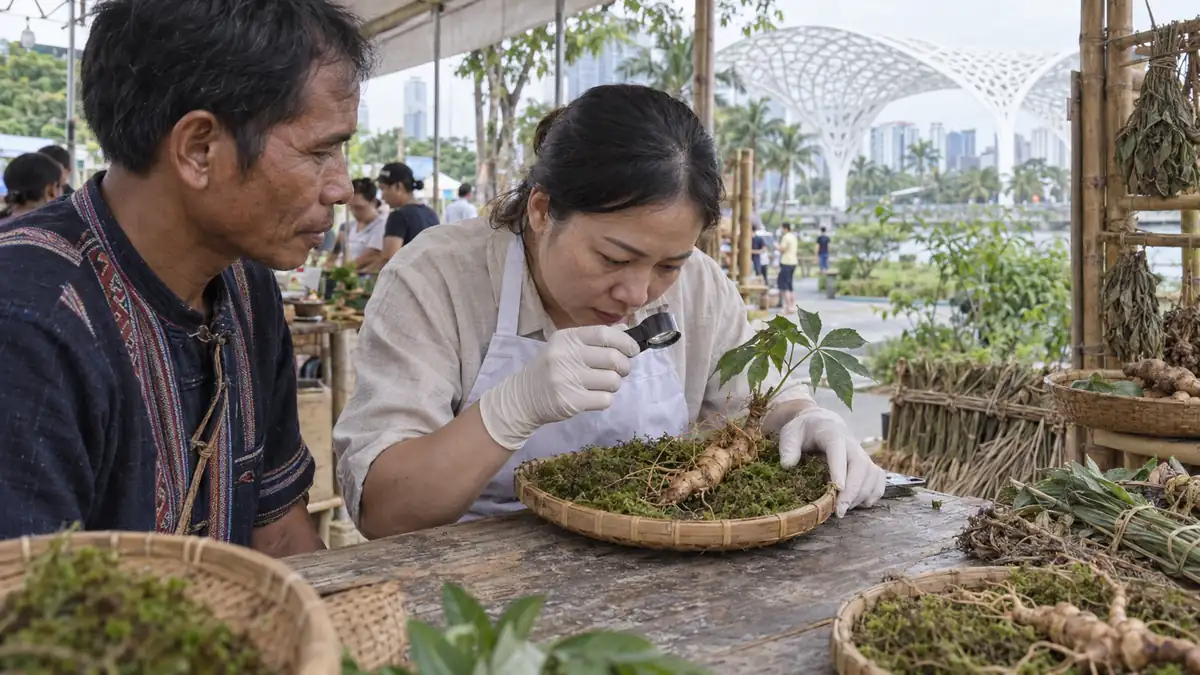
Because of its high price, cases of passing off similar-looking roots such as tam that (pseudoginseng) as "Ngoc Linh ginseng" never cease. A known trick is to process a cheaply sourced foreign species into a similar shape and pass it off as "the real thing" at a fraction of the genuine cost, and the methods are said to grow more sophisticated year by year. Growers and experts long involved in cultivation can tell the difference by details like the arrangement of the leaves and the nodes of the roots, but for an ordinary buyer, telling by eye is close to impossible. It's best to assume that for travelers and residents to spot the real from the fake on their own at a local market is, in practice, difficult.
Vietnam's health authorities and specialist bodies are at the stage of building up testing technology that scientifically assays active compounds to prove authenticity. Turn that around and it means buying expensive ginseng through a route where the origin or seller is unclear carries that much more of a gamble. The 'authenticity guarantee' the festival touts is new in facing this long-standing problem head-on, under the organizers' own responsibility.
Event overview and highlights
| Item | Details |
|---|---|
| Dates | August 1-3, 2026 (with the God of Agriculture festival on July 31, the day before) |
| Main venue | APEC Park (Hai Chau District, Da Nang) |
| Satellite events | Growing areas in Nam Tra My district, including Tra Linh, Tra Van, and Tra Len |
| Organizer | Da Nang City People's Committee / municipal Department of Culture, Sports and Tourism / VTV8 |
| Scale | About 60 booths and 10 main programs |
| Highlight | A 100%-genuine ginseng market, ethnic-minority rituals, medicinal cuisine and an international symposium |
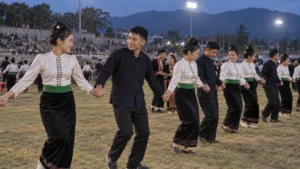
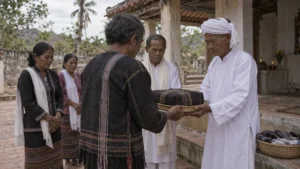
At the venue, besides ginseng, there's a sales zone lining up forest herbs, health foods, and cosmetics, plus an auction directing proceeds to conserving the nature reserve and an international symposium gathering experts. Rather than stopping at a mere products fair, it's a lineup that runs scholarship, tourism, and business talks all at once. The day before, on July 31, in the growing region's Kon Pin village, the indigenous Sedang people hold the Than Nong Festival (a rite honoring the god of ginseng) and a ceremony distributing saplings to poor farmers. The opening ceremony is set to feature an artistic program depicting the story of ginseng and ethnic-minority music, conveying mountain life and the origin of a national treasure on stage.
Reactions from organizers and those involved
The announcement stood out for its emphasis on quality. Ho Quang Buu, deputy chair of the Da Nang City People's Committee, stated flatly that "no counterfeits will ever slip in" during the festival, and said the organizers would refund buyers should a fake be found.
As a guarantee framework, city authorities say all ginseng sold at the venue is genuine, and that any customer who buys a fake will be fully refunded and the seller dealt with under the law. Authentication is handled by an appraisal team led by the city's Department of Industry and Trade, with strict verification.
The organizers further set out to spread the national treasure's value internationally through 10 main programs and open world markets for Ngoc Linh ginseng, which has yet to reach full-scale export.
How travelers and residents can enjoy it
The dates run across the weekend, August 1 (Sat) to 3 (Mon). APEC Park sits in the center along the Han River near Da Nang's landmark Dragon Bridge, and it's an easy ten minutes or so by taxi from the hotels at My Khe Beach—a spot you can drop into between rounds of city sightseeing.
If shopping is your aim, the festival period—with an appraisal team and a refund guarantee—is a window to choose, with peace of mind, ginseng that's usually hard to reach for. When buying on-site, checking the booth's labeling and the receipt you get gives you something to go on if you later want to query authenticity. Even if the pricey root itself is out of reach, processed goods like ginseng-blended tea, candy, honey preserves and health foods fit a souvenir budget more easily and keep the weight and bulk down for carrying back to Japan. If a booth lets you taste on the spot, you can check the aroma and flavor before choosing.
It's easy to plan around, too. If you extend to the God of Agriculture festival at the source on July 31, it takes several hours by car from downtown Da Nang toward Nam Tra My in the mountains, so an early-morning day trip or an overnight is realistic. If you stick to just the APEC Park venue in the city, it fits comfortably into the same stay as My Khe Beach or Hoi An old-town sightseeing. Joining a source tour or an ethnic-culture experience program lets you take home the background of the 'mountain's bounty' that the city booths alone don't show. For families living in Da Nang, it also has value as a weekend cultural event where you can see ethnic-minority performances and rites up close.
From a medicinal-cuisine and souvenir angle
Ngoc Linh ginseng has been prized in Vietnam too as an ingredient for food-based body care. Ginseng itself may be expensive, but the culture of soups and teas combining medicinal herbs is rooted in the Vietnamese table, and the festival's gourmet zone becomes an entry point to it. At the venue, a zone is expected where you can taste local stews and herbal teas made with Central Highlands herbs, along with ethnic-minority cooking methods—a place to experience not just ginseng-starring dishes but the mountain's food culture itself, from a single plate.
In Da Nang and Saigon, bars and cafés using medicinal herbs are on the rise, so you can carry an ingredient you tasted while traveling into an everyday cup. For souvenirs, starting with processed goods is the safe bet. Ginseng teas, candies, and honey-steeped products span a wide price range, easy to match to the recipient and budget. Whatever the item, the habit of checking the origin label and whether there's a guarantee before buying pays off especially in this field, where fakes abound. Because the organizers take that checking off your hands during the festival, it's an easy entry point for first-timers.
Summary
Da Nang's first Ngoc Linh ginseng festival is an attempt to bring a mountain national treasure down to the city and remove the worry of fakes with a guarantee. Pencil in APEC Park on August 1–3 and you can take in a genuine ginseng market, ethnic-minority culture and medicinal cuisine all at once. It looks set to be an event that fits both travelers visiting Da Nang and residents looking for a weekend outing.
Related reading
- Bon Odori by the Da Nang seaside: fit the 50,000-strong Vietnam-Japan culture festival into your itinerary
- AEON Opens 5 Minutes From Da Nang Airport: A New Base for Residents Where You Can Buy Sushi and Bento
- Bringing a medicinal-cuisine bar's flavors to Saigon: a Singaporean chef's one night