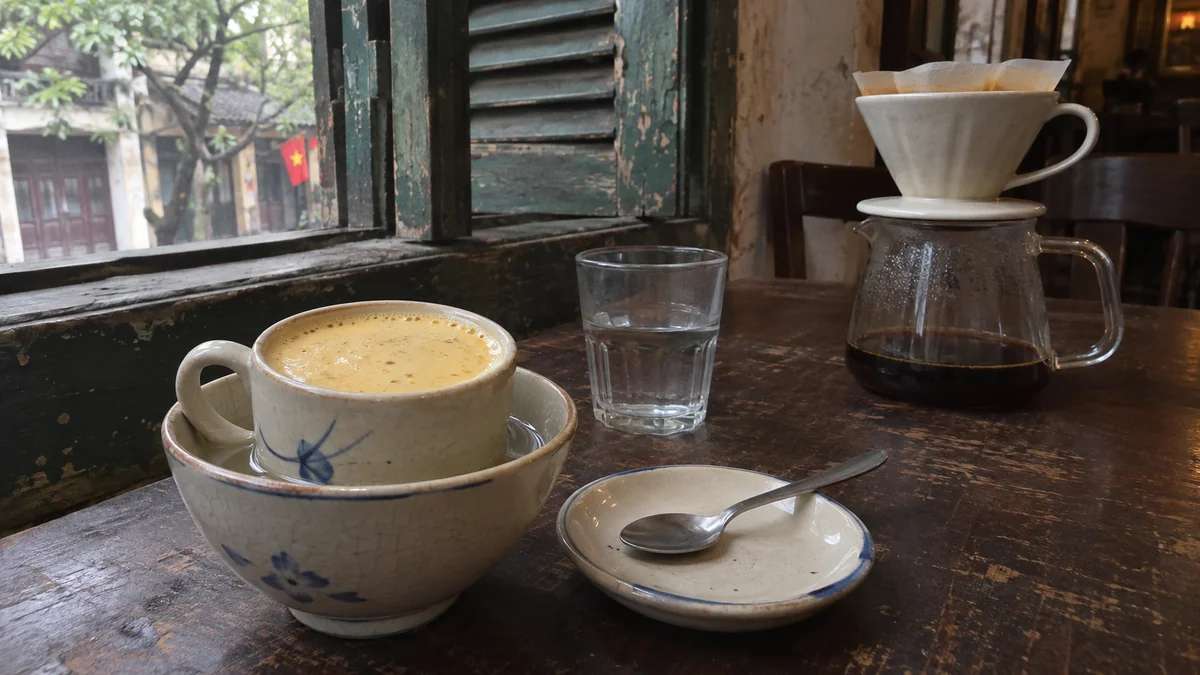
Egg coffee is an essential starting point for understanding Hanoi's café culture. It is said to have been devised by Nguyễn Văn Giảng in 1946, and consists of coffee topped with a rich cream made using eggs. At the same time, Hanoi today also has a growing number of specialty coffee shops working with Vietnamese-grown beans. Enjoying both not as "old versus new" but as two distinct ways of drinking coffee reveals the breadth of what the city has to offer.
Background on egg coffee
It is explained that eggs were used as a substitute during a period when milk was scarce. Recipes vary by venue — egg yolk, condensed milk, sugar, butter, or cheese — and it comes both hot and cold. This is a food culture of comparison: sweetness, foam thickness, and the bitterness of the coffee itself, rather than one where "only the original shop's cup is the right answer."
Type: Points to consider when choosing
Egg coffee: sweetness, hot or cold, richness of egg
Phin coffee: brewing time, with or without condensed milk
Specialty: origin, variety, processing, roast
Lotus tea: how the fragrance is infused, with or without sweetener
Divide your goals between the Old Quarter and West Lake
The Old Quarter is well suited to walking between long-established shops and small alley cafés for easy comparison, while the area around West Lake has venues that prioritize views and spacious settings. However, since "Tay Ho District" and "around West Lake" overlap, there is no need to treat them as separate areas and pad out your itinerary. Factoring in travel time, limiting yourself to roughly two areas per day — such as the Old Quarter in the morning and West Lake in the evening — keeps things manageable.
Notes on raw eggs, sweetness, and caffeine
Because these drinks contain eggs, anyone with an egg allergy, pregnant individuals, or those with weakened immune systems should ask the venue about ingredients and whether the eggs are heated. Condensed milk versions are sweet, and the coffee itself can be strong. If you plan to visit several cafés, sharing a cup, choosing a smaller size, and drinking water alongside can help reduce the strain.
Removal of unverified trend claims
The original article contained unsubstantiated statements, such as high engagement figures for specific hashtags and an expectation that café tours would be featured at VITM. These have been removed and replaced with historically verifiable information and practical criteria to help travelers make their choices.
How I would check things on the ground
For restaurants and food, I look at the condition of the shop rather than its reputation. I would check the price list, cooking and storage practices, how busy it is, and the ingredients, and if something seems off, I would choose a different shop or order a smaller portion. Since opening hours, prices, and menus change, I would not insist on old information when talking to staff. For food to bring home, even if it is pre-packaged, I would confirm Japan's animal and plant quarantine and customs conditions.
Summary
When café-hopping in Hanoi, choosing one traditional cup and one origin-focused cup rather than adding more photogenic stops tends to leave a stronger impression. Check the ingredients and how you are feeling, and enjoy it as a break during your walk around the city.
Related articles:VITM Hanoi/Fairmont Hanoi
Source:Nhân Dân · Egg Coffee
How to build your order
Deciding first on hot or cold, coffee or tea, sweetness level, and whether you want dairy will help you narrow down even a long menu. Even if you cannot pronounce the item name accurately, pointing at a photo and confirming size, ice, sugar, condensed milk, and toppings one by one is enough. Once you receive your order, compare the receipt against the product name.