Beneath the paddies of the Mekong Delta sleeps a port town more than 1,500 years old. The Oc Eo-Ba The site in An Giang Province now stands at the threshold of final review as a leading candidate to be Vietnam's next UNESCO World Heritage Site. No showy towers or palaces remain above ground. Even so, this was one of ancient Southeast Asia's foremost international trading cities. Now, while tourists are still few, is a fine chance to walk the quiet plain and touch the romance of antiquity.
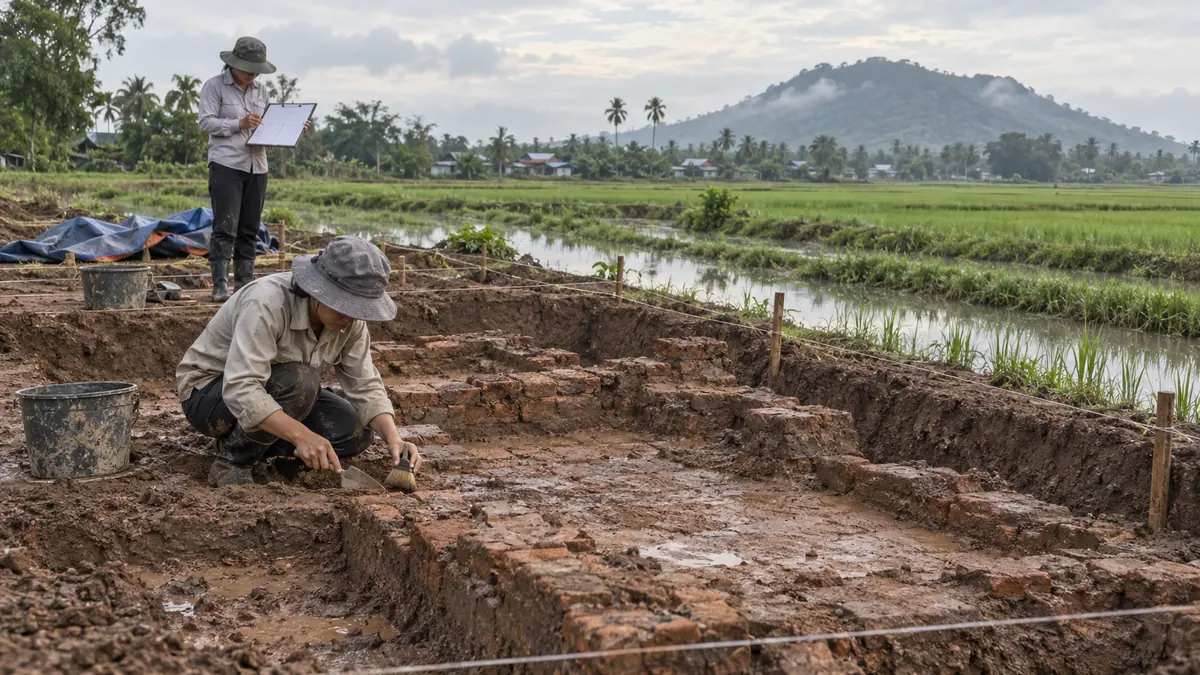
According to Vietnamese English-language media on July 20, experts from the International Council on Monuments and Sites (ICOMOS) will enter An Giang Province from August 17 to 24 to conduct a field survey and evaluation of the Oc Eo–Ba The site. It's meant to determine whether it merits inscription on the World Heritage List, and the survey is led by Dr. Rima Hooja, chair of ICOMOS India. This evaluation becomes the crux that sways whether it's inscribed.
Just what were the Funan Kingdom and Oc Eo culture?
Oc Eo is thought to have been the sea gateway of Funan, an ancient state that linked the South China Sea and the Indian Ocean from the 1st to the 7th century. Funan, one of Southeast Asia's oldest states, flourished in the lower Mekong, and Oc Eo was its trading hub. By the authorities' account, this place was then a crossroads of history and culture connecting the regions of South Asia, West Asia and Northeast Asia with the kingdoms of Southeast Asia.
This site drew world attention because of the range of its finds. Roman gold coins, Hindu deity statues from India, glass beads, and gold ornaments emerged from the same soil, telling of a major hub of the maritime Silk Road. With no giant monuments left above ground, Oc Eo's value lies in the history itself - that 'the world was connected here.' In An Giang Province, more than 80 relics of the Oc Eo culture have been confirmed to date.
Oc Eo became academically known thanks to excavations by a French researcher in the mid-20th century. Traces of ancient canals running crosswise and of harbor works then emerged from beneath the paddies and wetlands, revealing that this was no mere settlement but a planned city where people and goods moved by boat. After Funan declined, the city sank quietly beneath earth and water and fell into a long sleep as part of the rural landscape. Walk this plain today and the very stillness feels like the lingering echo of a vanished maritime state.
453 hectares split into four zones
The nomination covers a 453.1-hectare area spanning Oc Eo commune and My Thuan commune, with 16 component sites organized into four zones. Each has a different character, and how you plan a ruins tour changes with it. Before visiting, it helps to know where you can see what.
| Zone | Overview and highlights | Access at a glance |
|---|---|---|
| Ba The Mountain | A low hill overlooking the ruins; dotted with temple remains and stone structures, it's also a lookout with a sweeping view of the plain | About 1.5 hours by car from Long Xuyen. The starting point for Oc Eo sightseeing |
| The Oc Eo urban zone | The heart of the ancient city; canal traces and building platforms have been confirmed, letting you trace the skeleton of the port town | Adjacent to the foot of Ba The Mountain. Reachable on foot or by car |
| Giong Xoai | The ruins area where excavation is underway. Traces of platforms and ritual sites remain | A short drive from the urban zone |
| Nen Chua | An area dense with religious remains, where you can feel the spread of the Oc Eo culture's faith | Access via nearby village roads |
How authorities and experts take it
Ahead of the review, locals let their hopes for a listing show. Nguyen Huu Gien, head of the Oc Eo Cultural Site Management Board, said that with preparations firmly in place, 'as a province, we hope the Oc Eo–Ba The site will be formally inscribed at the 49th session of the World Heritage Committee in 2027.' For locals it's a wish more than a decade in the making.
On the ICOMOS side conducting the assessment, its Indian chair, Dr. Rima Hooja, will visit the site in August to see the ruins' state of preservation and authenticity for herself. ICOMOS's evaluation will be key material for the World Heritage Committee, which decides on inscription in 2027. How experts assess the site will determine the next step.
An Giang authorities are also improving the visitor infrastructure. The Oc Eo Culture Exhibition Hall, which displays the finds, is undergoing renovation to meet international museum standards. The site was designated a Special National Relic in 2012, and the nomination dossier was formally submitted to the UNESCO World Heritage Centre in late January 2026. It has cleared the technical requirements review, and the process is steadily advancing.
Practical information for visiting before the crowds
The Oc Eo–Ba The site sits in the plains of An Giang Province. Many travelers use the Mekong Delta hub city of Long Xuyen, or provincial-capital-class cities, as their foothold. Because the site itself is widely scattered, chartering a car or motorbike is realistic if you want to tour the mountain and the plain in a day. It's easy to plan a route starting from Ba The mountain and descending to the urban area at its foot.
At the heart of a visit is the Oc Eo Culture Museum, now under renovation. With no large structures left above ground, seeing the excavated finds first—gold coins, deity statues, ornaments—makes standing on the plain resolve into something entirely different. Grasp the image of the ancient canals and port from the exhibits before heading to the remains, and what looked like plain rice paddies rises into the outline of a port town. Guides and interpretive panels are still being put in place, so arming yourself with some background on Oc Eo culture beforehand raises the payoff.
On climate, this is a land of strong sun and humidity year-round, so a hat, water and comfortable walking shoes are essential. Since the ruins are spread widely, you'll cover distance on foot, so it's comfortable to move in the morning and evening to avoid the midday heat. Once it's inscribed as a World Heritage site, crowds and lodging prices will move all at once, which makes the present—when you can savor the quiet with no crowds and no scramble for photo spots—a precious grace period for travel lovers.
How to fit it into a Mekong trip
An Giang Province is rich in travel material beyond Oc Eo. The scenery woven from plain and mountain lies right nearby-the stunning "Seven Mountains" (Bay Nui), where a former quarry was reborn as a jade-colored lake, and villages deep in the Mekong spread with sugar-palm groves. The appeal of this region is that on the same feet that walked an ancient port town, you can trace all the way to Mekong life today in one go.
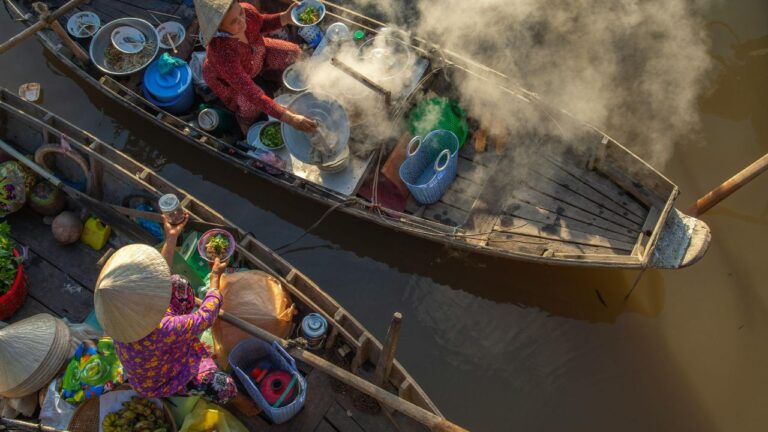
Close to the Cambodian border too, it's easy to fold into a touring route built around the Mekong River—a strength. Tour the water country by boat, bite into fruit at the market, and walk the traces of an ancient city in the evening—a location where you can effortlessly picture such a day. Become World Heritage and attention will surge at once. If you want to set foot in Vietnam's "next destination" ahead of the crowd, this plain where the memory of Funan sleeps is one of the most rewarding candidates to talk about right now.
Summary
The Oc Eo–Ba The site, holding the grand story of a Funan trading city beneath the soil, moves through August's ICOMOS review toward a World Heritage decision. Its core value isn't surface spectacle but the very memory of the maritime Silk Road. Now is the time to savor the quiet plain—ancient romance and all—before people and prices move. Why not add a 1,500-year-old port town to a day of touring the Mekong?
Sources
- Việt Nam News, "An Giang prepares for UNESCO World Heritage evaluation at Óc Eo – Ba Thê" (July 20, 2026)
- UNESCO World Heritage Centre Tentative List, 'Oc Eo – Ba The archaeological site'
- Quarries Turned Jade-Green Lakes: How to Tour Six Scenic Lakes Scattered Across An Giang's Seven Mountains
- Staying in a toddy-palm forest: village tourism in Bay Nui, deep in the Mekong
- All-you-can-eat: 20 durian dishes for about 1,190 yen, as Can Tho shows a producing region's seriousness