The cast and crew of the Korean drama 'My Royal Nemesis,' which became a talking point on Netflix, will visit Phu Quoc, Vietnam's largest island, in July 2026. They plan to leave Korea on July 7 and stay on the island for four days and three nights. The purpose isn't filming but a "reward trip" to celebrate the show's hit. Even so, the fact that the team behind Korea's hottest title right now went out of its way to choose this destination looks like a sign that Phu Quoc will become strongly tied to Korean entertainment going forward. For Japanese readers used to visiting filming locations, the "quiet now," before it gets crowded as a pilgrimage site, is the sweet spot.
What it means that a hit film's crew chose "a vacation" rather than "a shoot"
First, let’s get the facts straight. The people heading to Phu Quoc this time are not a drama film crew. According to what the Vietnamese side reported based on Korean media, this is a reward trip celebrating the series’ commercial success, and lead actors Lim Ji-yeon and Heo Nam-jun are expected to take part. It is neither a location scout for filming nor an announcement of a sequel shoot — a point that we on the reporting side must not confuse.
The very fact of being 'chosen as a vacation spot' has value in itself. 'My Royal Nemesis' began streaming on May 8, 2026, and reached 4.1 million views. In a brand reputation index in which a Korean research firm analyzed 21 TV programs, it ranked first, reportedly topping 10 million points. In other words, the team behind the most-talked-about show in Korea right now picked Phu Quoc from among many candidates. Filming locations often spread from exactly these 'places insiders personally took a liking to.'
Why Phu Quoc now — the tailwind of direct Seoul flights and surging tourist numbers
Behind Phu Quoc being chosen is the fact that the distance to Korea has physically shrunk. A direct flight linking Phu Quoc and Seoul recently launched, making travel from Korea easier. The celebrity team can move on a schedule as short as four days and three nights precisely because a no-transfer route is now in place.
The island's overall visitor numbers are climbing too. In the five months from January to May 2026, Phu Quoc's visitor count reached 4.76 million, up 34% year on year. Vietnam has set a target of 8.5 million for the year, including 2 million international tourists. More people, more routes, and the entertainment industry's interest riding on top - you could say the conditions for it becoming a "sacred site" are falling into place.
| Item | Figures and details |
|---|---|
| Drama premiere | May 8, 2026 (Netflix) |
| Views | 4.1 million views |
| Brand reputation index | No. 1 of 21 titles, over 10 million points |
| The team's stay in Phu Quoc | Departing July 7, 2026; four days, three nights |
| Island visitor numbers (January–May) | 4.76 million (up 34% year on year) |
| The island’s annual visitor target | 8.5 million (including 2 million international) |
Filming locations spread from private visits before any official announcement
K-drama pilgrimages usually start with an official filming-location announcement. But in practice, it's not rare for a place where actors or crew went off-camera and posted the scenery on social media to draw people first as "where that person went." A trip like this one, where the team behind a hit show visits together, tends to become that kind of quiet entry point.
Japanese readers will surely recognize this pattern. In Japan too, we've repeatedly seen crowds pour in the moment a drama or film location is announced, turning once-quiet alleys and eateries into lines and photo spots. On the fervor for filming locations within Vietnam, in an article that followed the move to turn the Old Quarter into a weekend pedestrian zoneArticle on Hanoi’s Old Quarterand people gathering at regional festivalsArticle on the Quang Tri festivalis also worth referencing. "Before the announcement" and "after the announcement": the quality of a trip changes completely even at the same place. Phu Quoc is still on the former side.
What it suggests for Japanese travelers - the three values of "before it becomes a sacred site"
Visiting before it becomes a “sacred site” has a clear practical upside. First, you can move while the crowds are still manageable. Visitors are increasing, but it has not yet reached the stage where specific spots are plastered with the drama’s name. There is still room to take in the beaches and night markets as scenes of everyday life rather than as queues.
Second is price. Being designated a filming location tends to push up the pricing of lodging and experience tours. Now, with direct flights stabilizing the route, is the window before the 'sacred site' premium kicks in. Third is the rarity of photos. In a place where the 'standard shot' hasn't yet settled, scenery captured from your own perspective becomes your individuality. It's the opposite of pilgrimage-style travel that chases the same compositions as everyone else.
Of course, how far the tie to Korean entertainment will deepen remains to be seen. This was, after all, just a leisure trip; no sequel shoot has been set, and no official tourism partnership has been announced. There is no need to build plans on outsized expectations—it is more realistic to treat it at the level of "a good island that happens to be gaining a bit of buzz."
How to get to Phu Quoc, and the places to hit on the island
Phu Quoc is an island in the Gulf of Thailand in southwestern Vietnam. The island has Phu Quoc International Airport, connected by domestic flights from major Vietnamese cities such as Ho Chi Minh City and Hanoi. International routes are also in service, including a direct flight from Seoul, and depending on how you arrange your itinerary you can fly straight to the island without stopping on the mainland. Coming from Japan, the basic idea is to connect to a domestic flight in Ho Chi Minh City or Hanoi.
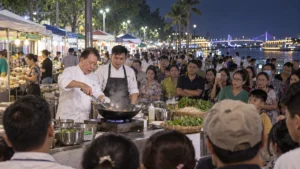
The island’s center is around Duong Dong on the west coast, where the night market is a go-to for meals and souvenir hunting. Scattered across the south are white-sand beaches led by Sao Beach, and tourist routes to the offshore islets are well set up by cable car or boat. The north gathers theme parks and resort developments, so from families to couples you can pick a base to match the purpose of your stay. For timing, the dry season with little rain — roughly November to April — suits sea activities.
| Item | Guide / point |
|---|---|
| Access to the island | Phu Quoc International Airport is served by domestic and some international flights. From Japan, routing via Ho Chi Minh City or Hanoi is standard. |
| Connections with Korea | A direct Phu Quoc–Seoul flight is already in service |
| Best season | The dry season, roughly November through the following April |
| A guide to choosing a base | Central Duong Dong (night market) / South (beaches and island tours) / North (resorts and theme parks) |
If you're interested in Vietnam's outlying islands and water activities, our guide to ways to explore the bayNha Trang Bay cruise articlewill also help you picture how to spend your time by the sea in Phu Quoc.
Summary - move "now," not "wait for the announcement"
The My Royal Nemesis team chose Phu Quoc not for filming, but the fact that a cast from a hit work went out of their way to pick it for a holiday shows the island is on the radar of Korean entertainment. Filming locations quietly spread from private stays like this before any official announcement. The next action is simple. First, assuming a route connecting to a domestic flight via Ho Chi Minh City or Hanoi, target the dry season of November to April and rough out your dates. Next, decide by the purpose of your stay whether to base yourself in the central Duong Dong area or on the southern beach side. There is plenty of value in seeing the quiet Phu Quoc with your own eyes now, before it gets crowded as a “sacred site.”