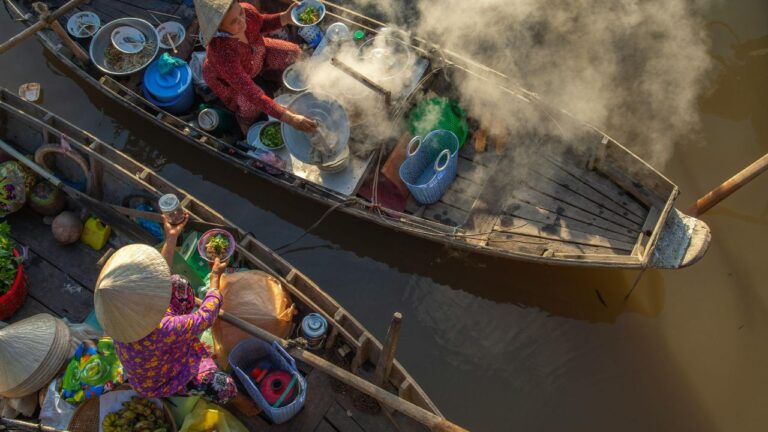
The local outlet Saigoneer ran a story about young people from all walks of life—teachers, office workers, engineers, students, factory hands—singing southern classical music more than a century old in a Ho Chi Minh City bar. Their group is called "Đờn Ca Đó Đây" (meaning "playing here and there"). What they perform is don ca tai tu, a traditional music rooted in Vietnam's Mekong Delta. Formed as an official group in March 2025, they keep playing in parks, cafés, schools, and bars—"places you wouldn't expect classical music." To Japanese readers this may look like a niche genre from a faraway country, but it mirrors, strikingly closely, the challenges facing Japanese traditional arts like rakugo, folk song, and rokyoku.
An "amateur crew" with zero professional musicians takes center stage
According to Saigoneer's article, Đờn Ca Đó Đây is led by Đỗ Thanh Phong. Alongside his office job, he plays the đàn tranh - a plucked string instrument similar to the koto - at a beginner level, self-taught. The membership is telling. A teacher handles the educational activities and script-writing; a student from Dong Thap Province who joined via TikTok runs the arrangements and musical side; there are also an engineer and a factory worker. Not one of them has had professional musical training.
It began with an encounter on social media. In early 2025 they started gathering like an offline meetup at Lê Văn Tám Park in central Ho Chi Minh City, and in March of the same year it took shape as a performing group. That it was not spread top-down by experts, but started by enthusiasts finding each other online and pitching in on their own dime, is the heart of this movement.
What is don ca tai tu
Don ca tai tu (Đờn ca tài tử) is a style of folk music and song handed down in southern Vietnam for more than a century. Hue's courtly ceremonial music is said to have changed shape to fit the southern landscape as people migrated south, with its melodies and playing techniques systematized in the 19th century to reach a peak. Its hallmark is a mellow, nostalgic tone that reflects the feelings and lives of Mekong Delta residents. In 2013 it was inscribed on UNESCO's list of intangible cultural heritage (the Representative List of the Intangible Cultural Heritage of Humanity), and it counts as one of Vietnam's signature traditional arts.
But prestige and reaching young people are separate issues. The article frankly conveys that younger generations tend to see it as "damp," "old-fashioned," and "hard to get into." Even with the title of intangible cultural heritage, it has drifted away as an everyday musical experience, and this gap in feeling is exactly the one that don ca tai tu is trying to fill.
The script is rewritten for each venue
What is interesting about their approach is that they don’t fix the program. They rewrite the script every time to suit the venue and audience, and they prize back-and-forth with the crowd. Building on traditional melodies, they set modern themes like career worries and city life to new lyrics. They also make songs woven with southern place names such as Vinh Long and Ca Mau. The idea is to pour the contents of today’s life into an old vessel.
The activity is scattered across many places. At 'Hai To Bar' on Huynh Man Dat Street, they perform cai luong (reformed opera — a traditional southern musical theater) on Saturdays. Cafes, schools, exhibitions, restaurants — they're not picky about where they play. TikTok is both a broadcasting channel and a recruiting tool, and it was this platform that drew in a student from Dong Thap Province.
Reading it alongside the modernization of Japan's traditional arts
This movement resonates on many points with the "modernization" of traditional performing arts happening in Japan. The first thing that comes to mind is the folk-song-based band Minyo Crusaders. They've cross-bred folk songs from across Japan with Latin and Afrobeat, performed at overseas festivals, and dug up young audiences. The method of reaching unfamiliar generations through "old melody × a different rhythm" closely mirrors don ca tai tu's idea of putting contemporary lyrics over traditional melodies.
There's a similar structure in the world of rakugo. Over the past decade it's become common for young rakugo performers to cherish the yose (the regular vaudeville halls) while expanding their stage to cafés, bars and video streaming, sharing their daily life on social media to win new audiences. The lament that "the mainstream venues (the yose / public halls) are slow to prioritize young performers or new approaches" is almost identical to Phong's words.
Rokyoku likewise sees young performers attempting a revival at small live houses and self-organized events. What they share is the sequence of not waiting for an authoritative big stage, but first building a close-range relationship with the audience in a familiar place. That Vietnam’s young people started in parks and bars is exactly this “secure the small venue first” strategy. On how to pitch tradition,The story of a blind MasterChef rewriting her family's Vietnamese cooking, you can see that a stance of "rewriting while inheriting" is happening simultaneously across many fields in Vietnam.
The "inherit while rewriting" movement, seen in the data
Placing Đờn Ca Đó Đây's efforts alongside the modernization of Japan's traditional performing arts brings the shared methods into focus.
| Item | Đờn ca tài tử (Vietnamese) | Minyo Crusaders / young rakugo performers (Japan) |
|---|---|---|
| The people driving it | Amateurs—office workers, teachers, students, and the like | Pros plus moonlighting musicians, young rakugo performers |
| Announcement venue | Parks, bars, cafés, schools | Festivals, live houses, café storytelling shows |
| Customer-drawing channels | Social media centered on TikTok | YouTube, social media, streaming |
| Updating the content | Traditional melodies + modern lyrics | Folk songs plus rhythms from other genres, and new pieces on current topics |
| The biggest barrier | Securing places to perform; wariness from older generations | Drawing audiences and securing regular venues; the generational gap in enthusiasm |
A title alone (UNESCO intangible cultural heritage / traditional storytelling art) won’t move young audiences; a point of contact is only created once you provide everyday venues and an online path yourself — this structure is the same in Vietnam as in Japan.
Reactions locally and nearby
The Saigoneer article also reveals several reactions from around them. First, people who learned of the group are sending donations of traditional clothing from across the country—ao ba ba, khan dong (khăn đóng), and ao dai. Second, connections with overseas Vietnamese (Viet Kieu) are giving rise to cultural exchange projects. Third, older residents stop to listen to the public performances, creating a space that bridges generations.
On the other hand, Phuong doesn't hide the walls. "Where to perform and how to connect with the audience is my biggest worry. Official venues don't prioritize grassroots performers, so our activity is inevitably ad hoc and completely independent. And older generations are still wary of our new approach to this old art." Praise and wariness coexist—that's the reality, and it too overlaps with the path young performers in Japan walk.
What it suggests for Japanese readers and businesses
This case is rich in lessons for Japanese businesses and regions that deal in traditional culture too. There are three key points.
The first is 'the courage to lower the venue.' Rather than waiting for high-status halls or established theaters, they reach new audiences by coming down to bars, cafes, and parks. The second is 'translating the content.' Instead of presenting the original song or form as is, they re-tie it to today's worries and local topics. Just as the don ca tai tu players weave place names like Vinh Long and Ca Mau into their songs, using regional names and the texture of daily life as material creates a sense of ownership. The third is 'the internet is for recruiting comrades, not just announcements.' What worked was not only drawing customers on TikTok but recruiting the performers themselves.
The same idea holds in food culture too. Rather than selling regional ingredients and local dishes "as is," translate them into answers for today's dinner-table problems—this stance of "rewriting while inheriting" applies directly to thinking about how to sell farm produce, dried vegetables, and traditional processed goods.
Where can travelers hear it?
For travelers to Ho Chi Minh City who want to catch a live performance of đờn ca tài tử, here are some pointers. Performances are ad hoc and their schedules fluid, so checking the latest information on social media before your visit is a prerequisite.
| Venue and occasion | Details | Point |
|---|---|---|
| Hai To Bar (Huynh Man Dat Street) | Staging cai luong (southern traditional opera) on Saturdays | You can enjoy it while relaxing at a bar. It's on set days only, so check in advance |
| Le Van Tam Park | Informal gatherings and performances that double as practice | You can soak up the atmosphere for free, but the schedule is irregular |
| Cafes, schools, and exhibitions around the city | Occasional pop-up performances | Check the group's TikTok for announcements |
If you want to enjoy southern traditional performing arts more reliably, tours in the Mekong Delta (toward My Tho or Can Tho) often build in đờn ca tài tử performances, and you can sometimes hear them paired with a riverside boat ride. For those who want to build a Vietnamese cultural experience into their itinerary,The story of a Hanoi café that dropped music and switched to readings and animeAs with this, keeping in mind that Vietnam's live-music culture is now moving in many directions widens how you can spend your time on the ground. If you want to walk the old quarter and take in the sounds of the city,How to walk Hanoi's Old Quarter as it goes car-free on weekendsis also a helpful reference.
Summary: what you can do next
The story of Đờn Ca Đó Đây is a case of an amateur group answering, from the field, the universal question of "how do you pass intangible cultural heritage to the next generation?" Set alongside the modernization of Japan's rakugo, folk song and roukyoku, the outline of an answer comes into view. Lower the venue, translate the content, gather comrades online. These three points work just as well not only for traditional performing arts but for promoting a region's food culture and local industries.
The concrete next thing you can do as a traveler: if you go to Ho Chi Minh City, check the group’s TikTok for performance schedules and work a Saturday show at Hai To Bar or a traditional-music slot on a Mekong Delta tour into your itinerary. Hear the live performance, and touch grassroots forms of support such as tips or costume donations, and you should feel that intangible cultural heritage is not a “preserved past” but a “culture in motion right now.”