Hoi An craftsman Huỳnh Văn Ba is known as the person who devised the foldable lantern that is easy to carry home. His idea came from applying the opening-and-closing mechanism of fans and umbrellas to solve travelers' complaint that lanterns would not fit in their luggage. Because the original article's reference to "half a century" is inconsistent with the documented start of production, it has been removed; what follows is a summary of the confirmed background and guidance on choosing one.
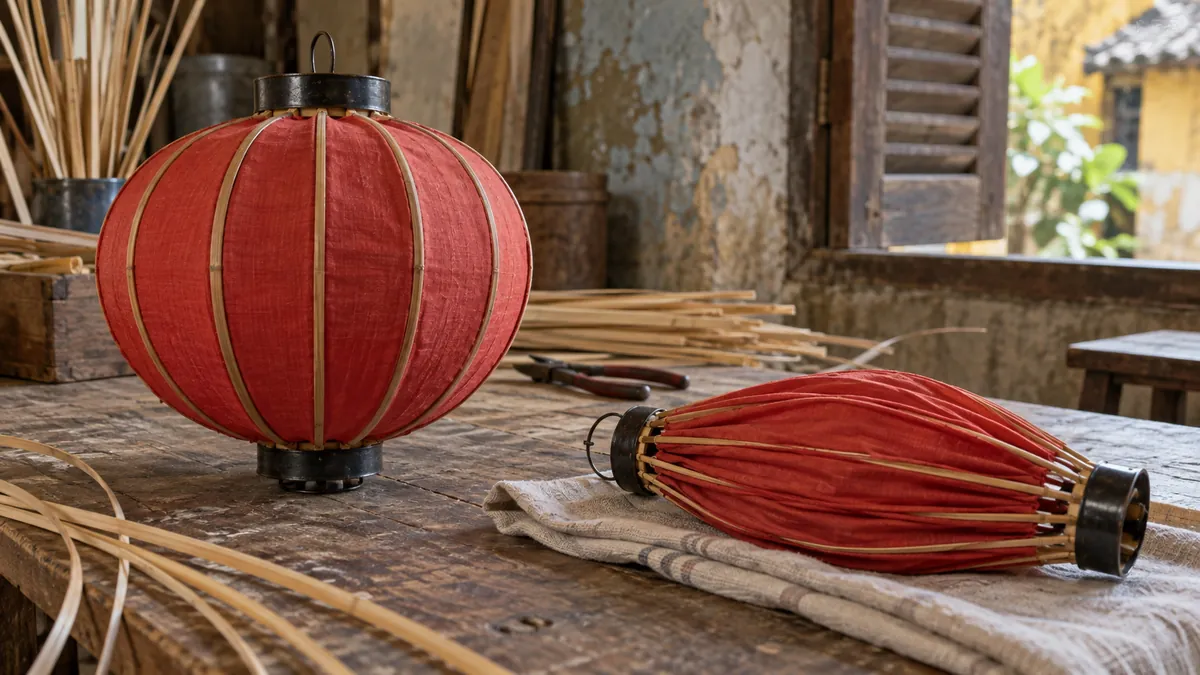
From bamboo craft to lanterns
Ba worked at a bamboo-craft cooperative making blinds, baskets, and flower vases, and is described as having begun making lanterns in the 1990s. In 2010 he received a title equivalent to "Outstanding Artisan" from Vietnam's head of state. Rather than stating definitively that he is the sole official inventor, it is more cautious to regard him as the representative craftsman who established and popularized the folding lantern of Hoi An.
About six months of prototyping sparked by a traveler's remark
The story goes that an Australian traveler's comment—that she wanted to buy a large lantern but it would not fit in her suitcase—prompted roughly six months of prototyping. The structure gathers the ends of bamboo strips onto a central axis and opens or closes by moving the top and bottom frames. The advantage is not so much durability as the ability to reduce volume. Because bamboo strips and fabric are vulnerable to pressure, moisture, and heat, the lantern should be wrapped in clothing for protection inside luggage.
Check materials for each individual item
| Item to check | What to look for |
|---|---|
| Frame | Bamboo strips: splits, catching when opening and closing |
| Fabric | Labeling (silk, synthetic fiber, etc.), uneven color |
| Adhesive | Fabric lifting away, glue seeping out |
| Hardware | Looseness of the axis, strength of the hanging attachment |
| Lighting | Whether the bulb and socket are compatible with Japanese voltage and standards |
The original article described bamboo and Ha Dong silk as the standard materials, but not all products on sale use the same materials. Rather than relying on the words "handmade" or "silk" alone, ask the shop about the maker, the materials, and how to have it repaired.
In Japan, prioritize electrical safety
Displaying the lantern body as decoration and using the included electrical components in Japan are two separate matters. Any components whose plug type, voltage, heat output, or PSE compliance cannot be confirmed should not be connected; it is safer to source a compatible LED light separately in Japan. Do not use candles or high-temperature incandescent bulbs near the fabric and bamboo.
How I would check things on the ground
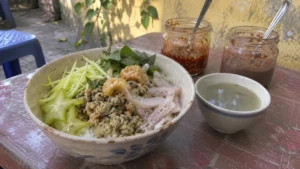
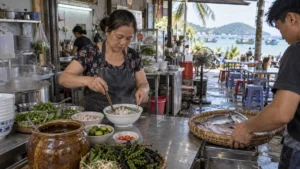
For restaurants and food, I look at the condition of the shop rather than its reputation. I would check the price list, cooking and storage practices, how busy it is, and the ingredients, and if something seems off, I would choose a different shop or order a smaller portion. Since opening hours, prices, and menus change, I would not insist on old information when talking to staff. For food to bring home, even if it is pre-packaged, I would confirm Japan's animal and plant quarantine and customs conditions.
To preserve the amount of information in the article, the policy is to retain the background and options covered in the original article and correct only errors. If you are unsure how to decide, write down your constraints in terms of time, budget, energy, and travel companions, and choose one priority. Because the optimal answer changes when conditions change, it is important not to apply the article's conclusions directly to your own situation.
How I would check things on the ground
For restaurants and food, I look at the condition of the shop rather than its reputation. I would check the price list, cooking and storage practices, how busy it is, and the ingredients, and if something seems off, I would choose a different shop or order a smaller portion. Since opening hours, prices, and menus change, I would not insist on old information when talking to staff. For food to bring home, even if it is pre-packaged, I would confirm Japan's animal and plant quarantine and customs conditions.
Buying in a way that sustains the craft
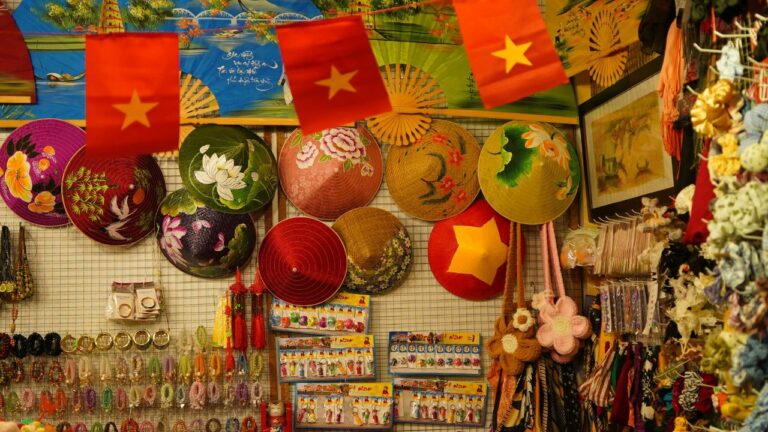
Rather than hunting for the cheapest option, buying from a workshop that can explain its production process—and joining a hands-on session if available—puts more revenue directly in the craftsperson's hands. Making the lantern foldable did not dilute tradition; it was an improvement that allowed handcraft to continue in step with travel and daily life. Taking that thinking home with you leaves the purchase with more meaning than a mere decoration.
Reference:Saigoneer、The Hoi An Chronicles
How to use the information in this article for current planning
Proper nouns, figures, prices, and opening hours are updated over time. Check the publication date and the period covered by the article, and reconfirm with official information from operators, government bodies, or companies immediately before booking or visiting. When reading reviews, look at the posting date and the specific conditions of use, and avoid judging safety or quality based on a single rating alone.