An essay by Tom Pham, a Vietnamese-French man who grew up in the Chinatown of Paris’s 13th arrondissement, recounting the shock of the moment he learned that “soy milk isn’t on the menu” at a restaurant in Saigon, was published on Saigoneer. It vividly depicts the gap between the “imagined Vietnam” held by a diaspora child and the actual table culture.
The table in Paris’s 13th arrondissement—the boyhood when soy milk was “Vietnam itself”
Tom Pham is a French-born young man with Vietnamese parents. His childhood table was surrounded by the Vietnamese cooking his grandmother made, but there was one moment that felt like “authentic Vietnam,” beyond an extension of home cooking: the cold soy milk (sua dau nanh) served at a Vietnamese restaurant in Paris’s 13th arrondissement.
“A faint sweetness and a slightly earthy flavor. Drunk between bites, the coolness spread through my mouth.” For Pham, that cup was a symbol of the “taste of the homeland” out of reach in France.
The reality thrust upon him in Saigon—“Soy milk? We don’t have that”
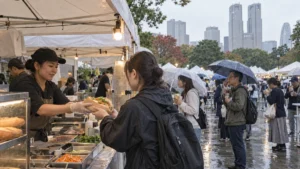
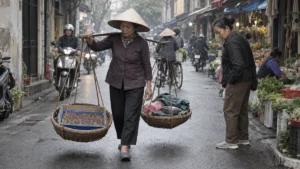
Visiting Saigon for the first time, Pham tried to order soy milk as a matter of course at a restaurant. But what came back was a puzzled face and a single line: “We have tra da (iced tea), though.” Soy milk wasn’t a standard drink at the Vietnamese table. Even though it’s sold on the street in the morning, it isn’t something served alongside a restaurant meal.
That Vietnamese restaurants in Paris’s 13th arrondissement served soy milk was the result of a mix of the local Chinese-descended culture and the eating habits unique to France’s Vietnamese community—a separate thing from the standard in Vietnam proper.
The diaspora food culture that produces an “imagined Vietnam”
This “gap” doesn’t stop at Pham’s personal misunderstanding. An immigrant community’s food culture begins its own evolution the moment it leaves the home country. Ingredients available in France, local customers’ preferences, and the food cultures of Chinese, Lao, and Cambodian communities blend together, giving birth to “Vietnamese food that doesn’t exist in the home country.”
| Element | Vietnamese food in Paris’s 13th arrondissement | The reality in Saigon |
|---|---|---|
| Drink during meals | Soy milk (sua dau nanh) | Iced tea (tra da) |
| The positioning of soy milk | A standard menu item at restaurants | Centered on morning street sales |
| Food-culture influences | Chinese-descended, French-Vietnamese mix | Southern Vietnamese local |
| The standard for “Vietnamese-ness” | Parents’ and grandparents’ memories | The reality of daily life |
Da Lat-style soy milk wasn't "that taste" either (though he's never been to Da Lat)
Pham later tried soy milk at a Da Lat-style shop known for it (though he's never actually been to Da Lat). But "that taste he remembered from childhood" didn't come back. It wasn't a matter of flavor. The soy milk he drank in a dimly lit Paris restaurant, surrounded by family, had one ingredient mixed in that no shop could replicate: longing for a homeland he'd never seen.
At the close of the essay, Pham writes this: “This mythical “taste of Vietnam” wasn’t inside the drink. What I was searching for was a connection with a home that was distant both geographically and culturally.”
The “food-culture gap” travelers can experience
For travelers visiting Vietnam, this essay becomes an occasion to be aware of the gap between “guidebook Vietnamese food” and “the local table.” The pho you eat in Japan and the pho of Hanoi, Japan’s banh mi and Ho Chi Minh City’s street banh mi, are different enough to be called separate foods. That very difference is the fun of visiting the place itself.
Places where you can drink Vietnamese soy milk
| Location | Style | Characteristics |
|---|---|---|
| Morning markets in Ho Chi Minh City | Street sales | Warm soy milk + fried dough (quay) is the standard breakfast set |
| Around the Da Lat market | specialty shop from Tsukiji, Tokyo, | Warm soy milk is a specialty in the cool highland climate |
| Hanoi's Old Quarter | Street sales | It’s often sold together with tofu pudding (tau hu) |
| Paris’s 13th arrondissement (for reference) | Restaurant | Served as a side drink to a meal |
Related reading
- A French couple’s two-month homestay in the Mekong Delta—behind 300 million views on social media
- Hanoi’s famous “Bun Thang 50” opens in Ho Chi Minh City
- Ho Chi Minh City’s “Gastronomy and Food Culture Festival 2026” gathers 500 dishes
Frequently asked questions
Q. Can you drink soy milk at Vietnamese restaurants?
A. It’s rarely on restaurant menus. It’s common to buy it from morning street sellers or market stalls.
Q. Why are there so many Vietnamese restaurants in Paris’s 13th arrondissement?
A. The 13th arrondissement developed as a settlement destination for Indochinese refugees from the 1970s onward, and it remains an area where Vietnamese and Chinese eateries are concentrated.
Q. Is the difference between overseas Vietnamese food and local food big?
A. Due to ingredient availability, local customers’ preferences, and the influence of surrounding food cultures, both the menu composition and the seasoning differ considerably. Experiencing that difference is the real thrill of travel.
Source:
Saigoneer – How Soy Milk Symbolizes an Imagined Vietnam of My Childhood in France