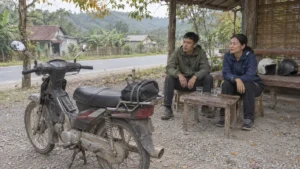
In spring 2026, safety management for tours and rental motorcycles on the Ha Giang Loop, a mountain route in northern Vietnam, was tightened. On April 14, the Tuyen Quang Province Department of Culture, Sports and Tourism announced that it would rigorously enforce operator responsibilities and verify contracts, guides, and insurance for motorcycle tours in the former Ha Giang province area. If you are considering the trip drawn by the mountain scenery, the first thing to establish is who will be riding and how far the operator's responsibilities extend. This article separates the confirmed measures from the conditions Japanese travelers should have in place before departure.
Safety Measures Strengthened in Spring 2026
According to the provincial tourism authority's announcement, operator inspections were planned from the start of the year; a focused inspection targeting unlicensed tours and similar operations was planned for March, with multiple checks scheduled through the end of April. Tour companies are required to operate in accordance with their contracts, prepare safety plans suited to each route, and have guides with valid credentials accompany all trips. A provincial police announcement on April 16 also reported patrols and enforcement of violations. The core of the confirmed measures is the inspection of tour operations and the strict enforcement of existing traffic rules. Road access conditions need to be checked separately against local information on the day of your visit.
Speed limits and helmet regulations
- Follow Road Signs and On-Site Regulations for Speed. Do not apply a single figure to the entire loop; check the limit for each section. This does not mean you can ride up to the posted limit—slow down sufficiently on sharp curves and where visibility is poor.
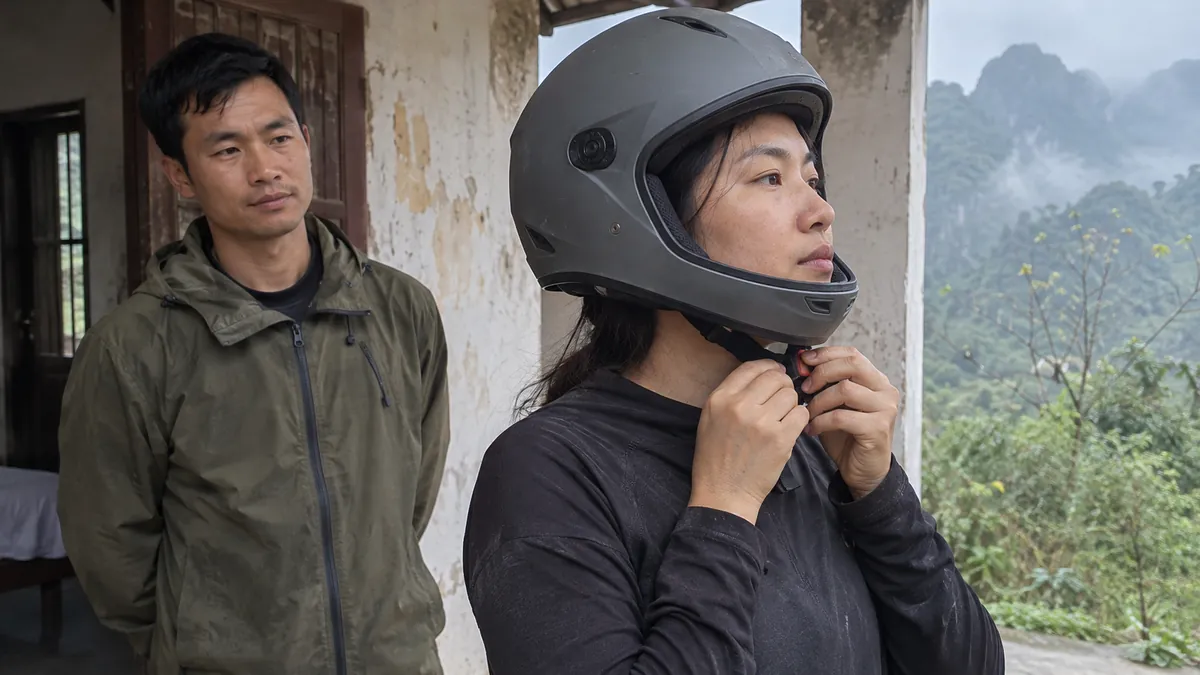
- Helmets Must Be Worn with the Chin Strap Fastened. Under the government's Decree 168/2024, riding without a helmet or with it improperly fastened is subject to a fine of 400,000–600,000 VND; this has been a nationwide rule since January 2025. If you are riding as a passenger, check before departure that your helmet fits correctly and can be properly fastened.
- The tourism authority recommends riding during daylight hours and finishing before dark. This is a safety-based approach to planning your itinerary, separate from any blanket time restrictions. On mountain roads such as Ma Pi Leng Pass,Plan to Arrive at Your Accommodation Before Dark
Decide on Rest Stops and Emergency Contacts in Advance
The distance and number of days for the loop vary depending on the route. The tourism authority's model itinerary includes a four-day example, and it notes that services become limited once you leave town. Before departure,rest stops, refueling points, and emergency contact methodsshould be confirmed with your operator. Do not plan your itinerary on the assumption that rescue will arrive quickly or that you will have phone signal everywhere. Bring water, rain gear, warm clothing, and a backup power bank, and save the contact details for your accommodation and insurance company somewhere accessible offline. The ambulance number is 115, but the Ministry of Foreign Affairs notes limitations around communicating in Vietnamese and restrictions on where patients can be transported. It is also worth deciding in advance who will communicate your situation and location in the local language if something goes wrong.
The impact on Japanese motorbike tourists
International driving permits and cautions on local rentals
According to a July 2026 notice from the Embassy of Japan in Vietnam, a Japanese driver's license and an international driving permit issued in Japan are not valid in Vietnam. This is because Japan's international driving permits follow the 1949 Geneva Convention format, which differs from the 1968 Vienna Convention format that Vietnam recognizes. Even when using an international driving permit issued by a country under the Vienna Convention, you must carry it together with a valid domestic license for the vehicle category you intend to drive. Converting a Japanese license involves conditions and procedures, and you should not assume it can be completed during a short trip. The fact that a rental shop hands over the keys is separate from whether you are legally permitted to ride. If you do not have the proper license or experience on mountain roads, consider riding as a passenger with a local driver on an Easy Rider tour, or exploring the area by car with a driver. Riding as a passenger does not eliminate the risks, and you should still verify the driver's credentials and the operator's safety practices.
An article about Yasushi Ogura, a Japanese national supporting cultural preservation and tourism in the former Ha Giang area,offers a way to see this region not just for its scenery but as a place where people live. When traveling to experience the cultures of the Hmong, Tay, Dao, and other ethnic groups, it is also important not to block village paths for photography or to photograph homes and people without permission. Do not stop abruptly in the middle of a curve for a photo—discuss with your guide where it is safe to pull over. Not letting your own desire to take in the view drive every decision is a basic principle of visiting these communities.
What to prepare before traveling
- Ask your booking contact for the operating company name, tourism business license, contract, guide credentials, and how the driver and vehicle can be verified. Get in writing what is included in the price—accommodation, meals, entrance fees—and how cancellations due to bad weather are handled. If you are told something is "officially certified," ask which specific license or registration is being referred to.
- Check in advance that a helmet fits your head properly. Consider a full-face helmet, and check for damage, chin strap condition, and whether gloves and protective gear are provided. Whether you bring your own or rent, avoid anything that is too large or cannot be properly fastened.
- Tell your insurance provider your destination, the engine displacement, and whether you will be riding yourself or as a passenger, then confirm the coverage for medical treatment, emergency evacuation, and liability. Coverage varies by product and policy, and some products exclude unlicensed riding. Check both the operator's insurance and your own travel insurance, and keep a record of the responses.
- Before leaving Ha Giang, and before departing each subsequent accommodation such as Dong Van, check with your lodging or operator for information on rain, fog, construction, and road closures. On days when you are tired or visibility is poor, keep the option open to shorten your plans or postpone your departure.
A change in safety awareness across Vietnamese tourism as a whole
According to Vietnamese government communications citing national statistics authority figures, the number of international visitors in January–March 2026 was approximately 6.76 million, up roughly 12% year on year.An article covering quarterly tourism trendsandAn article covering arrival trends including Japanese visitorscovers the country as a whole, and those figures cannot be used to assess accident rates or safety conditions on the Ha Giang Loop specifically. The regional inspections described here are best understood as a move to review the substance of tours—contracts, drivers, vehicles, and guides. For participants, what matters more than popularity or review scores is whether an operator can give concrete answers to specific safety questions.
Riding a motorcycle yourself is not the only way to enjoy the scenery of Ma Pi Leng Pass and the Nho Que River. Start by choosing a mode of transport that suits your license and experience, then confirm the operator, equipment, and insurance, and finally adjust your daily itinerary based on the weather. Following that order makes it easier to balance your desire to see the scenery with a realistic plan.An article covering the late April 2026 holiday periodand other dated travel information should be treated as past guidance; please check road conditions for the specific days you plan to visit. Strengthened safety measures are not a guarantee that anyone can ride the route without concern.