
Vietnam Airlines flights linking Japan and Vietnam are thickening in stages. For the central resort city of Da Nang, Tokyo (Narita) rose to 11 flights a week and Osaka (Kansai) to 5 a week from July 1. In the winter schedule, Hanoi–Osaka (Kansai) goes to 11 a week on October 26 and up to 14 a week (equal to two round trips a day) on December 1. More flights reach Da Nang without a transfer, and Kansai–Hanoi round trips approach a two-a-day setup. For travelers it becomes easier to get seats at preferred times; for residents, more flights become usable for home visits or bringing family over.
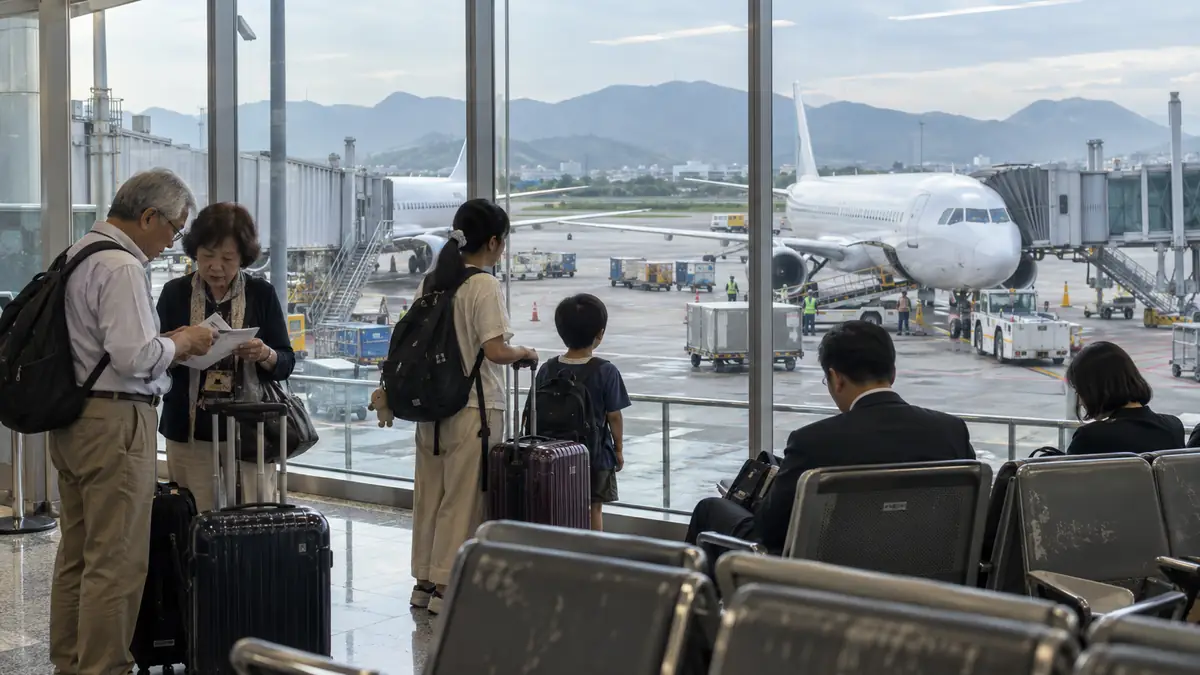
Da Nang moved first, with added flights already in place from July 1
This expansion is proceeding not through new routes but by 'adding frequencies to existing ones.' Already in effect are three routes out of Da Nang. Through the Da Nang Tourism Department, Vietnam Airlines has announced that from July 1 it increased Da Nang-Tokyo (Narita) to 11 weekly flights, Da Nang-Osaka (Kansai) to 5, and Da Nang-Seoul (Incheon) in South Korea to 14. Direct service from Da Nang, the gateway to central Vietnam, to Tokyo, Osaka, and Seoul thickened all at once.
Until now, getting from Japan to Da Nang often meant a connection in Ho Chi Minh City, Hanoi or a third country. With 11 direct flights a week from Tokyo and five from Osaka, you can cut the several hours of layover entirely. Da Nang-handy as a base for side trips to Hoi An and Hue-has moved closer to being a city you can "enter direct" from Japan.
The winter schedule's centerpiece is the doubling of Hanoi–Osaka
What moves next is out of Hanoi. Hanoi–Osaka (Kansai) rises to 11 flights a week from October 26 and to 14 a week on December 1. Fourteen a week equals two round trips a day, so departure times will likely split even within the same day. Alongside, Taiwan's Hanoi–Taipei also goes from 7 to 11 flights a week from October 26. Heading into the winter peak, the northern hub's Northeast Asia routes get a lift.
Only Hanoi–Osaka changes frequency by season, so when planning your itinerary, sort out "how many flights from when" to avoid mixing it up.
| Line | Number of flights | Since when |
|---|---|---|
| Da Nang-Tokyo (Narita) | 11 flights a week | From July 1 (already in effect) |
| Da Nang–Osaka (Kansai) | Five flights a week | From July 1 (already in effect) |
| Hanoi–Osaka (Kansai) | 11 flights a week → 14 flights a week | From October 26 / from December 1 |
| Da Nang-Seoul (Incheon) * for reference | 14 flights a week | From July 1 (already in effect) |
| Hanoi–Taipei *for reference | 7 flights/week → 11 flights/week | From October 26 |
Why add frequencies now
Behind it is the sheer thickness of the flow of people to and from Vietnam. Vietnam Airlines explains the added flights as supporting broad traffic that includes not just tourism but investment, trade, family visits and people-to-people exchange. Winter is when travel demand from Japan rises, and Da Nang's beach resorts and central-northern spots like Hanoi and Hoi An remain firmly popular with Japanese visitors.
Momentum in nearby markets is significant too. According to statistics cited in Vietnam Airlines' announcement, South Korea became Vietnam's second-largest overseas source of visitors in the first half of 2026, with over 2.16 million arrivals. Japan and Taiwan also maintain steady two-way flows of people. The reasoning is to add flights to avoid losing bookings for lack of seats in high-demand markets.
How to work your itinerary and booking to come out ahead
A phase of more flights is a moment when travelers' options widen on both price and timing. Here are points to keep in mind when actually booking.
- For direct Da Nang flights, check the operating days first: The five-a-week Osaka route has days with no service. If your outbound and return days don't line up, you'll rack up extra nights, so plan both legs on matching days of the week.
- Hanoi–Osaka is best from December on: at 14 flights a week you'll likely choose from several departure times on the same day, and if you can shift your year-end holidays, it's easier to grab dates that dodge the peaks in crowds and price.
- Residents' home visits and bringing family over: as Kansai-Hanoi approaches two flights a day, arrival-time options grow. It's easier to pick a flight when bringing family over briefly or wanting a longer stay.
- Schedules change from the launch date onward: Frequencies switch over on October 26 and December 1. Lock in seats early for dates around those.
To cover the central region on a short break, a 4–5 day loop built around a direct Da Nang arrival and taking in Hoi An and Hue is easier to arrange than back when a transfer was a given. Da Nang keeps adding tourist highlights, such as launching a glowing-kite event on summer nights (Not fireworks: 500 glowing kites dancing over the night sea—Da Nang's new summer), more direct flights pair well with short trips aimed at events like these.
Consider airport-and-destination combinations too
The reception side in Vietnam is moving too. Near Ho Chi Minh City, the giant Long Thanh airport is set to open, and the southern gateway will change going forward (Giant Long Thanh airport opens December 1: how to use it alongside SGN?). What's increasing this time is Hanoi and Da Nang departures and arrivals, but if you tour the south combined with the center and north, how you pick your gateway cities and airports greatly changes travel time. Enter the north on a Hanoi-arriving flight, enjoy the Old Quarter's night walks and food, then head south—with more flights, that kind of itinerary gets more flexible on timing (Hanoi's nights grow longer as the city goes after what travelers spend after dark)。
Practical info: a roundup of added flights on Japan and related routes
| Operations | Vietnam Airlines |
|---|---|
| Da Nang-Tokyo (Narita) | 11 flights a week (already in effect from July 1) |
| Da Nang–Osaka (Kansai) | 5 weekly flights (in effect since July 1) |
| Hanoi–Osaka (Kansai) | 11 flights a week (from October 26) / 14 flights a week, equivalent to two round trips daily (from December 1) |
| Da Nang–Seoul (Incheon) | 14 flights/week (from July 1) *for reference |
| Hanoi–Taipei | 7 to 11 weekly flights (from October 26) *for reference |
| Reservations | Vietnam Airlines official site and travel agencies |
| Note | Days, times, and aircraft are subject to change. Check the latest flight schedule on the official site before booking |
In short: start by checking 'the operating days for the month you want to go'
Vietnam Airlines' Japan routes are thickening in two stages: Da Nang already got added flights in July, and Hanoi–Osaka doubles in winter. Da Nang already has direct service of 11 flights a week from Tokyo and 5 from Osaka, and Hanoi–Osaka goes to 14 flights a week from December 1. If you're considering a trip, start by checking the operating days of the Da Nang and Osaka flights for your target month on the official site, then align your outbound and return days and lock in seats early. For those who want to tour central resorts on a short break and residents shuttling frequently between Kansai and Hanoi, the second half of the year gets easier to move around in.