From April 17 to 19, 2026, the “World Coffee Heritage Forum” was held in Buon Ma Thuot, the capital of Dak Lak Province in Vietnam’s Central Highlands. The theme was “From diverse traditions to a living global heritage.” Representatives from UNESCO, the FAO, Thailand, and other countries gathered, and a concrete path was discussed for nominating knowledge related to Dak Lak Province’s coffee cultivation and processing to UNESCO Intangible Cultural Heritage.
Vietnam is the world’s second-largest coffee-producing country after Brazil, with Dak Lak Province at its core. Centered on the Robusta variety, the province alone accounts for about 30% of the country’s output. In March 2025, Vietnam’s Ministry of Culture, Sports, and Tourism officially recognized “the knowledge of coffee cultivation and processing in Dak Lak” as a national intangible cultural heritage, and this forum served as international groundwork toward the application to UNESCO.
What was discussed at the forum
About 40 research papers and presentations were delivered at the forum. The themes are structured around four pillars.
The first is “the history and cultural heritage of the world’s coffee.” It reported on the transmission routes of coffee—spreading from Ethiopia through the Arabian Peninsula and Europe to Asia—and the drinking cultures that developed independently in each region.
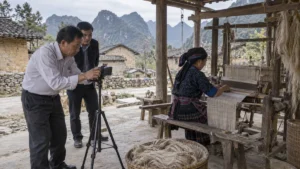
The second is “the knowledge system of cultivation and processing techniques.” It emphasized that the cultivation know-how handed down over many generations by Dak Lak’s ethnic minorities, the Ede and Jarai peoples, is not mere agricultural technique but “a living knowledge heritage.”
The third is “coffee as a consumption culture.” It analyzed Vietnam’s distinctive drip culture using the phin (metal filter) and the social role of condensed-milk coffee (ca phe sua da).
The fourth is “heritage preservation and sustainable development.” A discussion was held on how to reconcile growth as an industry with preservation as cultural heritage.
Vietnam’s coffee industry in numbers
| Indicator | Figure | Notes |
|---|---|---|
| World production ranking | 2nd | After Brazil |
| World share of the Robusta variety | 1st | About 40% of the world’s Robusta production |
| Dak Lak Province’s domestic share | About 30% | Vietnam’s largest production area |
| Coffee export value to Germany (2025) | US$1.22 billion (about 185 billion yen) | The second-largest supplier after Brazil |
| National intangible cultural heritage recognition | March 2025 | By the Ministry of Culture, Sports, and Tourism |
| UNESCO application | In preparation | Concrete discussion at this forum |
Voices of participants and stakeholders
“This initiative raises the added value of Vietnam’s coffee industry and strengthens our country’s standing on the world coffee map.”—Nguyen Minh Vu, Deputy Foreign Minister
“Coffee is not a mere agricultural product but a ”living heritage” embodying knowledge, customs, and spiritual value.”—a shared view of forum participants
“We position Buon Ma Thuot as a global coffee hub and promote building a brand with a production-area identity.”—Dak Lak Province People’s Committee
The impact on Japanese coffee lovers
Japan is one of the major importers of Vietnamese coffee. Much of the Robusta used in convenience-store coffee and instant coffee is from Vietnam, and many people are drinking Dak Lak coffee without knowing it.
If it’s registered as a UNESCO Intangible Cultural Heritage, the awareness and brand value of Vietnamese coffee will surely rise. In the specialty coffee market, Dak Lak-grown Arabica has already begun to attract attention.The egg coffee served at Hanoi’s Cafe Giang—as with this, the trend of Vietnam’s unique drinking styles being internationally valued will likely accelerate too.
The industrial transformation that turning coffee culture into heritage brings
UNESCO registration is also significant as a tourism resource.The Da Nang fireworks festival DIFF 2026—in addition to event tourism like this, there’s potential for Dak Lak Province’s “coffee-plantation tours” to grow as a new tourism product. Buon Ma Thuot already has the World Coffee Museum, which also served as the forum venue.
On the industrial side, the branding of “heritage coffee” is expected to raise the price of the Robusta variety. Robusta, currently traded cheaper than Arabica, could realistically shift into a premium price range as a cultural story is added.It’s the same structure as the case where Phu Quoc Island’s nuoc mam raised its value with a GI (geographical indication).The same structure as this case.
A guide to visiting Buon Ma Thuot
| Item | Details |
|---|---|
| Access | About one hour by domestic flight from Ho Chi Minh City. Buon Ma Thuot Airport (BMV) |
| Best season | November–April (dry season). The coffee harvest season is October–January |
| World Coffee Museum | In Buon Ma Thuot. Exhibits the history of coffee and various countries’ drinking cultures |
| Coffee-plantation tour | Half-day to one-day tours can be arranged through local travel agencies. Harvest and roasting experiences included |
| Signature coffee | Ca phe phin (iced coffee with condensed milk). 15,000–30,000 VND a cup (about 90–180 yen) |
| Lodging | About 3,000–8,000 yen a night for a hotel in the city |
Summary
Whether Dak Lak Province’s coffee culture will be formally registered as a UNESCO Intangible Cultural Heritage rests on the application process over the coming years. But the fact that it has already been recognized as a national intangible cultural heritage, and that UNESCO and experts from various countries took their seats at the discussion table at an international forum, is significant. The day when Vietnam’s cultural diversity is recognized by the world through coffee is surely drawing near.