
Phu Quoc, an island resort selling beaches and nature, has connected directly with a major city in inland China. On July 16, Sun PhuQuoc Airways launched a scheduled flight linking Phu Quoc International Airport and Chengdu Tianfu International Airport. It's Phu Quoc's first direct link to southwestern China, a move that lifts the island's positioning a notch, from "South China Sea beach resort" to "international hub receiving inland Chinese visitors." For those visiting Phu Quoc from Japan, too, how crowded the island gets and its atmosphere will surely change.
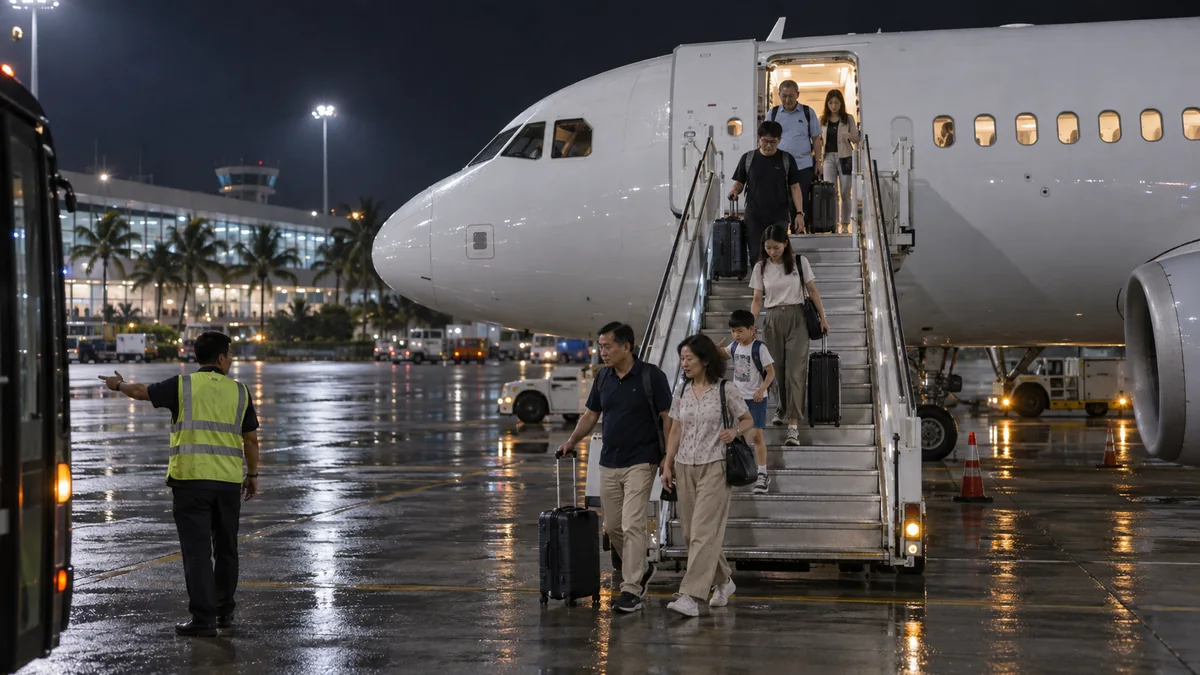
What kind of route launched
The Chengdu–Phu Quoc route runs three round trips a week on Tuesday, Thursday, and Saturday, using single-aisle A320neos. From Phu Quoc it departs at 4:25 p.m. and lands in Chengdu at 9:05 p.m.; the return leaves Chengdu at 10:05 p.m. and arrives back in Phu Quoc at 0:50 the next day. The trip takes just under four hours each way, letting inland travelers who used to transit through Hong Kong or Guangzhou reach the southern island in one go with no transfer. The carrier is an emerging airline under Sun Group, which set a discount of up to 20% for bookings from June 26 to July 26 to mark the launch, offering one-way fares at a promotional price from 2,408,000 dong (roughly the low 90s in dollars, about 14,000 yen at 1 yen ≈ 170 dong). The airline plans to add a Ho Chi Minh City–Chengdu route (four round trips a week) on August 12, driving into the single city of Chengdu from two directions.
How far Phu Quoc's international routes have spread
This route is not a one-off. This summer Sun PhuQuoc Airways has launched flights from major domestic cities such as Hai Phong and a Singapore route one after another, adding aircraft to fill out its network. The aim is clear: building the capacity to host the APEC leaders' summit set for Phu Quoc in 2027. In step with the airport expansion, the new Chengdu route is part of a process to recast the island from a domestic terminus into an international hub.
China is now the largest source of visitors to Vietnam, with 2.7 million arriving in the first half of 2026 alone, making up-together with South Korea-about 40% of arrivals. The Chengdu link reads as a move to capture the inland side of that big constituency direct, rather than via Hong Kong.
Chengdu is the central city of Sichuan Province, with a population over 20 million, and counting neighboring Chongqing and Yunnan it holds a hinterland on the scale of 100 million people. In a Chinese market where travel demand from the coast has run its course, this inland region is seen as having the greatest room to grow right now.
Phu Quoc qualifies for a visa exemption, so there's a regulatory tailwind too: even a Chinese passport can enter easily for a short island-only stay.
The Chengdu route by the route data
| Item | Chengdu-Phu Quoc route |
|---|---|
| Launch date | July 16, 2026 |
| Section | Phu Quoc International Airport to Chengdu Tianfu International Airport |
| Frequency | Three round trips a week (Tue, Thu, Sat) |
| Aircraft | A320neo (single-aisle) |
| Time required | Just under four hours one way |
| Departing Phu Quoc | Departs 16:25 -> arrives Chengdu 21:05 |
| Departing Chengdu | Departs 22:05 → arrives Phu Quoc 00:50 the next day |
| Inaugural fare | From 2,408,000 dong one way (bookings June 26 – July 26) |
Three different takes
The airline's approach is aggressive. Rather than simply selling seats, it foregrounds 'ecosystem funneling,' bundling free Hon Thom cable-car passes and discounts on Sun World-group lodging, dining, and spas for guests arriving from Chengdu. The design places the flight as the entry point to draw customers and recoups value at its own facilities on the island.
The hope of the island's tourism and lodging industry is that it fills a seasonal gap. Phu Quoc's occupancy tends to drop in summer as Western visitors thin out, but if inland Chinese guests looking to escape the heat pour in on three weekday flights, there's room to lift vacancies in the slow season. At the same time comes the worry of whether on-the-ground staff and transport can keep up with a sudden influx of groups.
Reactions from Japanese residents and travelers from Japan are mixed. There are voices welcoming that added connecting points widen ticketing options, but from the group that has chosen the island for its quiet beaches and calm lodgings, there's also wariness that internationalization will thin out the island's character.
How travelers and residents should approach it
In practical terms, adding the Chengdu flight thickens Phu Quoc Airport's international timetable overall. From Japan a connection is still the premise, but once the China, Singapore and domestic routes bundle together on the same island, there's more room to build unconventional routes involving Hong Kong or Singapore. The Chengdu flight in particular lands late, at 0:50 a.m., so rather than aiming to connect the same day from Japan, it's less of a stretch to plan on an overnight in a hub city.
On crowding, the things to watch are the day of the week and the time. Chinese flights concentrate on Tuesday, Thursday, and Saturday, with arrivals clustered from evening into night. Immigration and ride-hailing at Phu Quoc airport tend to clog in that band, so if you're Japanese, simply choosing mornings or the weekdays of Monday and Wednesday makes a real difference in how crowded it feels. For lodging, too, choosing a small place in the south of the island or the old town over a large resort near Sun World, where mainland-Chinese groups tend to stay, still secures a stay a step removed from the surge of internationalization. Since internationalization is an irreversible trend, the more you want quiet, the more moving 'early and on weekdays' pays off. From a resident's view, once the Chengdu flights take hold, Chinese-language support and payment options on the island will likely fall into place. If bookings via Chinese OTAs and the reach of UnionPay and Alipay expand, the island's prices and service standards may move to match group tourists, gradually affecting the sense of living costs. Before the once-reasonable southern inns and eateries drift toward tourist pricing, it's worth the idea of locking in your regular haunts.
Ripple effects on the industry
The choice of Chengdu reveals this route's essence. Coastal megacities like Beijing and Shanghai are already locked up by other carriers, but inland southwestern China was a direct-flight blank spot. Planting a flag there first pulls a hinterland of some 100 million people-Sichuan, Yunnan, Chongqing-into Phu Quoc's catchment. It's also a scramble against established China-facing resorts like Da Nang and Nha Trang. If Phu Quoc can fix first the position of "the southern Vietnamese island closest to inland China," the edge won't easily shift even if a latecomer city runs the same Chengdu route. For Japanese travelers, it's worth watching this single flight as a turning point at which Phu Quoc changes from a quiet island centered on Western and Korean visitors into a mixed resort where East Asia's major visitor sources mingle.
Summary
The launch of the Chengdu–Phu Quoc direct flight is a milestone: the first time an island resort has been directly linked with inland China. Three flights a week on an A320neo is still modest in scale, but seen together with the pre-APEC expansion of the route network, it's a stepping stone that advances the island's internationalization a notch. Those visiting Phu Quoc from Japan should take the more convenient ticketing options while dodging the crowded days and times, and lock in quiet lodgings in the island's south early. Precisely because internationalization is advancing now, it's worth rethinking once how you engage with the island.
Along with this,Why the Phu Quoc-based emerging airline is moving toward a 26-aircraft fleetandPhu Quoc today, going international as a Korean-drama filming locationwe've compiled booking tips for the peak seasonThis summer's big surge in Vietnam flights and how to get seatsis a useful reference too.