
Every time you swap out the kitchen gas tank, the number on the receipt shifts a little. From September 1, 2026, retail prices for household LPG (bottled gas) went up again. The increase itself is small, but for residents who cook at home, it feeds directly into the monthly budget. Here's a look at what's behind the numbers and what you can do starting tomorrow.
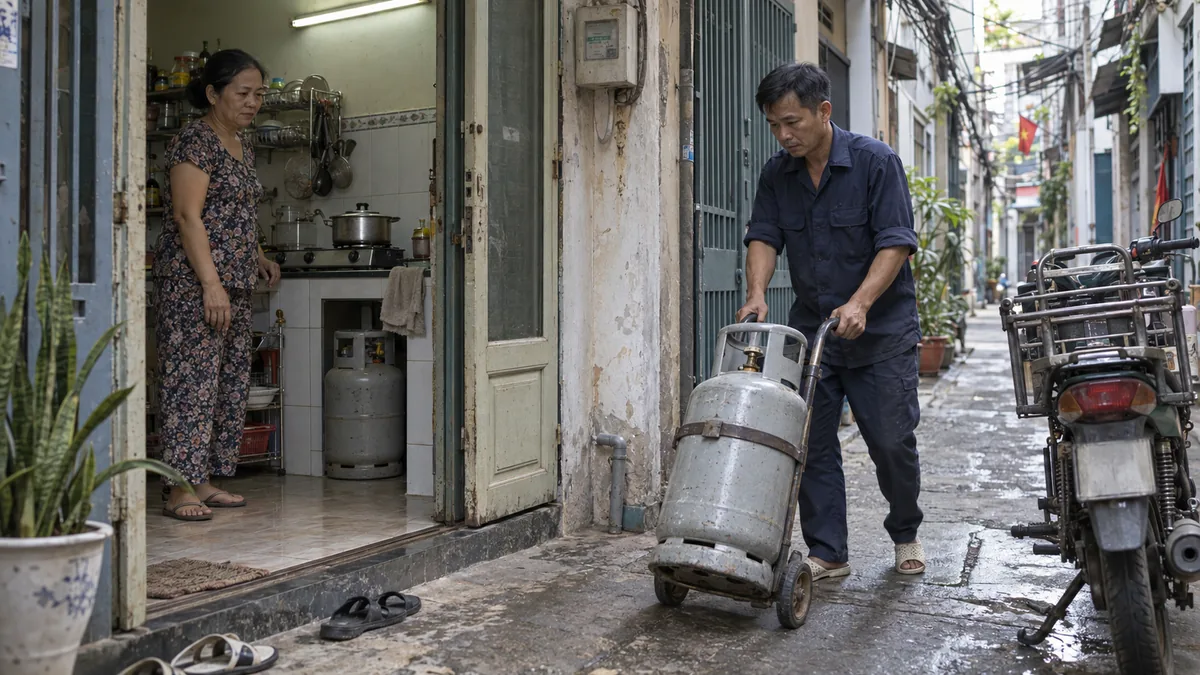
September 1: household gas tanks got more expensive again
The Gas South group of brands (Gas Dầu Khí, VT-Gas, A Gas, JP Gas, Đăk Gas, Đặng Phước Gas, and others) announced a retail price increase effective September 1. The hike is +5,000 dong for a 12kg tank and +18,750 dong for a 45kg tank; the exact amount varies by brand and region, but they're all moving in the same direction, upward.
A separate revision in September, on top of August's hike
In August, a 12kg tank in Ho Chi Minh City jumped by a large 30,000 dong to 552,000 dong (A 12kg gas canister in Ho Chi Minh City rises to 552,000 dong, up 30,000 dong from August). This September revision is separate from that one, marking the second adjustment in a row across two months. Where August was a big jump, September is a smaller add-on, a difference in character worth noting. The key point to grasp first is that August's hike didn't mean September would hold steady.
The increase: 5,000 dong for 12kg, 18,750 dong for 45kg
This increase amounts to 5,000 dong for a 12kg tank and 18,750 dong for a 45kg tank. Converted at roughly 1 yen = 170 dong, that's about 29 yen added for the 12kg tank and about 110 yen for the 45kg tank. After the revision, retail prices sit at around 3,350 yen for 12kg and about 12,550 yen for 45kg. Since households almost always use the 12kg size, it's fair to think of this as "a bit under 30 yen more per tank." The 45kg size is a large format for commercial use such as restaurants and is rarely seen in homes.
The trigger: an international CP price of 642.5 dollars
The direct cause of the increase is a rise in the CP (Contract Price), the international trading benchmark. September's CP came in at 642.5 dollars per ton, up 12.5 dollars from August. Because Vietnam sources most of its household LPG through imports or pricing tied to overseas benchmarks, a rise in CP feeds straight through to domestic retail prices. This month's 12.5-dollar move is modest as monthly swings go, which is why the retail increase stayed small.
Vietnam's gas prices are built to move every month
Household LPG prices are reviewed on the 1st of every month, based on the CP announced at the end of the previous month. Since CP is denominated in dollars, the dong exchange rate plus taxes and shipping costs are layered on top to set the final retail price. Unlike Japan's piped city gas on a fixed contract, it's a system where you pay that month's going rate each time you replace a tank; understanding that up front keeps the price swings from being a surprise. This revision also lands at a time when rising prices are already squeezing household budgets (From YOLO to frugality—rising prices have changed how Vietnam's Gen Z spends)。
Estimating the cost to home-cooking households
For a two-person household that cooks properly every day, a 12kg tank often runs out in a month and a half to two months. At a pace of roughly one tank a month, this increase adds under 30 yen to monthly spending. That's small in a single month, but combined with August's 30,000 dong, the retail price has climbed by 35,000 dong, about 200 yen, over two months. Since revisions will keep coming every month, it's more accurate to track the cumulative rise than any single month's increase.
Ways to save on the burner before you even swap the tank
You can reliably cut gas costs by changing how you use the flame. A flame that spills out past the bottom of the pot just wastes heat, so match the flame size to the pot. For simmering, bring it to a boil, then turn it down low and cover with a lid. Batch-prepping ingredients to cut the number of times you heat things up also helps. Add these habits up and a tank's lifespan shifts by a week or more. Even the same 12kg size varies in price between brands, so checking the price with the delivery vendor when you swap tanks avoids waste. Timing your ingredient shopping to sale periods also helps the household budget (Groceries at half price: how to shop the all-out Vietnamese supermarket sale running through July 22)。
Is switching to induction (all-electric) an option?
Every time prices rise, switching to an induction cooktop (bếp từ) comes to mind. Induction needs no tank deliveries or swaps, and without an open flame, the room stays a bit cooler in summer. But it comes with upfront costs for the unit and induction-compatible pots, electricity is billed on a tiered rate that climbs as usage rises, and it won't work during a power outage. Gas has low upfront costs, intuitive heat control, and still lets you cook during a blackout. Which suits you depends on your lifestyle: gas for frequent cooks who rely on high heat with a wok, induction for those who mostly do light heating and want to skip the hassle of deliveries. Plenty of households don't pick one over the other, adding a single induction burner and using both side by side.
What to watch ahead of the next revision
Gas prices move on the 1st of every month. As the month-end approaches, check the news for the CP announcement, and if it looks like it's heading up, topping off a tank before the month ends can get you ahead by tens of yen. A single month's increase is small, but it adds up to a sum worth noting over a year. Get your flame technique in order and keep track of your brand and refill timing, and you can run your kitchen without being thrown by the monthly revisions.
Sources:
Tuổi Trẻ, "Giá gas tháng 9 tiếp tục điều chỉnh tăng theo thị trường thế giới" (September 1, 2026)
Vietnam.vn「Today’s retail gas price ranges from 640,000 to 661,000 VND per 12kg cylinder」
DATA Energy「Factors affecting LPG gas prices」