The idea of choosing a country in order to get vaccinated has been unfamiliar in Japan. In Vietnam, though, a movement is spreading among international students and resident foreigners who think, 'While I'm in Vietnam anyway, let me get my shots done.' Behind it lies the reality that the same vaccine can differ greatly in price by country. An article by the Vietnamese outlet VnExpress on July 16, 2026 conveys this quiet shift with concrete figures. For Japanese who live in or travel back and forth to Vietnam, it's not someone else's concern.
The reporting in brief: why international students get vaccinated in Vietnam
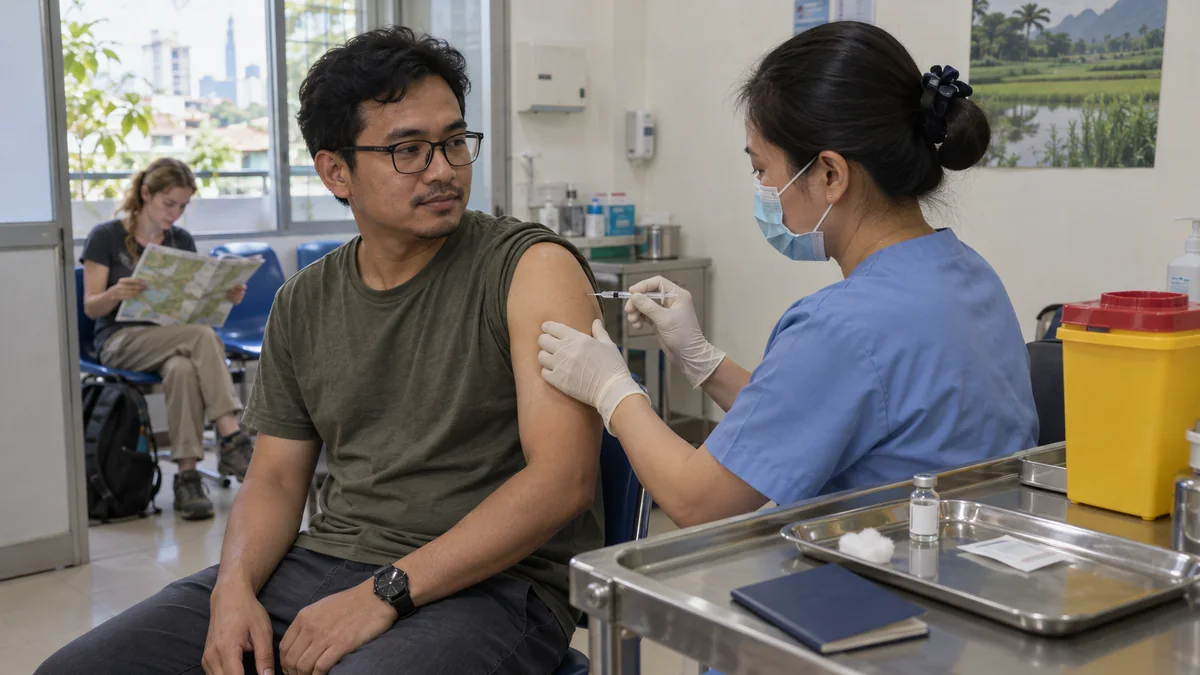
The article introduced the choices of two international students who came to study in Vietnam. Lawrence Kurniawan Wong, 36, from Singapore, who studies Vietnamese at a university in Ho Chi Minh City, got the 9-valent HPV vaccine in Vietnam. The reason is plain: he could keep the cost down compared with his home country of Singapore. Mira Muller, 28, from Germany, majoring in Vietnamese studies in Hanoi, got the Japanese encephalitis vaccine because she often heads out into the countryside and suburbs for fieldwork.
What the two share is using their time studying abroad as 'a window to get their health in order.' Rather than leaving in a few days like tourists, they spend months to years in Vietnam. During that time, they get vaccines that are costly or come with long waits back home at local prices and schedules. As a place to receive vaccinations, Vietnam is beginning to be chosen.
Background: Vietnam's vaccination landscape and the reasons for the price gap
In Vietnam, private vaccination chains have spread mainly in urban areas, and the path from booking to shot is well established. The international student in the article also got vaccinated at a private facility such as VNVC in the city. Imported vaccines are increasingly handled too, and higher-priced options like the 9-valent HPV vaccine can be chosen.
So why the price gap? On top of the purchase price of the vaccine itself, each country's medical costs, labor and facility overhead are added on to set the final cost of a shot. Between high-cost Singapore and relatively cheap Vietnam, the amount a patient pays differs even for the same product. Students are pocketing this structural difference as a real benefit. Still, rather than jumping at cheapness alone, check-just as you would at home-whether the product is genuine and whether storage and administration are properly managed, even abroad.
Data: comparing HPV vaccine prices with Singapore
The concrete figure cited in reporting was the price of the 9-valent HPV vaccine. We lay out the gap between Singapore and Vietnam, with yen conversions. The yen figures are approximations at mid-July 2026 rates (1 Singapore dollar ≈ 125 yen, 10,000 dong ≈ 61 yen) and change daily.
| Vaccine / place of vaccination | Local price | In US dollars | Yen conversion (approximate) |
|---|---|---|---|
| 9-valent HPV (Singapore) | 700 Singapore dollars | About 543 US dollars | about 87,000 yen |
| 9-valent HPV (Vietnam) | about 8 million dong | About 304 US dollars | About 49,000 yen |
On price alone, getting vaccinated in Vietnam is about half of Singapore. Because the HPV vaccine requires multiple doses, the per-dose difference adds up and the gap in total widens further. The article also mentions vaccines like Japanese encephalitis, MMR (measles, mumps, rubella), pneumococcus, rabies and dengue, but their prices aren't specified. We don't cover figures we can't verify. Actual costs vary by facility and formulation, so check estimates with each medical provider.
Local voices: the views of an international student and a vaccination center
Wong says HPV isn't a women's-only issue. "Men can get genital warts and HPV-related cancers too," he notes, and after researching the options in Vietnam he chose the 9-valent shot. Wong reportedly went beyond 9-valent HPV to get several vaccines during his time in Vietnam-Japanese encephalitis, MMR (measles, mumps, rubella), pneumococcal, rabies and dengue.
Muller's motive is a straightforward wish to spend her study abroad with peace of mind. "I want to enjoy studying in Vietnam without worrying about preventable illnesses," she says. For her, someone who also travels to provincial and rural areas, guarding against Japanese encephalitis was a decision that came as a set with fieldwork.
The receiving side's view is presented too. Dr. Dinh Ky Nam of the VNVC Hai Ba Trung vaccination center explains that many international students visit seeking shots, like Wong and Muller. He then notes that the vaccines needed differ from person to person depending on country of origin, vaccination history, length of stay, and upcoming travel plans—a neutral stance that what to get can't be decided uniformly.
Practical info for Japanese residents and business travelers
This applies to Japanese who live in Vietnam or travel there often, too. There's room to consider, during a stay, the vaccines you missed in Japan or those that tend to be costly as optional shots. Here are the points to note before actually moving.
For where to get vaccinated, options include urban private vaccination chains and international clinics that advertise Japanese-language service. When booking, it's reassuring to confirm which products they carry and whether the schedule fits your stay. For vaccines needing multiple doses, like HPV, going home partway leaves a gap, so plan ahead for where you'll get the remaining shots.
One thing to watch is to always keep a record of your vaccinations in both your native language and English. When receiving follow-up doses at a Japanese medical institution, or if your condition changes, a record showing when, what, and how many times you were vaccinated is indispensable. For people with chronic illnesses, those who may be pregnant, or those on regular medication, whether a vaccine is advisable or indicated can change. Whether you can get it and whether you need it should always be judged only after consulting a local doctor or your regular physician in Japan. A low price can be one reason to choose, but it's not something to decide on that alone.
Around the topic: Vietnam's shifts in healthcare
Behind the growing capacity for vaccination lies movement in Vietnam's medical system itself. Health insurance operations have been revised, and entry procedures have changed from time to time. Such institutional changes affect how easily foreigners can access care locally. Even something as small as a vaccine turns out to be not just a matter of price but part of the process of living infrastructure taking shape. International students' choices are also a small mirror reflecting that change.
Please also refer to our articles on medical care and daily-life procedures in Vietnam.The health-insurance change that lets you go straight to a major hospital without a referralandThe latest handling of health declarations on entry、How VNeID's link with Singapore changes procedures for residentsand other information premised on actually living there is useful.
Summary
International students choose to get vaccinated in Vietnam because of a clear price gap - about 49,000 yen in Vietnam versus about 87,000 yen in Singapore for the 9-valent HPV vaccine. The idea of using a stay to prepare for your health applies to resident and traveling Japanese as well. But medical care isn't decided on price alone. Check the formulations used, the vaccination schedule, and how records are kept, and always consult a medical provider before deciding whether you can get the shot.
Sources
- VnExpress International, "Why international students choose to get vaccinated in Vietnam" (July 16, 2026) https://e.vnexpress.net/news/life/wellness/why-international-students-choose-to-get-vaccinated-in-vietnam-5095489.html