The Spain-based travel platformGuruWalkpublished its "Top 100 Most Walkable Cities in the World, 2026 Edition," in whichHanoi, Ho Chi Minh City, and Hoi An—three Vietnamese cities—ranked in. It's a turning point at which Vietnam's urban image, hard to call "walking cities" with motorbikes as the star of transport, earns international recognition as walking-tourism destinations on par with Rome, Madrid, and Tokyo.VnExpressStarting from the reporting, we organize the ranking criteria and the impact on Japanese travelers.
News details: GuruWalk selects Hanoi, HCMC, and Hoi An
GuruWalk is a platform aggregating free walking tours in cities around the world, and once a year it publishes a "most walkable cities" ranking. In the 2026 edition, No. 1 isRome,and from 2nd down areMadrid, Budapest, and Prague—with European cities occupying the top spots; from Asia, alongsideTokyo, Kyoto, and New York,Hanoi, HCMC, and Hoi An made it into the top 100.
The evaluation criteria are four axes—(1) walkability, (2) density of tourist spots, (3) accessibility, and (4) the experiential value of walking-centered travel—combining each city's number of free walking tours, participant reviews, and the activity of local guides.
Background: why a motorbike kingdom was rated "walkable"
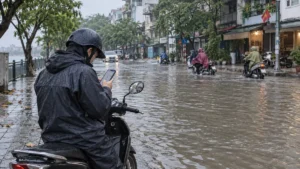
Vietnam, with a population of over 100 million, has about 75 million registered motorbikes, and two-wheelers are the star of transport. Sidewalks are filled with parked motorbikes and street vendors, and traffic lights are limited—the very opposite of the "walking city" image. Even so, the reason GuruWalk chose Hanoi and HCMC is clear.
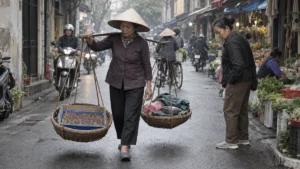
Hanoi's strength is theOld Quarter (the 36 streets).Cultural heritage sites and traditional craft shops are packed into a network of narrow alleys, with restaurants, cafés, and temples clustered within a 5-minute walk. HCMC's strength was rated as itsdynamic pace, the mix of history and modern architecture, and street-food culture.For both cities, "the experience of touring the central historic district on foot" was recognized as a tourism resource.
Composition of the 2026 top 100 ranking (excerpt)
| Rank band | Main cities |
|---|---|
| Top 10 | Rome, Madrid, Budapest, Prague, Barcelona, etc. (mostly European) |
| Asian entries | Tokyo, Kyoto, Hanoi, Ho Chi Minh City, Hoi An |
| The Americas | New York, Mexico City, Buenos Aires |
| Evaluation axes | Walkability / tourist density / accessibility / walking experience |
| Selecting body | GuruWalk (headquartered in Madrid, Spain) |
| Vietnam selections | Three cities: Hanoi, HCMC, and Hoi An (Da Nang) |
Industry reaction: a tailwind for tourism strategy, accelerated investment in Hanoi's Old Quarter
In VnExpress reporting, Vietnam's tourism industry receives this ranking as a signal of "a shift toward sustainable tourism (slow travel)." It's a trend of transitioning from short-term Instagram-worthy tourism to an "environmentally conscious travel style" of experiencing the streetscape and food culture on foot.
Since 2024, Hanoi has expanded pedestrianization of the Old Quarter on weekends, and HCMC has established pedestrian-only zones on Nguyen Hue Street and Bui Vien Street. This international recognition becomes a policy basis to push forward suchpedestrian-first street reorganization.as a policy basis to push it forward.
Meanwhile, Hoi An's Old Quarter, a UNESCO World Heritage site, has long banned motorbikes, so walking tourism is fully established. With its selection alongside the others in the top 100, it also serves as a role model for sidewalk development—"Hanoi and HCMC, follow Hoi An's lead."
Impact on Japanese travelers: itinerary design that emphasizes walking
For travelers from Japan, this ranking becomes a hint for itinerary design. Building your stay around areas you can enjoy on foot lowers travel costs and raisesthe density of the stay experience.Specifically, the following three model cases can be considered.
- Hanoi: Hoan Kiem Lake–Old Quarter's 36 streets–the Cathedral—sightseeing, food, and cafés concentrated within a 30-minute walk, walkable in half a day
- HCMC: Bui Vien–Ben Thanh Market–Saigon Notre-Dame Basilica–Central Post Office–Notre-Dame—all the major sights in a one-hour walk, andthe Rex Hotel of the D&G pop-upis also in this area
- Hoi An Ancient Town—walking all day, high stay value combined with lanterns at night
Combined with thecafé-photography culture of Hanoiaround Hoan Kiem Lake, you can also build a day plan complete with walking, photography, and dining.
Ripple effects on the industry: an evaluation race among other Southeast Asian cities
From Southeast Asia, others such asBangkok, Singapore, and Kuala Lumpuralso ranked in, but the simultaneous selection of the three cities Hanoi, HCMC, and Hoi An is among the most in the region. As with Bangkok's 2024 case of major investment in sidewalk development in the Buckanon Plaza district,becoming a walking-tourism destinationis becoming a competitive axis for cities in the region.
Behind this is the shift in post-pandemic travel style from "guidebook-type spot tours" to "experiential walking of the city itself." The number of participants in the free walking tours GuruWalk aggregates rose 30% year on year worldwide in 2025, and the three Vietnamese cities are positioned to benefit most.
Practical information: the best seasons and areas for walking tourism
| City | Best season for walking tourism | Main walking areas |
|---|---|---|
| Hanoi | October to the following April (cool season) | The Old Quarter's 36 streets, around Hoan Kiem Lake, the French Quarter |
| Ho Chi Minh City | December to the following March (dry season) | Ben Thanh–the Central Post Office, Bui Vien, Nguyen Hue |
| Hoi An | February to April, September to October | The entire Old Quarter (motorbikes banned), lanterns at night |
| Points to note | May to September is rainy season and severe heat | 7–10 a.m. / 4–7 p.m. are best for walking |
From May to September, the south gets squalls and daytime over 35 degrees, and the north also enters a humid rainy season. If you come mainly for walking tourism, choosingthe cool, dry season from October to the following Aprilis the iron rule.A dry-season experience in the Mekong Delta,combined with it, lets you maximize the seasonal benefits.
Summary: how you choose a Vietnam trip changes
Making GuruWalk's top 100 widens the evaluation axes of a Vietnam trip beyond "price" and "food" to "the value of walking." That Hanoi and HCMC can be adequately toured on foot if you narrow to 1 or 2 central areas has been backed up by international recognition. In Japanese travelers' itinerary design too, working in time to walk rather than relying on the metro or Grab lets you savor the city's expressions more deeply.