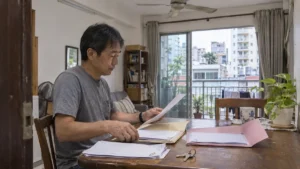
Yasushi Ogura is a Japanese national who has worked alongside residents of Lô Lô Chải village in northern Vietnam to preserve old earthen-walled houses while improving the quality of life there. According to local reporting from March 2026, he was 69 years old at the time. Over roughly 30 years since his first visit to Vietnam, he has built relationships with the community, speaks Vietnamese he taught himself, and calls Hà Giang a second home. The village is located in what was formerly Hà Giang Province, now part of Tuyên Quang Province. What is noteworthy is not only the scale of the funding involved, but the way he connected the reason for keeping the houses to the work of tourism.
From a first visit to Vietnam in 1995 to engagement with mountain communities
In a 2023 interview with Heritage magazine, Ogura said he first visited Vietnam in 1995 and extended his travels to the northwest in 1999. As he continued to travel, his interest deepened in the cultures of ethnic minority groups and the old buildings found in mountain areas. His first visit to Vietnam and the period when he began working in Lô Lô Chải village should be understood as separate points in time.
A VnExpress article dated March 23, 2026 reports that he visited Lô Lô Chải village in 2010 and witnessed earthen-walled houses being replaced by concrete construction. Lô Lô Chải is written as Lô Lô Chải and is a different village from Lũng Cẩm in the Sủng Là valley. What he sought to preserve was not just an attractive exterior, butthe traditional earthen-walled houses and the way of life continuing within them. Residents also have their own reasons for wanting more comfortable living conditions. The question of preserving old houses cannot be separated from how to address everyday inconveniences such as leaking roofs and sanitation facilities.
A café funded with around 200 million VND, and a mechanism for keeping the houses
According to VnExpress and Dân trí reporting from March 2026, Ogura invested around 200 million Vietnamese dong and in 2014 opened a"Cực Bắc Café (Cà phê Cực Bắc)"using a traditional house. VnExpress describes the building as approximately 200 years old. Linking the funding to a practical use for the building led to the activities that followed.
The core idea was to use the traditional house as a café and generate income to sustain it. Dân trí reports that while keeping the building intact, a toilet and a small counter were added, and operations were later handed over to the family. The key point when reading about this case is that rather than simply bringing in a business from outside and walking away, the approach was structured so that the residents themselves could continue to run it.
| Year | Event |
|---|---|
| 1995 | First visit to Vietnam |
| 2010 | The year VnExpress reports he visited Lô Lô Chải |
| 2014 | Cực Bắc Café opened; reported investment of approximately 200 million VND |
| 2025 | Selected as a UN Tourism Best Tourism Village |
Tourism led by residents, and international recognition in 2025
The support extended beyond start-up funding. VnExpress reports that he brought two university students from Hanoi to teach drink-making and literacy, and also helped with homestay facilities and stone wall maintenance. The UN Tourism village profile, meanwhile, places emphasis on tourism led by the residents themselves. Rather than focusing solely on the achievements of one supporter, it is worth also looking at the work of the residents who have maintained their homes, run accommodation, and passed skills on to the next generation.
According to the village chief's account published in VnExpress on March 23, 2026,52 households are participating in community-based homestay tourism, with an average monthly income of around 30 million VND per household. This is a figure given at the time of the interview and does not guarantee the income of every individual resident or future earnings. In 2025, the village was selected for theBest Tourism Villages program by UN Tourism, the United Nations' specialized tourism body. This is not a ranking of "the world's best" but an initiative that recognizes efforts such as cultural preservation.
In the same interview, the village chief said that Ogura is welcomed like a member of the family. This conveys the depth of a long relationship, but it does not mean that visitors are free to enter any home they like. Asking permission before visiting or taking photographs—that small consideration is where a respectful relationship with a destination begins.
A message for Japanese travelers
Lô Lô Chải village is located in a mountain area near the Lũng Cú flag tower. A brief stop to see the earthen-walled houses and stone walls is possible, but if you want to learn more about daily life there, try asking whether a locally run guesthouse or guide is available. Culture is not only a performance put on for tourists. In domestic and ceremonial spaces, staying within the areas you have been shown is a basic expectation.
- Access:The approximately six hours cited by tourism authorities from Hanoi is a guide to Hà Giang town. Getting to the village requires additional travel along mountain roads. When booking, confirm the bus drop-off point and transfers to your accommodation separately.
- Best season:Tourism authorities suggest September to November as a general guide for visiting the Hà Giang area. The best time to see flowers and harvests varies by location and year, so ask the village guesthouse about current conditions closer to your visit.
- Recommended:If you choose to stay overnight, check whether the accommodation is family-run and whether meals and opportunities for interaction are available. Private rooms, bathrooms, heating, and languages spoken also vary by property, so it helps to communicate your expectations in advance.
- Note:On mountain roads, rain, fog, and road conditions can affect travel times. Avoid planning a demanding itinerary immediately after an overnight journey, and prioritize rest and traveling during daylight hours.
The work being done in this village cannot be fully captured by visitor numbers alone.Related articles covering trends among visitors to Vietnam, including Japanese travelers,are available, but national statistics and the effects on village life are separate matters. Looking at what you spend money on when you travel and who does that work can give you additional criteria for choosing accommodation and experiences.
If you are considering a multi-destination trip, note that a mountain stay in the north and Da Nang in central Vietnam are not nearby destinations.An article covering a water-splashing event in Da Nang in Aprilis a separate destination to consider after checking the year it is held and your travel dates.Phu Quoc Island's visa exemption detailscovers regulations specific to that island and cannot be used in place of entry requirements for the mainland. If you are traveling to the mainland on a Japanese passport, check the number of days you plan to stay and the conditions for your passport on the website of the Embassy of Japan in Vietnam under "Vietnam Entry and Exit Information."
Summary
What the story of Ogura and Lô Lô Chải village shows is an effort to reconcile preserving old buildings with improving the lives of the people who live in them. As a traveler visiting the area, start by arranging manageable transportation and accommodation, then in the village ask permission before listening to people's stories, and enjoy the food and drinks on offer. Approaching it not merely as a place to photograph, but as somewhere people continue to live, is a first step toward bringing this story into your own travels.
Related reporting:VnExpress International – Japanese man makes Ha Giang his home away from home