Da Lat, a summer retreat spreading across highlands at 1,500 meters in elevation. Its air gateway, Lien Khuong International Airport, has finished a full renovation lasting about five months and is scheduled to resume operations on August 19, 2026 (the official timetable is awaited). It's a large-scale project with an investment topping 1 trillion dong, with everything from the runway to technical facilities renewed. For Japanese travelers heading to Da Lat by connecting via domestic flights from Ho Chi Minh City or Hanoi, it means that the "foot to the cool highlands" officially returns in time for the end of summer. Passing through sweltering Ho Chi Minh City to a town with a spring-like climate year-round. That gateway of travel is back to full operation.
Summary of the news behind this article
According to Vietnamese English-language media VnExpress (June 17, 2026), Lien Khuong International Airport, the gateway to Da Lat in Lam Dong province, is scheduled to resume operations on August 19, 2026, after about five months of closure. What was carried out during the closure was a full renovation of the runway, taxiways, safety strips, and technical facilities. The project is run by Airports Corporation of Vietnam (ACV), with total investment reported to top 1 trillion dong.
The airport is positioned as an aviation hub for the Central Highlands region, with a plan to obtain 4E standards by 2030 and aim to accept large aircraft such as the Boeing 787 and Airbus A350. In the future, a scale handling about 5 million passengers and 20,000 tons of cargo annually is envisioned. It's worth keeping in mind that these are not confirmed results but merely target figures in the development plan. What's confirmed first this time is the single point of resuming operations on August 19, 2026.
Why close the airport just to renovate it
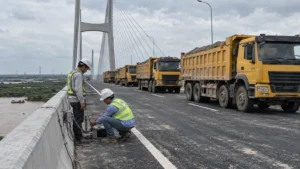
The decision to close an airport entirely for a set period falls into a rare category even within Vietnam. Behind it are the aging of runways and taxiways that have added years since opening, and a fundamental rebuild with future large-aircraft service in mind. Rather than repeating partial repairs, closing it all at once and rebuilding from the runway's roadbed is judged easier to secure both safety and expansion room in the long term. Local reports say all-out construction continued around the clock on the runway exceeding 3 km, with hundreds of engineers and workers deployed.
During the closure, travelers heading to Da Lat moved using routes entering by land from Nha Trang's Cam Ranh Airport or Buon Ma Thuot Airport. Da Lat's tourism demand itself hasn't vanished; only the air route was stopped. That's exactly why the impact of the resumption is large, and the halted direct domestic-flight demand is seen returning all at once.
What kind of town is Da Lat in the first place
Da Lat is a town in south-central Vietnam, located on highlands at about 1,500 meters in elevation. It has a history of being developed as a summer retreat in the French colonial era, and its greatest appeal is a cool climate year-round. It's described as feeling four seasons within a single day — "spring in the morning, summer at midday, autumn in the afternoon, winter at night" — an entirely different world of comfort from lowland Ho Chi Minh City or Nha Trang.
Lakes and French-style streetscapes, flower and coffee farms, night markets in the evening. For Vietnamese it's long been a honeymoon destination and a mecca for dating, also called the "city of love," and it has become known to Japanese travelers too as a summer retreat like "Vietnam's Karuizawa." Once the air route returns, it becomes much easier to build a tour that inserts the cool highlands into your itinerary, combined with the beach resort of Nha Trang or the business city of Ho Chi Minh City.
Lien Khuong Airport basic data and main routes
Lien Khuong International Airport (airport code: DLI) is located about 30 km south of central Da Lat. Though it bears the name of an international airport, in practice it centers on domestic routes, functioning as a connection base from Ho Chi Minh City and Hanoi.
| Item | Details |
|---|---|
| Operation resumption date | August 19, 2026 (VnExpress reporting) |
| Closure period | About 5 months (full renovation) |
| Renovation details | Renewal of runway, taxiways, safety strips, and technical facilities |
| Investment amount | Over 1 trillion dong (ACV project) |
| Airport–Da Lat city | About 30 km / about 40 minutes by taxi |
| Main domestic routes | Ho Chi Minh City, Hanoi, Hai Phong, Vinh, etc. |
| Future plan (target figures) | 4E standards, large-aircraft capable, about 5 million passengers annually |
By route distance, the shortest is the Ho Chi Minh City–Da Lat route at about 214 km, with a flight time of roughly 55 minutes. The Hanoi–Da Lat route is about 1 hour 50 minutes. Both are segments that VietJet Air, Vietnam Airlines, and others have operated, and how flights return after resumption is a point to watch going forward. Note that amounts including the investment figure are in Vietnamese dong, and since Japanese yen conversion fluctuates with the exchange rate, this article lists only the confirmed dong-denominated figures.
How locals and travelers receive it
Organizing the reactions to the resumption news from local reporting and traveler communities, the following voices are broadly seen.
First, relief from Da Lat's tourism and lodging businesses. During the closure they had no choice but to rely on land access, dulling the footfall of individual visitors from afar, so voices see the air-route revival as a turning point for recovering business opportunities. Second, from repeat travelers, a welcoming reaction of "we can go quickly again by direct domestic flight." For those wanting to avoid the lowlands in the hot season and spend time in the highlands, shortening travel time directly ties to freedom in itinerary design.
Third, there are cautious views too. While the operation resumption date was given as August 19 in this VnExpress report, past reports had floated estimates like late August or early September. Since there's a nonzero chance it shifts depending on construction progress, among travelers securing tickets there's also a prudent stance of "book after the carriers' official schedules are announced post-resumption."
What changes for Japanese travelers
From here we'll consider it from the viewpoint of travelers aiming for Da Lat from Japan. First, as a major premise, there are no direct flights from Japan to Da Lat. Access basically means flying from Japan to Ho Chi Minh City (Tan Son Nhat) or Hanoi (Noi Bai) and transferring there to a domestic flight to Lien Khuong Airport. This resumption means that "last one segment" officially returns.
What's big on the practical side is the ease of rearranging itineraries. For example, stay two nights in Ho Chi Minh City enjoying city walks and food, then on the third day move to the highlands on a domestic flight of about 55 minutes. A trip that switches climate itself from the sweltering lowlands to cool Da Lat becomes realistic with the air-route revival. By land, Ho Chi Minh City to Da Lat takes 6 to 7 hours by bus or car, so for Japanese travelers who want to spend their limited vacation on sightseeing, the presence or absence of an air route sways the density of the trip.
A Vietnam trip's communication environment also sways the quality of your itinerary. To comfortably use local transport apps, maps, and ride-hailing, preparing a SIM or eSIM at the point of entry is essential. Since new SIM routes and registration rules change year by year, confirming the latest practices before departure is a safe bet. For details, seeNew SIM rules for travelersalong with this.
Another thing to consider is "timing." Though Da Lat is cool year-round, the rainy season (roughly May to October) sees more sudden showers. Right after the August 19 resumption is still within the rainy season, but the sightseeing peak is the dry season of November to March. Rather than jumping in just because the air route is back, the wise way to use it is to pick the timing to suit your purpose — the hot lowland season if avoiding the heat is the goal, the dry season if enjoying city walks and flowers — while watching the post-resumption timetable.
Ripple effects on the tourism industry
The airport's resumption and the expansion plan beyond it take on different meaning when seen in the context of turning the entire Central Highlands into a tourism hub, not just Da Lat alone. If it becomes a 4E-standard airport where large aircraft can operate as the future plan intends, room emerges to draw direct flights from neighboring countries, beyond its current role as a domestic-flight relay point. The passenger target of about 5 million a year is a figure premised on a major boost from the present.
In relation to Japan's outbound demand, a flow in which Da Lat emerges as the "next move" in Vietnam travel — after Ho Chi Minh City and Da Nang became standards — is entirely conceivable. A highland resort that's neither beach nor city is a theme that easily draws the interest of the repeat crowd. The revival of the airport as infrastructure can be seen as an event that physically reopens that gateway.
Practical information on access and how to get there after resumption
On the premise of post-resumption, let's organize the basic flow of heading to Da Lat from Japan. The steps are as follows.
① Move from Japan (Narita, Kansai, etc.) to Ho Chi Minh City or Hanoi by international flight. ② Transfer to a domestic flight at the arrival airport, to Lien Khuong Airport (DLI). About 55 minutes from Ho Chi Minh City, about 1 hour 50 minutes from Hanoi as a guide. ③ From Lien Khuong Airport to central Da Lat, about 40 minutes by taxi (about 30 km), or by shuttle bus to the city center. Including connection time, allowing half a day or more from leaving Japan to arriving in Da Lat gives you room.
Planning how to enjoy Da Lat once you arrive in the city lets you use a limited stay with high density. Options are wide-ranging, from suburban activities to unique spots in town — for example, taking advantage of the slopes,Da Lat's gravity cartor, packed with the town's playfulness,Da Lat's maze barand the like are spots easy to work into an itinerary as experiences befitting a summer retreat.
Summary: how to build an itinerary with the resumption in view
The August 19, 2026 resumption of Lien Khuong International Airport is a turning point where the halted "foot to the cool highlands" returns. The practical conclusion for Japanese travelers is simple: a tour combining a one- or two-night highland Da Lat with a Ho Chi Minh City or Hanoi stay becomes much easier to build after resumption. The recommended approach is to first confirm the official domestic-flight schedules each airline issues after resumption, then aim for the hot lowland season if avoiding the heat is the goal, or the dry season of November to March if city walks and flowers are the goal. On top of that, get your communications ready with a SIM or eSIM, and a Vietnam-like two-city tour is complete — switching climate itself from the lowland bustle to the cool highlands. Make the revival of the air route the trigger for your next Vietnam trip.
Frequently asked questions
When does Lien Khuong Airport resume operations?
According to VnExpress (reported June 17, 2026), it's scheduled to resume operations on August 19, 2026, after about five months of full renovation. Past reports had estimates of late August or early September, so when getting tickets, we recommend confirming the official schedules each carrier issues after resumption.
Are there direct flights from Japan to Da Lat?
There are no direct flights. The basic route is to fly from Japan to Ho Chi Minh City (Tan Son Nhat) or Hanoi (Noi Bai) and transfer there to a domestic flight to Lien Khuong Airport (DLI). About 55 minutes from Ho Chi Minh City, about 1 hour 50 minutes from Hanoi as a guide.
How long does it take from the airport to central Da Lat?
Lien Khuong Airport is about 30 km south of central Da Lat, about 40 minutes by taxi as a guide. A shuttle bus can also be used to the city center.
Related reading
Source: