In Quang Tri Province in central Vietnam, 64 people were hospitalized with food poisoning symptoms after eating banh mi, the Vietnamese-style sandwich. Victims ranged from a 28-month-old infant to an 87-year-old. Similar incidents occurred in March, with 62 cases in Nghe An Province and 108 in Vung Tau, putting the hygiene of banh mi street stalls—a beloved national dish—at the center of nationwide debate.
A banh mi shop in Tan Lap commune: a small shop selling 100 a day is the epicenter
The source of the food poisoning was an individually run banh mi shop in Tan Lap commune, Phong Hoa district, Quang Tri Province. It made and sold about 100 banh mi a day and also delivered 44 to local elementary and junior high schools. Residents who ate banh mi bought on Tuesday and Wednesday in late April were carried in one after another from Wednesday to Friday complaining of high fever, diarrhea, vomiting, and abdominal pain.
By Friday afternoon, 18 people had been hospitalized at Phong Hoa Regional General Hospital. Authorities ordered the shop suspended as of Thursday and are collecting samples to identify the causative bacteria.
Three cases in April 2026 alone: a chain of banh mi food poisoning
The Quang Tri Province case is the third large-scale banh mi food poisoning since the start of 2026.
| Period | Location | Number hospitalized | Cause (identified portion) |
|---|---|---|---|
| March 2026 | Vung Tau | 108 people | Salmonella (confirmed by testing) |
| Late April 2026 | Nghe An Province | 62 people | Salmonella (confirmed by testing) |
| As of May 1, 2026 | Quang Tri Province | 64 people | Under testing |
All had a small local banh mi shop as the source, and homemade pate, egg-based mayonnaise, and room-temperature-stored cold cuts are common as high-risk ingredients.
Why food poisoning is repeated with banh mi
According to an analysis article by VnExpress, banh mi's structural risk lies in "storing high-protein, high-fat ingredients at room temperature at a stall with no refrigeration equipment." In an environment of 37 to 39 degrees, bacteria double in 15 to 20 minutes. By the calculation, if pate prepared in the morning is sold at room temperature until noon, a dangerous level of bacteria multiplies.
The Ministry of Health, through the Food Safety Authority, instructed provincial authorities to trace and investigate the entire supply chain and to strengthen penalties for offending businesses. It especially called for tightening surveillance of stalls, school lunches, and industrial-park cafeterias.
Local reactions: "Trust in the national food is shaken"
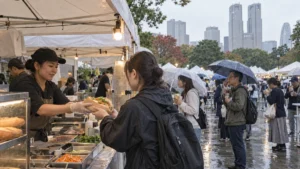
On social media, voices of anxiety asking "is banh mi safe?" have followed one after another. On the other hand, the owner of the famous Ho Chi Minh City shop "Banh Mi Huynh Hoa" commented to local media, "Shops that thoroughly manage refrigeration and their suppliers' hygiene standards are fine. Cracking down on small, unlicensed shops is an urgent task." Ho Chi Minh City authorities also issued an emergency food-safety warning and are strengthening surprise inspections of stalls in busy districts.
Countermeasures travelers should take
In a safety guide compiling experts' advice by Tuoi Tre, the following points are emphasized.
| Item to check | Specific criteria for judgment |
|---|---|
| The shop's hygiene state | Whether flies are swarming the prep counter, whether gloves are used |
| Storage of pate | Whether it's stored in a refrigerated case (a large room-temperature lump is a no) |
| Off-odor check | If there's a sour smell, sliminess, or bubbles, don't eat it |
| Time after purchase | Eat within 30 minutes of buying (avoid leaving takeout sitting) |
| When feeling unwell | Go to a medical institution without judging on your own. Especially children, the elderly, and pregnant women should see a doctor immediately |
The future of banh mi as a tourism icon
Banh mi, alongside pho, is a symbol of Vietnam's food culture, and has been selected for CNN's "World's 23 Best Street Foods." It is a weapon for attracting tourists, but at the same time there is a risk that lax hygiene management damages travelers' trust. To achieve the Vietnamese government's target of 25 million tourists in 2026, the question is how to raise hygiene standards while maintaining the appeal of the stalls.
Related reading
- Food-safety violation at a Korean restaurant chain in Hanoi: Dookki and Laboon fined up to 12 million VND
- Ho Chi Minh City "Gastronomy and Food Culture Festival 2026": 500 dishes and 50 establishments gather
- Food & Hospitality Vietnam 2026: 400 companies from 36 countries gather
Frequently asked questions
Q. What is the main causative bacterium of banh mi food poisoning?
A. In 2026 testing, salmonella has been confirmed. Homemade pate and egg-based mayonnaise in particular are high-risk ingredients.
Q. Should travelers avoid banh mi?
A. If you choose a shop with thorough hygiene management, there's no need to worry excessively. Check for refrigerated storage, glove use, and a clean prep counter before buying.
Q. What should I do if food-poisoning symptoms appear?
A. If high fever, vomiting, or diarrhea appear, don't judge on your own; see a medical institution immediately. Children, the elderly, and pregnant women in particular have a risk of it becoming serious.
Source:
Tuoi Tre News – Suspected banh mi poisoning in Quang Tri rises to 64
Tuoi Tre News – What to know about banh mi food poisoning and how to eat safely
VnExpress – Why Vietnam sees repeated banh mi food poisoning outbreaks